Skip to content

KimStanleyRobinson.info

The reference site for Kim Stanley Robinson

  • Who is KSR?
  • Stan’s Favorites
  • About
  • Bibliography
  • Forum
  • Events

Category: novels

  • Antarctica

    Antarctica is Robinson’s first novel published after the success of the Mars trilogy, published in 1997. It was written as a result of Robinson’s experience in the continent itself during a visit organized by the “Artists & Writers” program of the National Science Foundation in 1995.

    Set in the close future at the time of writing (start of 21st century), it describes the adventures of a US Senator envoyé in Antarctica, who investigates happenings related to the upcoming renegotiation of the Antarctic Treaty and discovers local Antarctic cultures, either ferals living off the land or ecoteurs (ecological saboteurs) fighting against environmental degradation. It follows several characters from their own point of view, and is rich with passages on Antarctic history.

    Antarctica shares many themes with the Mars trilogy, such as environmental awareness, the exploitation of natural resources, feral living style and descriptions of landscapes with conditions as extreme as those in the Mars novels — because of the similarity in the themes of both works, Antarctica has been called “White Mars” by some. It also shares some characters with the Science In The Capital trilogy, such as Wade Norton and US Senator Phil Chase. The character of Ta Shu was also reused in Red Moon.

    Summary

    1. Ice Planet

    In Antarctica, X, a General Field Assistant, is driving a SPOT train when he is hijacked by “ice pirates” on the way to McMurdo, a vehicle is taken.Val, tour guide, is touring a group of clients at Cape Crozier, recreating Cherry-Garrard’s Worst Journey in the World with George’s film crew.

    2. Science in the Capital

    Wade Norton gets assigned to go to Antarctica by Senator Phil Chase to break gridlock on the upcoming Antarctica Treaty renegotiation; gridlock risks to leave legal status in limbo, allowing for the exploitation of Antarctica by private interests, and environmental degradation. Wade’s bio, from radical environmentalist to Senator aide.

    3. In the Antarctic Grain

    X’s daily routine as a Good For Anything worker/proletarian in Mac Town (McMurdo) and surroundings for the beakers (scientists). X’s bio: reader of Marxist theory, manual labor.
    Wade travels to Antarctica via New Zealand.

    Ta Shu’s log, broadcasting to Chinese TV: first impressions in Antarctica.

    4. Observation Hill

    Sylvia, NSF representative, welcomes newcomers in McMurdo. Sylvia and Wade discuss the Antarctica situation, mistrust in the air. Wade meets X, then Val. X resigns from his employer, ASL.

    5. A Site of Special Scientific Interest

    Ta Shu on the Ross Ice Shelf.

    Val gives Wade a tour of the Dry Valleys, by helicopter and on foot. They get to S-375 camp, where Wade meets Professor Michelson and group, they discuss oil drilling prospects. They hike together, discuss the findings of Sirius sandstone diatoms, the stabilists/dynamicists controversy, and their implications on Antarctic history. Wade feels comfortable with Val, even attracted. Flight to Lake Vashka, hike to Lake Vida.

    Val’s bio: left Midwest life for guiding in Antarctica.

    6. In the Footsteps of Amundsen

    Ta Shu on Shackleton.

    X arrives at Roberts Massif and starts work at an experimental oil/methane hydrates drilling station.

    Phone call between Wade and Phil.

    Val’s 13th “In the Footsteps of Amundsen” expedition departs, with a sledge and five clients, 300 miles, as much as possible recreating Amundsen’s expedition, starting at Ross Ice Shelf: Mount Betty cairn, Herbert Range, Sargent Glacier, Axel Heiberg. At night camps, talking about Amundsen, Scott’s mistakes, the historiography and biographies of these explorers.

    7. Down the Rabbit Hole

    Wade at the South Pole Station: sees what little there is to see, visits the old abandoned station (items are disappearing from there too, some good organization would be required to pull that off). Wade meets Viktor, who plans to pump the freshwater of Lake Vostok to the Sahara. Wade meets Spiff, who takes him on the unofficial tour: they take him to the “summer camp” on the old station, with a band concert and dancing, then down to the old old 1956 station, with an underground complex created by melting lasers, then down the water slide to the underice heated lake!

    Sylvia notes the appearances of unknown objects on map. She talks with Wade, back from the Pole and on his way to Mohn Basin, about working together to solve the mystery of the disappearing equipment.

    8. The Sirius Group

    Graham’s bio: stabilist/dynamicist debate. Graham and company are on a sample collecting trip in the field, they find an ancient crushed beech leaf!

    Ta Shu on Amundsen’s trip.

    Val’s group on Axel Heiberg Glacier, discuss Amundsen’s Butcher’s Spur. Hike up Hansen Shoulder, crossing ice bridge; they fall down a crevasse, their sledge is stuck below, inaccessible.

    9. Big Trouble

    Wade arrives at Roberts Massif, has a discussion with X and Carlos on scientists, utopia, and capitalism versus science.

    The ecoteurs set up plan.

    Carlos and X take Wade on snowmobile to a box car missing since the 1950s that they found, abandoned but recently used. They then arrive at the drilling platform right after an explosion has occurred.

    Val’s team has no communications, Val decides they have to walk 100+ km to Roberts Massif.

    Wade, X and Carlos have to use the snowcraft to travel back; they run out of gas, go on skiing, and arrive at the Roberts Station, finding it destroyed as well.

    10. Roberts Massif

    Michelson and group have lost communications too. Michelson ponders about the speed of scientific discourse.

    Wade, X and Carlos try to get warm in the hovercraft at Roberts.

    Ta Shu on Shackleton.

    Val’s group walk for hours and hours. Jack has to be carried on a ski stretcher. They reach the destroyed Roberts Station.

    11. Extreme Weather Event

    The two groups meet, get warm, Jack is injured. They somewhat manage to communicate with McMurdo; they are low priority for evacuation. They decide to use the hovercraft to get all the way to Shackleton Camp, X and Carlos experiment with piloting it.

    Wade communicates with Phil thanks to military satellite; communications are down all over Antarctica.

    They get going with the hovercraft, trying to avoid faults in the ice or slopes up or down, until the hovercraft half-falls into a crevasse. From there on they have to walk the last 20 miles.

    While they walk, a storm hits; they gather in a makeshift shelter of sleds and rocks, Val unsure what to do with Jack.

    Then in the middle of the winds, blimps arrive to their rescue! They are taken to Bennett’s Other Platform.

    12. Transantarctica

    The Transantarcticans welcome the group in their base. They are nomads, trying to make a permanent life on Antarctica, about 1000 people, many groups (fundamentalists, pragmatists). Mai-lis’s group considers itself democratic, it is in quarrel with the Deep Ecology ecoteurs/ice pirates, who steal and sabotage. They fear the US Navy or NSF will react and kick everyone out of Antarctica. Various people on Antarctica and in the rest of the world know about the ferals, and help keeping it a secret.

    Ta Shu on Shackleton’s group return to civilization.

    Aboard blimps, the group (and Phil on the phone) witnesses the Antarcticans attacking the ice pirates at their base: they use stun guns, Mai-lis’ group sentences them to be exiled. In their lair, they find plenty of stolen material (and X’s SPOT train car). They discuss the countries breaking the Antarctica Treaty, and the Antarcticans’ way of life.

    The group reaches Quivannikumut, a big shelter, with greenhouses for food, a sauna; they discuss living off the land; they empty underice fish traps. Then the Antarcticans take them onboard their blimps to McMurdo, crossing various settlements on the way; they get off at Cape Evans.

    Ta Shu on Scott’s hut at Cape Evans.

    The group waits for a lift inside Scott’s hut.

    13. The McMurdo Convergence

    The group is transferred back to McMurdo, Wade feels weird. US Navy is there, FBI coming soon. A lawyer appears, Mr. Smith, representing the ecoteurs, starts negotiating with Sylvia.
    Val wanders around, remembering her failed “In the Wake of Shackleton” expedition.

    Wade gets Phil’s approval to use his name in the negotiations.

    Sylvia chairs a meeting in the Chalet gathering all Antarctican parties present about the events of the past week: there is time pressure for them to present their story before the FBI comes in and non-Antarctican parties get involved. Mr. Smith makes the case for the ecoteurs, justifying their action as retaliation for the environmental degradation conducted by undemocratic governments and profit-seeking private interests that go against the Antarctica Treaty. Carlos replies: the upcoming renewal of the Treaty has left things in a vacuum, which certain countries are using to test methane hydrates extraction technology, which has proven to be environmentally safe were it not for the sabotage by this pretentious deep ecology group. Mai-lis arrives, and defends her group’s project of sacred inhabitation of Antarctica, going feral and making the most of new technologies. They decide to reconvene.

    14. From the Bottom Up

    X is frustrated at the meeting. X learns from his ex-colleagues they are planning to form a co-op to make a bid to NSF for certain aspects of running McMurdo field services and replace ASL. X is progressively convinced, and tries to shake off his image of an innocent radical unreliable collaborator.

    Wade and Sylvia discuss Sylvia’s investigation of the ecoteurs: satellite dishes, bombs, equipment destruction, but people safely evacuated. Wade and Michelson discuss his findings: Antarctica of old was a biome resembling the south of Chile of today, significant for policymaking about global warming. They both talk to Mai-lis. Armed with references from both Sylvia and Mai-lis, Wade calls their secret satellite image expert, Sam.

    Ta Shu on the landscape, on how to live, on what the Antarctican example means.

    15. Shackleton’s Leap

    They all reconvene. X makes the case for a non-profit-oriented co-op of local workers as contractor to NSF, a case representative of the world’s problems.

    Val and Wade feel each other out, inviting each other to join them, in Antarctica or Washington. Val decides to join the Antarcticans.

    X talks to everyone and tries to get help, to make the co-op bid a reality. He and Val reconnect, and he imagines sharing his time between reconstructing McMurdo and helping the Antarcticans live life like true inhabitants of this place. He drives Ta Shu around for a last visit to Cape Evans.

    The 8 Articles of the protocol for a New Antarctic Treaty: site of special scientific/spiritual interest; nonrenewable resources cached for the future; land without ownership, human carrying capacity; zero-impact lifestyle for locals; nonviolence.

    Wade lands in Christchurch. Wade had talked with Sam: he has solid proof that companies from non-Southern Club countries are contravening the Treaty by doing oil exploration, one of them Texacon, directly financing Chase’s opponent Senator Winston; he urges Phil Chase to pursue this in Washington. He catches Ta Shu’s final broadcast from Antarctica to Chinese TV.
    Through the winter: the McMurdo Field Services Co-op won the bid; X built a small home from scavenged parts; he practiced traverse trekking and climbing; he kept contact with Wade and Val. Spring arrives: X traverses Ross Island, arriving just in time at Cape Crozier’s for George’s musical ceremony with the first sunrise!

    Characters

    Wade Norton: Senator Chase’s science advisor and friend. He had studied the Antartic Treaty System before. Grew up in Hemet, California, near Redlands; went to college in Berkeley; studied forestry in Humboldt State; studied environmental law; worked with the Wilderness Defense Club in Washington DC, quit disgusted at the compromises of reform politics; had a run-in with ecotage internationale in the Sierras; got interested in the impending ecological disaster of opening up Antarctica to development. Slim.

    Phil Chase: California Senator, Democrat, ex-chairman of the Senate Foreign Relations Committee aiming to come up with a continuation of the Antarctic Treaty System. The wandering Senator, travels a lot outside of the USA.

    X: General Field Assistant (“Good For Anything”) at McMurdo, e.g. conducting trains with material. Val’s ex, they had hooked up between Antarctican sessions as guides in New Zealand. “X” from “Extra”, from “Extra Large”. Read a lot of political philosophy, a Marxist.

    Valerie “Val” Kenning: guide at “Footsteps Unlimited”. Physically fit, muscular. Had a brother who died young, lived with her grandmother in Wyoming before her death. Moved to Antarctica, had many ice romances, most failed.

    Ta Shu: Chinese writer and journalist visiting Antarctica, a practicioner of feng shui, has a 3D video feed to China. Short, wiry, gray goatee, long gray ponytail, around 60. Was previously named Wu Li. Down in Antarctica with the US Anterctic Program via the Woo program.

    Geoffrey Michelson: British geologist experienced in Antarctica. High in the SCAR hierarchy (Scientific Committee for Antarctic Research, an international organization).

    Graham Forbes: Kiwi glacial sedimentologist. Graduate at Cambridge, where his work under a professor who was a stabilist in the Sirius group controversy made him waste years of work, then moved to University of Sydney.

    Sylvia Johnston: English biologist, had married an American and got citizenship, works for NSF (National Science Foundation, a US organization). As NSF representative, she welcomes the visitors from the US Antarctic Program in McMurdo.

    Carlos: Chilean, experienced in Antarctica work and exploratory oil and gas drilling. X’s boss at Roberts Massif.

    Mai-lis: Sami origin. Was a biologist in the Norwegian program 20 years ago. Became a leader of the (Trans)Antarctican ferals group.

    George Tremont: leader of the expedition filming documentaries in Antarctica, a Kiwi.

    The McMurdo Protocol: Proposal for a new Antarctic Treaty

    As written by the McMurdo convergence (in chapter 15. Shackleton’s Leap):

    1. The Antarctic Treaty should be renewed as soon as possible, after whatever renegotiation is necessary to get all parties to agree to terms and sign. Some law needs to be in place. Paraphrasing the original proposal for an Antarctic Treaty, written by people in the American State Department in 1958: “It would appear desirable to reach agreement on a program to assure the continuation of fruitful scientific cooperation in that continent, preventing unnecessary and undesirable political rivalries, the uneconomic expenditure of funds to defend individual interests, and the recurrent possibility of misunderstanding. If harmonious agreement can be reached in regard to friendly cooperation in Antarctica, there would be advantages to all other countries as well.”

    2. In this renewed Treaty, and by a more general proclamation of the United Nations, Antarctica should be declared to be a world site of special scientific interest. Some may wish to interpret this to mean also that Antarctica is a sacred ritual space, in which human acts take on spiritual significance.

    3. Oil, natural gas, methane hydrates, minerals, and fresh water all exist in Antarctica, sometimes in concentrations that make their extraction and use a technical possibility. (Oil in particular, to be specific about the most controversial resource, is located in no supergiant fields but in three or four giant fields and many smaller ones, totalling approximately fifty billion barrels). Given that this is so, and that world supplies of some of these nonrenewable resources are being consumed at a rapid rate, the possibility of extraction needs to be explicitly considered by not only the Antarctic Treaty nations, but the United Nations as well.

    Non-Treaty nations, in the Southern Hemisphere in particular, think of the possibility of oil extraction from Antarctica as one way of solving energy needs and dealing with ongoing debt crises. At the same time current oil extraction technology presents a small but not negligible risk of environmental contamination as the result of an accident. Technologies are likely to become safer in the future, and world oil supplies are decreasing so sharply that any remaining untapped supplies, left in reserve for future generations who may need oil for purposes, other than fuel, are likely to be extremely valuable. These trends point to the idea of caching or sequestering certain oil fields for future use. Southern Hemisphere nations in need of short-term help could perhaps make arrangements modeled on the debt-for- nature exchanges that have already been made; in this case, the World Bank or individual northern countries might buy future rights to Antarctic oil from southern nations, with the payments to start now, but the oil to be sequestered, with extraction to be delayed until the extraction technology’s safety and the need for oil warrant it.
    At the same time, demonstrably safe methane-hydrate drilling could proceed, providing a less concentrated but still valuable source of fuel and income ‘to the drillers, while serving also as a training ground for drilling technologies that could be considered for later use in oil extraction.

    4. The Antarctic Treaty suspends all claims of sovereignty on the continent, at the same time that it specifies free access to all, and a ban on military presences for anything but unarmed logistical support. The continent is land without ownership, terra communis; it is not property but commons, in the stewardship of all humanity. It is also the largest remaining wilderness on this planet. As such it exists in an experimental legal state which cannot ban visitors. Therefore if people desire to live in Antarctica, and take that responsibility and that cost on themselves, this is their right, even if all governmental and other official organizations disapprove and withhold all support.

    However, because Antarctica is such a delicate environment, individuals like countries should be required to adhere to the principles of the Antarctic Treaty in its current form, and to respect the continent’s status as wilderness. This adherence and respect puts severe limits on the number of indigenous animals that can be legally killed under international convention and law; thus the natural carrying capacity of the continent for human beings is very low. People interested enough in Antarctica to consider living there should keep this in mind, and a scientifically established “human carrying capacity” should be ascertained for Antarctica and for its local bioregions, and the human population of the continent and the bioregions should not exceed carrying capacity. Current preliminary calculations of the human carrying capacity of the continent suggest it is on the order of three to six thousand people, but human carrying capacity in general is a notoriously vexed topic, and estimates of capacities both local and global range over many orders of magnitude, depending on the methods used; for instance, for Antarctica figures have been cited ranging from zero to ten million. Possibly work on this issue in Antarctica could refine the concept of human carrying capacity itself.

    5. If people do decide to try to become indigenous to Antarctica, special care will have to be taken to avoid polluting the environment, because the Antarctic serves as a benchmark of cleanliness for studies of the rest of the world, and in the cold arid environment many forms of pollution are very slow to break down. Some would wish to add that as sacred space, cleanliness of treatment is our obligation to this place.

    Again the entire continent must be considered a site of special scientific interest, in this case becoming an ongoing experiment in clean technologies and practices, including sufficiency minima, recycling, waste reduction and processing, etc. The goal should be a zero-impact lifestyle, and the reality cannot stray very far from that goal.

    The Treaty’s ban on the importation of exotic plants, animals, and soils means that any local agriculture attempted by inhabitants will have to be conducted hydroponically or aquaculturally, in hermetically sealed greenhouses and terraria or in well-controlled aquaculture pens containing only indigenous sealife. This constraint will be one aspect of the carrying capacity calculations, and suggests also that self- sufficiency for any indigenous Antarctic society or societies would be impractical and risky for the environment, and should not be considered a goal of such societies. The reliance on outside help should be acknowledged as a given.

    Anthropogenic reintroduction of species that used to exist in Antarctica is an issue that we leave to further discussions elsewhere.

    6. The achievement of clean appropriate zero-impact lifestyles in Antarctica is not merely a matter of the technologies employed, but of the social structures which both use these technologies and call successor technologies into being, as a function of the society’s desires for itself. This being the case, all inhabitants of Antarctica should abide by the various human rights documents generated by the United Nations, and special attention should be given to cooperative, nonexploitative economic models, which emphasize sustainable permaculture in a healthy biophysical context, abandoning growth models and inequitable hierarchies which in Antarctica not only degrade human existence but also very quickly impact the fragile environment.

    7. In such a harsh environment all attacks against person or equipment constitute a threat to life and cannot be allowed. All those interested enough in Antarctica to come here must forswear violence against humanity or its works, and interact in peaceable ways.

    8. What is true in Antarctica is true everywhere else.

    Quotes

    “First you fall in love with Antarctica, and then it breaks your heart.” (opening line)

    “What is true in Antarctica is true everywhere else.” –  Article 8 of the New Antarctic Treaty

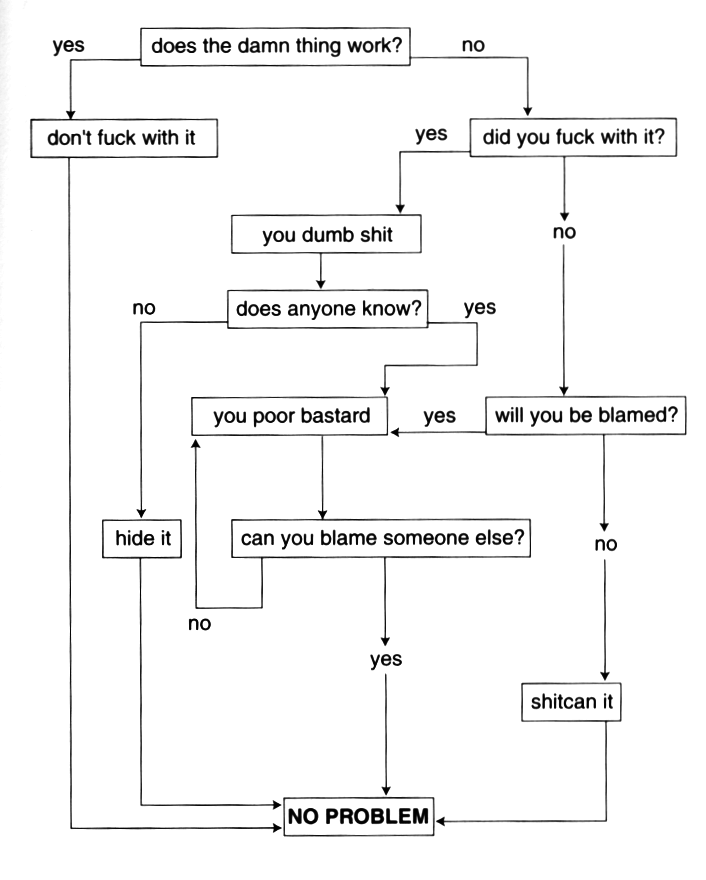
    Pole Station flowchart:
    Publication History

    • Voyager (UK), September 1997
    • Voyager (Australia & NZ), September 1997
    • Presses de la Cité, as S.O.S. Antarctica, (French translation) June 1998
    • Bantam Spectra (USA), July 1998
    • Easton Press (USA), November 1998 (COA: 11/13/97)
    • Bantam/Science Fiction Book Club, (USA) September 1998
    • Voyager, (UK) paperback, September 1998
    • Libre Expression, as S.O.S. Antarctica, (Canada, French translation) February 1999
    • Bantam (USA) paperback, July 1999
    • Prószyński i S-ka, as Antarktyka, (Polish translation) September 1999
    • Cicero, as Antarktis, (Danish translation) October 1999
    • Minotauro, as Antártida, (Spanish translation) November 1999
    • Otava, as Antarktika, (Finnish translation) 2000
    • Heyne, as Antarktika, (German translation) 2001
    • 講談社, as 南極大陸 (Japanese translation, 2 volumes) December 2003
    • Voyager (UK) paperback, October 2008
    • Bantam Spectra (USA) eBook, July 2010

    Essays and Criticism

    • Introduction, Robert Silverberg, Easton Press, 1997
    • Scripts Deep Enough: Kim Stanley Robinson’s Antarctica, Paul Voermans, The New York Review of Science Fiction #125, 1999
    • “The moment is here … and it’s important”: State, Agency, and Dystopia in Kim Stanley Robinson’s Antarctica and Ursula K. Le Guin’s The Telling, Tom Moylan, in Dark Horizons: Science Fiction and the Dystopian Imagination, Routledge, 2003
    • Unfinished business: subjectivity and supervision, Bill Green, Higher Education Research & Development, Volume 24, Issue 2, 2005
    • Dead Penguins in Immigrant Pilchard Scandal: Telling Stories About “the Environment” in Antarctica, Sherryl Vint and Mark Bould, in Kim Stanley Robinson Maps the Unimaginable, McFarland, 2009
    • Antarctica in Fiction: Imaginative Narratives of the Far South, Elizabeth Leane, Cambridge University Press, 2012

    Reviews

    • cascoly – HubPages

    Resources

    • Original artwork for UK edition, from Peter Elson
    • Antarctica at The Internet Speculative Fiction Database
    • Antarctica at Google Books
    • Antarctic Artists & Writers Program at NSF
    • “Encounters at the End of the World“, a documentary film by Werner Herzog (Robinson in “thanks”)
    • Discussion of the Antarctic Protocols
    • Some Antarctica photos
    • 2016 Washington Post article on the dynamicists vs stabilists debate
    • KSR’s second visit to Antarctica with NSF in 2017: article for the Smithsonian: “The Daring Journey Across Antarctica That Became a Nightmare“
    • Below: Antarctica illustration by Lee Moyer done for the 2014 Clarion Calendar

    1 September 1997
  • Blue Mars

    Blue Mars is the third novel of the Mars trilogy, published in 1996.

    The scope expands greatly compared to the first two volumes, both in space and time. It follows the characters we have come to know and love as Mars achieves independence and social justice and is successfully turned into an Earth-like planet that sustains life, while humanity colonizes the solar system.

    Structure

    (to develop)

    Timeline

    2127 Battle for Sheffield and the cable

    early 2128 Constitutional congress

    late 2128 Ambassadors’ trip to Earth

    2128-2134 Nadia’s presidency

    2129 Zo Boone born

    2134-2144 Nirgal on Tyrrhena Massif

    2155 Sax meets Ann on Da Vinci

    2160s Introduction of pulsed fusion space travel

    2171 Nirgal’s run with the ferals

    2180 Zo and Ann visit Jovian and Uranian systems

    2181 Grand Canal election campaign

    2190s Beginning of illegal immigration from Earth

    2206 Death of Michel

    2211 Underhill reunion

    2212 Sax and Ann sailing trip, cable crisis, third revolution

    Summary

    Peacock Mountain

    Point of view: Ann

    Ann is confronted to the most radical wing of her Red movement, the Kakaze, in the wake of the revolution. She exhorts them to stop «ecotage» on the terraforming infrastructure. She also dissuades them from bringing down the space elevator at Sheffield. She shows signs of changing her point of view toward acceptance of the fact that Mars has been colonised and has changed, although she remains committed to the preservation of its primal state.

    Areophany

    Point of view: Sax

    Sax seeks to understand Ann’s point of view. He makes a deal with her, to send the orbital mirrors away so that the terraforming is slowed down. He has an accident and learns that Hiroko is alive. As much as Ann seems to be moderating her «Red» point of view, Sax is moderating his «Green» stance that Mars should be transformed to suit human needs.

    A New Constitution

    Point of view: Art

    A great constitutional conference is called during which all kinds of issues are addressed, for instance economic reform and the environmental issue. Art acts as a talented mediator between all the actors represented on Mars: cities, settlements, political groups, metanationals.

    Green Earth

    Point of view: Nirgal

    Meanwhile, on Earth, the aftermath of the great flood has led to turmoil and chaos. A Martian delegation headed by Nirgal (accompanied by Sax, Michel and Maya) arrives, charged with negotiating the terms of Martian autonomy with the Terran authorities. They arrive in Trinidad, but soon fly to Bern, Switzerland. Nirgal discovers the Earth’s primal beauty in the Alps, then follows a lead according to which Hiroko is somewhere in England.

    Home At Last

    Point of view: Michel

    Michel returns to Provence. He is given a tour during which he recalls his previous life and grieves at the changing face of the Camargue. Although Michel takes time to convince her, Maya eventually rejoins him and they visit Arles where she seems to genuinely appreciate the surrounding landscape. Unlike Maya, Michel feels that he has returned home and is not excited at the prospect of going back to Mars.

    Ann In The Outback

    Point of view: Ann

    This short section follows Ann as she continues her pilgrimage in the Martian landscape, coming to terms with the changes that she witnesses. She meets Harry Whitebook, an «animal designer» responsible for the introduction of polar bears, among other species, on Mars. She then convinces a group of Kakaze not to attack Whitebook’s rover and killing him.

    Making Things Work

    Point of view: Nadia

    Nadia reluctantly accepts the post of President of the Martian Executive Council. She is opposed to Jackie Boone in a series of cases, as it becomes more and more obvious that the most powerful institution under the new Martian system is the Environmental Court, headed by moderate Red Irishka. The Earth delegation returns, sparking a debate about the terms of the treaty, most notably on immigration. The section closes on the selection of a site for the new capital.

    The Green And The White

    Point of view: Nirgal

    Nirgal is confronted by Jackie on the terms of the Earth-Mars treaty he negotiated, while the Chinese are flooding the Red Planet with new immigrants. Nirgal hears rumours that Hiroko might hide somewhere in the northern region, and pursues her ghost everywhere before deciding to settle in a cirque and become an «ecopoet». He exploits a large patch of land, and sees nature blossom (plants and animals like marmots) despite a viroid spreading through the potato seeds. The section closes with a massive dust storm that destroys everything.

    Natural History

    Point of view: Sax

    Sax settles in Da Vinci, where a group of scientist led by Bao, a genius female mathematician, experiment with the latest mathematical and physical theories. Sax wanders around the region, reflecting on the changes and making scientific observations. Michel comes and visit him, tells him he wants to return to Provence. They talk about Ann once again, and discuss the concept of areophany.

    Werteswandel

    Point of view: Nirgal

    New technology will shortly allow starships to link Earth with Mars in three days only. The section starts as Nirgal trains for the Round-the-Worlder, one of several Martian marathons. He adheres to the ‘religion’ of the lung-gom-pa: running as meditation or prayer. In the course of his wanderings, he hunts antelopes, meets hunter-gatherers reminiscent of African or Native American tribes, and flirts with a flying woman, the diana, who turns out to be Jackie Boone’s daughter: Zo.

    Viriditas

    Point of view: Zo

    This section is preceded by a long expository fragment capturing the wide range of changes that are affecting Humanity, a period known as the Accelerando (or diaspora): new economic theories, threats of overpopulation on both Mars and Earth, expansion pretty much everywhere in the solar system (Mercury, Saturn, Jupiter, Uranus, the asteroid belt). Zo, Jackie Boone’s rebellious daughter, embarks on a series of diplomatic missions to the new colonies on Mercury and Miranda (Uranus’ biggest moon) in order to forge an alliance against Earth’s disproportionate influence. She comes out as condescending with regard to Mercury’s rigid society, but also with the First Hundred and the previous generations. She also visits Venus and Earth, where she looks down upon the overpopulated slums of Calcutta. She also visits Crete. Her return on Mars is a relief, but as she goes flying she has an accident and dies.

    It Goes So Fast

    Point of view: Maya

    Michel is still preoccupied by Maya’s condition. Seeking to rekindle her memories, he embarks her on a trip to Burroughs (now underwater) and the Hellas Bassin where she spent the best days of her life. They attend Spencer’s funeral, and reflect on the extent to which areophany has changed them.

    Experimental Procedures

    Point of view: Sax

    Sax continues his research to counter the effects of senescence in the First Hundred. He works at a laboratory in Acheron, where Maya also lives since Michel’s death. They reflect on the change that Mars has undergone, the colour symbolism being an important motif here. Sax then leaves for Olympus Mons, where he meets Ann. The section ends with a massive storm in which they become embroiled, they turn out fine, and closer than ever.

    Phoenix Lake

    Point of view: Ann

    Ann has made peace with Sax. Now she makes peace with herself, and learns to accept Mars as it is, as she witnesses the utopian society that has been built around her. The book closes with a scene on a Martian beach, calm and serene, some of the last surviving First Hundred surrounded by children, symbolising the dawn of a new era.

    Characters

    (to develop)

    Themes

    (to develop)

    Quotes

    • “Economics was like psychology, a pseudoscience trying to hide that fact with intense theoretical hyperelaboration. And gross domestic product was one of those unfortunate measurement concepts, like inches or the British thermal unit, that ought to have been retired long before.” (p.80, Areophany)
    • The intense desire to talk with someone, sharp as any pain; this was what people meant when they talked about love. Or rather; this was what Sax would acknowledge to be love. Just the super-heightened desire to share thoughts. That alone. (p.100, Areophany)
    • [Zo:] “You’ve located intrinsic worth in the wrong place,” she said to all of them. “It’s like a rainbow. Without an observer at a twenty three degree angle to the light being reflected off a cloud of spherical droplets, there is no rainbow. The whole universe is like that. Our spirits stand at a twenty three degree angle to the universe. There is some new thing created at the contact of photon and retina, some space created between rock and mind. Without mind there is no intrinsic worth.” (pp.435-436, Viriditas).

    Reviews

    • Cheeze Blog
    • Val’s Random Comments
    • The Wertzone
    • Brendan – Balancing Frogs

    Reviews for the whole trilogy:

    • errorsandexceptions (Part 1, Part 2, Part 3)
    • cascoly – HubPages
    • Mike Johnstone – Travel by Thought
    • Newport Public Library (video)
    • Michael Durant
    • A Fettered Mind
    • Marte Tricolor (Spanish – Español)
    • Words Uttered in Haste

    Resources

    • Blue Mars at The Internet Speculative Fiction Database
    • Blue Mars at Google Books
    1 April 1996
  • Green Mars

    Green Mars is the second novel of the Mars trilogy, published in 1993.

    It follows the efforts of the Martian underground, after the failed revolution in Red Mars, to organize and plan for the day they will achieve independence from Earth — but the agendas of the numerous groups of the underground differ greatly — all the while the terraforming of Mars continues.

    Structure

    (to develop)

    Timeline

    2061 The Unrest

    2075 Jackie and Dao born

    2076 (M-year 25) Nirgal born

    2090 Nirgal and Coyote south polar circumnavigation

    2100 second elevator lands at Sheffield

    2101 soletta into position

    2102 M-38 conference on terraforming, Burroughs

    2104 Dorsa Brevia conference

    2106 aerial lens incident

    2108 Deimos incident

    2115 Nirgal Vallis covered

    2120 West Aquifer discovered

    2123 M-year 50 celebration

    2124 Sabishii curfew

    2127 Antarctic incident

    Summary

    Areoformation
    Point of view: Nirgal

    The Ambassador
    Point of view: Art

    The Long Runout
    Point of view: Ann

    The Scientist As Hero
    Point of view: Sax

    Homeless
    Point of view: Michel

    Tariqat
    Point of view: Nirgal

    What Is To Be Done?
    Point of view: Nadia

    Social Engineering
    Point of view: Sax

    The Spur Of The Moment
    Point of view: Maya

    Phase Change
    Point of view: Nadia

    Characters

    (to develop)

    Themes

    (to develop)

    Quotes

    • [Michel:] “In archetypal terminologies we might call green and white the Mystic and the Scientist. Both extremely powerful figures, as you see. But what we need, if you ask me, is a combination of the two, which we call the Alchemist.” (p.15, Areophany)
    • [William Fort:] “In a capitalist world, the word capital has taken on more and more uses. Human capital, for instance, which is what labor accumulates through education and work experience. Human capital differs from the classic kind in that you can’t inherit it, and it can only be rented, not bought or sold.” (p.77, The Ambassador)
    • He [William Fort] concluded that strictly speaking, there was no such thing as altruism. It was only selfishness taking the long view, acknowledging the real costs of behaviour and making sure to pay them in order not to run up any long-term debts. (p.84, The Ambassador)
    • [Sax:] “Our disagreement is another facet of what people call the fact-value problem. Science concerns itself with facts, and with theories that turn facts into examples. Values are another kind of system, a human construct. (p.144, The Scientist As Hero)
    • Human reality could only be explained in terms of values. And values were very resistant to scientific analysis. (p.220, The Scientist As Hero)
    • What was personal gain but the freedom to do what you wanted to do? And what was power but the freedom to do what you wanted to do? And once you had that freedom, any more wealth or power actually began to restrict one’s options, and reduce one’s freedom. One became a servant of one’s wealth or power, constrained to spend all one’s time protecting it. (p.235, The Scientist As Hero)
    • [Desmond:] “Some people like to tell others what to do. They like that more than freedom. Hierarchy, you know. And their place in the hierarchy. As long as it’s high enough. Everyone bound into their places. It’s safer than freedom. And a lot of people are cowards.” (p.235, The Scientist As Hero)
    • [Vijjika:] “Rituals should have some unpleasantness, or you don’t appreciate them properly.” (p.291, Tariqat)
    • [Nirgal:] “You can’t choose your childhood, it’s just what happens to you. But after that you choose. I chose Sabishii. And that’s really what made me.” “Maybe,” Art said, rubbing his jaw. “But childhood isn’t just those years. It’s also the opinions you form about them afterward. That’s why our childhoods are so long.” (p.300, Tariqat)
    • [Desmond:] “But all the good plans are crazy, aren’t they.” (p.312, Tariqat)
    • [Desmond:] “You can’t get any movement larger than five people without including at least one fucking idiot.” (p.315, Tariqat)
    • [Zeyk Tuqan:] “What we need is equality without conformity.” (p.338, Tariqat)
    • [Desmond:] “That’s libertarians for you —- anarchists who want police protection from their slaves.” (p.370, What Is To Be Done?)
    • [Michel:] “The truth is not a very good lover.” (p.402, Social Engineering)
    • It was precisely in the moments of greatest need when people could do the least for each other. (p.520, The Spur Of The Moment)
    • [Michel:] “You only put your full effort into a thing when there is no going back.” (p.622, Phase Change)

    Reviews

    • Val’s Random Comments
    • Cheeze Blog
    • adamosf – Visions of Paradise
    • Adam Whitehead – The Wertzone
    • Ethan – Examined Worlds

    Resources

    • Green Mars at The Internet Speculative Fiction Database
    • Green Mars at Google Books
    1 October 1993
  • Red Mars

    Red Mars is the first novel of the Mars trilogy, published to great acclaim in 1992.

    It tells of the beginnings of the colonization of Mars, the beginnings of the efforts to terraform it and the tensions resulting from corporate forces from Earth exerting their influence on the developing Martian culture.

    Structure

    (to develop)

    Summary

    Festival Night

    Point of view: Frank

    The Voyage Out

    Point of view: Maya

    The Crucible

    Point of view: Nadia

    Homesick

    Point of view: Michel

    Falling Into History

    Point of view: John

    Guns Under The Table

    Point of view: Frank

    Senzeni Na

    Point of view: Nadia

    Shikata Ga Nai

    Point of view: Ann

    Characters

    (to develop)

    Themes

    (to develop)

    Quotes

    • [Frank’s thoughts] But lies were what people wanted; that was politics. (p.7, Festival Night)
    • [Arkady:] “History is not evolution! It is a false analogy! Evolution is a matter of environment and chance, acting over millions of years. But history is a matter of environment and choice, acting within lifetimes, and sometimes within years, or months, or days! History is Lamarckian!” (p.88, The Voyage Out)
    • [Arkady:] “Beauty is power and elegance, right action, form fitting function, intelligence, and reasonability. And very often,” he grinned and pushed at her belly, “expressed in curves.” (p.187, The Crucible)
    • [John’s thoughts] History was like some vast thing that was always over the tight horizon, invisible except in its effects. It was what happened when you weren’t looking — an unknowable infinity of events, which although out of control, controlled everything. (p.283, Falling Into History)
    • [Arkady:] “When we first arrived, and for twenty years after that, Mars was like Antarctica but even purer. We were outside the world, we didn’t even own things — some clothes, a lectern, and that was it! Now you know what I think, John. This arrangement resembles the prehistoric way to live, and it therefore feels right to us, because our brains recognize it from 3 millions of years practicing it. In essence our brains grew to their current configuration in response to the realities of that life. So as a result people grow powerfully attached to that kind of life, when they get the chance to live it. It allows you to concentrate your attention on the real work, which means everything that is done to stay alive, to make things, or satisfy one’s curiosity, or play. That is utopia.” (p.342, Falling Into History)

    Reviews

    • Gerald Jonas – New York Times
    • Val’s Random Comments
    • Anna Clark
    • Ted Gioia – Conceptual Fiction
    • Cheeze Blog
    • adamosf – Visions of Paradise
    • Adam Whitehead – The Wertzone
    • Tethyan Books
    • Steam Trains and Ghosts
    • Medieval Bookworm
    • Godards Letterboxes
    • Morgan Crooks – Ancient Logic (article 1, article 2, article 3)
    • Lynette M. Burrows
    • Jay Dee Archer
    • Beyond Dust Jackets
    • Thoughtful Optimism and Science Fiction – Centre for Science and the Imagination – Arizona State University (article 1, article 2, article 3)
    • Carla – Anakina.net (Italian)

    (for trilogy reviews, see Blue Mars)

    Resources

    • Red Mars at The Internet Speculative Fiction Database
    • Red Mars at Google Books
    • The Science of Red Mars at Science in my Fiction
    1 September 1992
  • Pacific Edge

    Pacific Edge is part of the Orange County trilogy. It was published in 1990.

    In a near future California after a revolution in legislature, an ecological utopia has been reached. But greed and grief still exist.It follows the story of Kevin Claiborne, a member of the Green party in the town of El Modena, California, who fights against the conversion of a parcel of wild land into a commercial-industrial complex. The importance of personal relations in local politics and the intricacies of water law are prominent. Many aspects of the life of El Modena can be found in Robinson’s interests (town council meetings, softball) and in his current town of residence, Davis, California.

    In many ways, Pacific Edge presents Robinson’s most accomplished utopia and served as a basis for ideas explored in the Mars trilogy.

    Structure

    The novel is composed of 11 chapters, all written in the third person. The majority is written from the point of view of the main character, Kevin; parts are from the point of view of his grandfather Tom (ch. 3, 10). Letters from Oscar, of a different style and content, close some chapters (ch. 3, 5, 9). Starting with ch. 2, each chapter begins with a short passage in the first person, close to a personal diary or a stream of thoughts, from an unnamed narrator that we come to identify as a younger Tom, before he started actively fighting for legislative change. Special mention must be made to ch. 6, which takes place in a single evening, with long descriptions of a communal experience and of the wilderness. The novel takes place in 2065 (approximately from winter-spring to October).

    Summary

    After a difficult legal struggle in the 2020s-2040s, the United States have reached a way of life comparable to an ecotopia. Company sizes are limited; land, water and energy are nationalized; and green ideas are respected and taken seriously. People do town work, like tearing out the asphalt roads from the wasteful past; they live in common houses; they take shifts in taking care of the neighborhood kids; citizens can be active in the town council; and softball is a very popular game.

    In the small town of El Modena, California, in 2065, Kevin Claiborne is a 32 year old man that works in building renovation and construction with Hank and Gabriela – work that makes buildings energy-efficient, green and beautiful, thus more livable. He learns that Ramona Sanchez just broke up with Alfredo Blair after a long relationship; Kevin knows he’s in love with Ramona. He just got a place in the town council as a member of the Green party, along with Doris Nakayama (with whom he has had a relationship). The party opposing him is the New Federalists, of which Alfredo became the new town mayor; Oscar Baldarramma is the new town attorney. In his first town council meeting, Kevin notices an item concerning the purchase of large quantities of water from Los Angeles’ Metropolitan Water District with a lower rate, thus making savings for the town. Kevin disapproves this proposal from Alfredo, sensing there’s more to it.

    The Green policy is that little water means growth control: offering more than what is needed is bad. The New Federalists say that job generation and business development can be beneficial to all: pushing the negative growth of the last decades too far can become dangerous. Acquainting with the peculiar huge and intellectual Oscar, Kevin and Doris learn that Heartech, Alfredo’s firm, might have plans for a new complex on Rattlesnake Hill, the only hill of El Modena that is still kept in the wilderness.

    Doris’ friend Nadezhda Katayev is an aged Russian-Indian teacher that’s visiting El Modena, her ship being docked in Newport. Nadezhda actually had met Tom Barnard, Kevin’s grandfather, when they were both younger, when they were changing international law and the world in the famous Singapore conferences in the 2020s-2030s. Tom now lives as a recluse, remembering his dead wife and his achievements as a lawyer far away. But the energetic Nadezhda and the pleas of Kevin needing help with the Rattlesnake Hill developments draws him out to the open again. As Kevin and Ramona draw closer, often going to fly with a glider, things between Kevin and Alfredo get tense. Then Doris discovers a rezoning proposal for Rattlesnake Hill from open space to commercial in the town planner’s files.

    Oscar takes Kevin and Doris to Bishop, where they meet Sally Tallhawk, specialist in the murky law of water; they hike and they camp as Sally explains El Modena has more than enough water and gives them hints of actions they could take. In Bishop, Kevin and Doris are surprised to discover Oscar and Sally are professional wrestlers and they watch a match between them. After getting drunk and a bar fight, Kevin and Doris end up together for the night.

    Kevin, Hank and Gabriela start doing heavy renovation work on Oscar’s house. Kevin, supported by the Green party, tries to bring the non-partisan town council members to their side. Doris quits her job as she discovers her firm is joining Heartech in the Rattlesnake Hill complex project – but not before making a copy of all the firm’s documents!

    The night of the first manned landing on Mars, all the friends spend a surreal night in hot water ponds among the woods, with animal masks, shamanic incantations and tequila. Tom and Nadezhda are happy together; Kevin and Ramona finally confirm their relationship; Doris is jealous of Kevin and Oscar, believing he has a chance with Doris, follows her and ends up spending a night alone lost in the woods.

    Tom’s investigation reveals that Heartech might have an illegal source of capital from Hong Kong. Oscar finds out that municipalities in fact cannot resell water, this is a business allowed only by the state; so Alfredo’s plans to have the water pumped back into the underground basin, thus saving money for El Modena, are impossible. The town council ends up voting down the buying of the water! Kevin and Ramona have a great time, until Alfredo comes back to talk with her. Ramona, confused and uncertain what to do, takes some time off El Modena. Later, Kevin is numbed to learn that Alfredo went to find her and this visit won Alfredo his relationship back.

    Tom further investigates as both parties go on a public campaign for and against the Rattlesnake Hill complex development. Oscar takes Doris to a drag cars race (cars using alcohol). As Tom discovers connections between Heartech and the American Association for Medical Technology, a conglomerate rebuilding the medical industry power base, a brushfire spreads and burns Tom’s house; Kevin and Hank find inconclusive evidence of arson. Tom explains that from the beginning Alfredo and Heartech got involved with the black operations of AAMT with illegal loans to get Heartech going; eventually dealings became a mix of saving lives and making money; Alfredo couldn’t bargain against AAMT – but Tom has no tangible proof. Tom ends up leaving with Nadezhda on her ship.

    Kevin and Doris keep campaigning. The Green party stops approving the fight: if the Green let go of Rattlesnake Hill, Alfredo shall make concessions elsewhere. Kevin and Alfredo discuss Ramona and Rattlesnake Hill and still can’t come to a compromise.

    On a tropical storm, Tom drowns; everyone is dismayed. Work on Oscar’s house is finished. A public vote in El Modena approves of the Rattlesnake Hill development. The Hill is rezoned from open space to commercial. Then Kevin has an idea so symbolic that it changes everything: he holds a memorial service and puts a commemorative plaque for Tom on a sycamore tree on Rattlesnake Hill.

    Later that year, Ramona and Alfredo get married. Kevin realizes he wanted Doris, but he now sees that she is with Oscar. Kevin bikes away madly, feeling the unhappiest man alive. Then he laughed at this very thought.

    Characters

    Kevin Claiborne
    At 32, he was recently appointed as a town council member for the Green party in El Modena, California. He is shy and works in building renovation and construction.

    Thomas Barnard
    He is Kevin’s grandfather. He did law and politics and was very active in the legal reforms of the 2020s and 2030s. Now at 81, he lives like a recluse until Nadezhda draws him out once again.

    Oscar Baldarramma
    From Chicago and Bishop, he is the new town attorney. He is around 40 and has an imposing physical appearance. He is cultured and has a critical view of the simple rural life in El Modena.

    Ramona Sanchez
    Now a teacher of population biology, she is strong and very beautiful. She had a longtime relationship with Alfredo, then a short relationship with Kevin before ending up with Alfredo.

    Alfredo Blair
    After 6 years in the town council for the New Federalists, he was recently appointed as the new mayor. He is handsome and has a moustache. He created and runs the medical technology firm Heartech.

    Nadezhda Katayev
    Originally from Russia but a longtime dweller of India, she was part of the legal struggle of the 2030s, headed the Soviet State Planning Commission and worked in a superconductor institute. Now she teaches history in a school freighter.

    Doris Nakayama
    Housemate and friend with Kevin, she has been in the town council for the Green party for 2 terms. She is passionate and works as a materials scientist.

    Gabriela
    At 22, she is tough, wild and has a mouth. She works with Kevin in construction.

    Hank
    At 42, he tries to go by the rule “moderation in all things, including moderation”. He works with Kevin in construction and he’s a Minister in many churches.

    Themes

    (to develop)

    Quotes

    Note: Page numbers refer to the 1995 Orb paperback.

    • “I detest softball. […] The world plays hardball.” (Oscar, p.43)
    • “Legislation is a revolutionary power” (Thomas, p.56)
    • “Utopia is the process of making a better world, the name for one path history can take, a dynamic, tumultuous, agonizing process, with no end. Struggle forever.” (p.95)
    • “In California, water flows uphill toward money.” (Sally Tallhawk, p.101)
    • “I try to live by the old Greek rule, you know. Moderation in all things. […] If you say moderation in all things, then among all things you gotta include moderation itself, see what I mean? So you gotta go crazy once in a while, if you ask me.” (Hank, p.184)
    • Last lines of the novel: “it seemed to him [Kevin] without a doubt that he was the unhappiest person in the whole world. And at that thought (thinking about it) he began to laugh.” (p.326)

    Reviews

    • Jo Walton – Tor.com
    • Val’s Random Comments
    • Nic – Eve’s Alexandria
    • Richard – Book Addiction
    • Fred’s Place

    Reviews of the entire trilogy/triptych:

    • Fred’s Place: 1, 2

    Resources

    • Excerpt at macmillan.com
    • Pacific Edge at The Internet Speculative Fiction Database
    • Pacific Edge at Google Books
    • Rattlesnake Hill, presently El Modena Open Space on Google Maps
    1 September 1990
  • The Gold Coast

    The Gold Coast is the second novel of the Three Californias triptych (or Orange County trilogy). It was published in 1988 and by his own account is the most autobiographical of all of Robinson’s novels.

    In a future California where technology has run wild and everywhere is an urban sparwl, a young English teacher tries to find love, meaning and a way to make things right.

    It follows the story of young Jim McPherson in the not so distant future, where Orange County is an endless urban sprawl full of highways, malls and condo towers. The novel depicts different modes of resistance to the capitalist system and most prominently to the industrial-military complex; this is best illustrated with the confrontation between Jim, who takes active part in sabotages against aerospace companies, and his father, who works in one of these companies.

    Structure

    The novel is composed of 83 short chapters, all written in the third person but each taking the point of view of one of the characters (a technique later used extensively in the Mars trilogy). These “a day in the life” chapters give the reader a sense of the everyday life of the characters. Poetry, either from the thoughts of one of the characters or from the lyrics of the music being listened to, often illustrates the descriptive prose. Intermittently, certain chapters detail the history of Orange County, from its prehistory to the present time of the novel; they are detached from the main narrative but their source is explained at the ending.

    Summary

    Jim McPherson is a young man of 27 who lives in an Orange County full with malls, condos and freeways, a sprawl of urbanism, in 2027 AD. He works only in part-time jobs (as a writing teacher and in a real estate agency), a source of arguments with his parents, particularly between father and son. With his friends Sandy, Abe and Tashi he tracks along the well-known freeways, takes part in parties and loses himself in a world of design drugs and video-obsessed sex. Jim is a poet and writer with little self-insurance; he loves history and satisfies his quench of OC history by visiting his old uncle Tom in a retirement home. He and his friends try to find a way to be as independent of the capitalist system as possible. Sandy designs and sells drugs. Abe drives a rescue truck for car accidents. Tashi lives in a tent and sells repaired items to the black market. Without having properly left his previous ally, Jim starts a relationship with Virginia for the sake of her looks; but the couple argue often. Jim, dissatisfied with his preposterous world, accepts to help his friend Arthur in a kind of underground resistance. First, it’s sticking anti-war posters; fast enough, it involves using small stolen missiles in sabotages against aerospace defence contractors, destroying their hardware and software (with no human losses). Jim enjoys doing something active and meaningful immensely.

    Dennis McPherson, Jim’s father, is an engineer in Laguna Space Research (LSR), an aerospace defence contractor; his superior Stewart Lemon is a manager who is all profit and doesn’t understand anything technical. Lucy, Jim’s mother, is a social worker with the catholic church. LSR wins a superblack (secret) program “Stormbee” from the Pentagon to develop a reconnaissance system for drones. Dennis is so impressed by the speed and efficiency of the first results that he thinks that if both parties in the ongoing Cold War get hold of such a technology, an all-out war would effectively be impossible! But eventually the superblack program becomes a proposal in an open public bid; much at the bewilderment of Dennis and the wrath of Lemon, LSR loses the contract to another company. At the instigation of Hereford, LSR’s mother company’s vice-president, Dennis starts legal procedures to overturn the military’s decision at Washington.

    Sandy is offered by an associate to operate the transfer of a new illegal aphrodisiac by boat off the OC coast. Sandy at first refuses but economic difficulties make him accept. While carrying the merchandise, a search by the coastguard makes Sandy and Tash to hide it on the coast, at the base of LSR HQ. In view of the recent sabotages, LSR announces heightened security and Sandy is unable to retrieve the merchandise. Sandy, Jim and friends take a trip to Europe while things calm down. They visit Russia (which looks surprisingly like OC), Cairo (where Jim is shocked by the level of human suffering and poverty) and Crete (where the sheer history of the place is overwhelming in contrast to OC).

    Dennis is also assigned to a project involving laser defence against soviet ballistic missiles (“Ball Lightening”). The project proves impossible to render, with LSR having previously faked test results to take the contract; Houston, one of Dennis’s engineers, succumbs to alcoholism complaining about a system that puts one company against the other in a meaningless game of competition, destroying many people’s lives along the way. The Stormbee appeal is denied but Dennis keeps trying at the advice of his lawyer Goldman. Goldman gets the unofficial story that the entire Stormbee program was but a small pawn in a personal power struggle between two Air Force Generals

    Jim starts a relationship with Hana, a teacher in arts who corresponds more to Jim’s intellectual aspirations. Involuntarily, Jim spreads sorrow once again when Hana witnesses him with Virginia. Things seem to be going worse for his surroundings: Abe and Lucy are devastated by the death of a young friend and Tashi ends a long relationship. Sandy links Jim to the underground resistance and resistance to an acquaintance’s personal vendetta against the airborne military. Hereford suggests to Lemon that they can manipulate the resistance to attack LSR, thus getting rid of the annoying Ball Lightening program. Jim and Arthur get assigned the job.

    The second Stormbee appeal is denied; all hope dies in Dennis. Lucy tries to reunite father and son in a common dinner. Jim and Dennis confront their ideas and means of ultimate struggle for a better world, one through immediate action, the other through technological advancement. Jim leaves, discomforted and unsure of the legitimacy of any kind of action. He sabotages the resistance effort by taking the sabotage material and attracting the attention of the police to Arthur; he then goes on a spree of violence attacking aerospace industries’ infrastructures, real estate offices, malls, and trashing of his own apartment. Sandy, who was told to retrieve the merchandise simultaneously, is arrested by coastguards; he is released later. Jim is stopped by Tashi, who takes him on a trip to the surviving wildlife preserve; a tiring but reinvigorating experience for Jim. The aftermath at LSR has Dennis and his team being fired. Jim abandons extreme actions and seriously decides to start healing those friends whose feelings he has hurt, mainly Hana, and to turn to writing as his weapon of choice in view of a better world.

    Characters

    James (“Jim”) McPherson

    Though he’s 27, Jim admits he doesn’t know anything. He doesn’t have a very high opinion of himself and lacks self-insurance dramatically – he thinks of himself as a dull, humorless person. He loves his friends all the more and prefers talking about them than about himself. He describes himself as a culturevulture, in his choices for reading, music, art and his will to know the past in order to build the future. He is a history buff and loves maps; more particularly, he loves to study the history of his own environment and he knows every little detail about the history of Orange County. On his spare time he tries to write, mainly poems, but he is never satisfied enough with them for him to show them to others. He lives in a small apartment among the pylons of an elevated highway. In his relationships and alliances he is rather awkward and progressively realizes he inflicts much more pain than he ever intends to. He works in the First American Title Insurance and Real Estate Company and in writing classes at night. These small, not entirely satisfying jobs get him a small living; his laziness to pursue more ambitious professions often get him in odds with his parents. He has some vague ideas of the reality of social injustice – later reinforced by a trip to Europe – and of the unfairness of the American defence policy – which gets him into taking action through sabotage. Ultimately, the sabotage actions and his confrontation with his father’s worldview bring him close to a breakdown. After a trip discovering a non-urban, natural environment, he decides the best way for him to take part in a resistance against the established system is through his engaged writing – for example a critical history of Orange County.

    Dennis McPherson

    Dennis has been working at LSR for 27 years as an engineer in high precision guidance systems. Far from being pro-war, he justifies his work in the defence industry as developing technology that might ultimately make the whole process of conventional war-faring moot. Thus he trusts the system and has a strong belief that though it makes one’s life difficult, it is ultimately fair. Adamant on technical precision but uncomfortable with management and human resources, he often comes to a head with his more profit-inclined superiors. At home he fancies doing maintenance and repair on his car, or the one of his son Jim. He loves his ally Lucy and when the work is too stressful, his thoughts turn to her. He sometimes considers moving to other things by settling in the land he owns in Eureka. Through a legal investigation into the decision-making progress of his country and after the restructuring of LSR, he will end up getting fired, with the bitter realization that his life’s work is nothing but a pawn in a machinery far outside of his reach.

    Stewart Lemon

    Lemon, LSR executive and Dennis’s boss, is comfortable in his position of power and takes advantage of his acute sense of human psychology and skill assessment to manage his employees so that his company may benefit the most. He often curses the engineers who look only at the technical aspects and do not adopt a wider, financial view. Highly stressed by his job, he lives under the constant impression that his career is on the brink of destruction. When orders that will have heavy consequences on his company come from higher in LSR’s hierarchy, Lemon will comply, comforted he is not the one to make such ruthless decisions.

    Sandy Chapman

    One of Jim’s friends. Very active and lively and with a big laugh, Sandy is the one to look for having fun. With his ally Angela he lives in his rich apartment which, with its many rooms and screens and powerful sound system, is often home to many friend gatherings or night-long parties. Sandy is a drug designer – an occupation mixing biology, chemistry and artistic intuition. He develops the drugs in his rented warehouse-turned-laboratory, then he has awfully busy days meeting suppliers and distributors. He hopes the money he gains will be able to pay for his father’s liver treatment. These facts Sandy tries to hide behind his intense sociability. Though his is a high-risk illegal job, Sandy has his own strict rules of conduct he won’t stray from. However, financial problems will finally push him into a deal that turns wrong.

    Tashi (“Tash”) Nakamura

    One of Jim’s friends. Tashi is secretive and doesn’t talk much, but he’s highly estimated by his friends, always compassionate and ready to help others. He lives for free in a large tent, installed on the top of a condo tower – an illegal agreement with the tower manager. Decided to live as independently of the machine and of money as possible, he makes his living by repairing salvaged equipment and reselling it to the black market. He loves surfing, especially at night when there’s less people. He also loves trekking away from Orange County’s urban nightmare, illegally accessing national parks.

    Abraham (“Abe”) Bernard

    One of Jim’s friends. Abe works in Orange County’s Freeway Rescue squads as a car driver. He tracks or drives to an accident scene and helps get victims out of their damaged vehicles, using even chainsaws to separate flesh from metal. With all the horrors he sees, this mentally exhausting work has him going to the edge – especially when he discovers Lillian, a girl he knew, dead in an accident. He lives in a wealthy neighborhood of Orange County with his parents, with whom he has a very good, almost fraternal, relation.

    Lucy McPherson

    Lucy shares her life between home and church. She is a social worker with her church, a work which includes baby-sitting and general help of poorer families in Orange County or Bible readings. She helps set up this and other humanistic activities with people like Lillian Keilbacher. She often clashes with Reverend Strong, whose sectarian views of faith and church she doesn’t share.

    Arthur Bastanchury

    One of Jim’s friends. Arthur is a pacifist and idealist who became part of an underground network of resistance against the war-encouraging military-industrial system. He sticks anti-war posters, but more importantly he’s involved in using stolen military equipment to strike against military equipment manufacturers – taking extra care not to have anyone killed or wounded in the process. All persons involved, Arthur included, are very secretive and won’t reveal all the workings of the organization. Arthur is the one that brings Jim in the fold, and Arthur will be very surprised when Jim betrays him and the means Arthur thought was just.

    Hana Steentoft

    Jim met Hana in her night art classes, they became friends and eventually lovers. Hana is an abstract painter and her house is filled with her creations. She loves to talk about art, music and many other cultural topics; in that way, and also in her physical appearance and clothing, she is different from the average youth of Orange County. However, she doesn’t bear with all of Jim’s eccentricities and comes to cut off all contact with him. Jim is determined to make up for it and share with her his writing, that he previously hid from her.

    Minor characters

    Uncle Tom is Jim’s old uncle (probably Lucy’s father), over a hundred years old, hospitalized and scarcely visited by relatives. In his youth, Tom tried to fight the social injustice by doing his best as a public defender, but he lost the strength in his cause through meaningless repetition and time. Now he can but only tell Jim stories of Orange County’s past, confined in his room that feels too much like a prison cell.

    ‘Xavier (“X”) is Abe’s co-worker in the rescue squads. He has had a complementary experience as an army medic. Once in an accident he mistook a victim for his own son; this traumatizing experience leads Abe to fear for X’s sanity in their ungraceful job.

    Virginia Novello became for a time Jim’s ally; for Jim it was mainly because of her attractive looks and the prestige his alliance with her would bring. Very quickly their relationship becomes just arguing and sex, always parting swearing they’ll never make the mistake to speak to one another again.

    Dan Houston is an engineer working under Dennis McPherson. He knows very well the problems tied to the Ball Lighting program and grows desperate as the program heads to a dead-end. His personal life doing no better than his professional life, his drinking problem develops. He tragically deplores the fierce competition among defence contractors encouraged by the Air Force that result in many lives’ worth of work becoming useless (“the American way”).

    Donald Hereford is LSR’s president and a fast rising power in LSR’s mother company Argo AG/Blessman Enterprises. His variety of skills and his ruthlessness won him the admiration of Stewart Lemon. He coolly makes big decisions with an understanding of the worlds of the industry, the Pentagon and the underground.

    Sheila Meyer was Jim’s once ally. Jim suddenly cut all contact with her and left her with no explanation. This came very hard on Sheila, much more so than Jim had suspected, a fact that ultimately led him to take fresh resolutions for his life.

    Angela Mendez is one of Jim’s friends and also Sandy’s long-time ally and often helps him in his business.

    Humphrey Riggs is one of Jim’s friends and also colleague in the First American Title Insurance and Real Estate Company. He is notorious among his friends for his thrifty attitude; he is known to go to great lengths to make savings or bargain a good deal.

    Lillian Keilbacher is an innocent girl of 18 and could be seen in Sandy’s parties. She is much appreciated by Lucy McPherson with whom she works in church. Her death in a car accident was a heavy blow for everyone.

    Bob Tompkins is one of Sandy’s most important drug dealers; the two of them will have to work together to bring in a shipment of a new aphrodisiac. He lives in a rich seaside villa South of Orange County.

    Raymond is Bob Tompkins’ dealing partner. But ever since some friends of his were killed by drone planes in Venezuela, Raymond has invested his resources on a personal vendetta against the US Air Force, who provided the planes. He is behind the sabotages of the military equipment manufacturers and is responsible for recruiting people for doing the job – Arthur being one among them.

    Louis Goldman is LSR’s lawyer on the Stormbee proposal rejection case. He is Dennis McPherson’s contact in Washington DC and though Dennis hates lawyers, he comes to appreciate Goldman. With much work and thanks to many contacts and unofficial channels, he is able to unravel much of the political intrigue that goes much higher than LSR. But despite his efforts to push the case with repetitive appeals, LSR puts an end to the case.

    Glossary: the world of The Gold Coast

    • OC: Orange County, a part of the continuous urban maze of the West American coast. Orange trees no longer exist.
    • Ally: a term describing a close relationship that can mean many things, like boyfriend/girlfriend or husband/wife. People make allies and break alliances. The term is probably used as a result of the decline of the concept of marriage as a social means of declaring a long-term relationship.
    • Condomundo: term that describes the residential areas of the limitless urbanized world, a concatenation of the words condo and mundo (“world” in Spanish). Residential towers offer hundreds of apartments (aps) and form apartment complexes (applex).
    • Mallsprawl: term that describes the huge areas where individual malls have merged into one. Malls are enclosed environments that can offer accommodation, food and leisure, so much that one can live all his life inside a mall without really needing to get out.
    • Track: Cars no longer have combustion engines running on gas or oil, they are electric cars that follow the electromagnetic tracks set in the streets or freeways. The driver taps in his destination and the car’s central computer (the carbrain) does the rest. Cars rely heavily on software and electronics. Also used as a verb, to track, instead of driving.
    • OC Freeway Rescue Squads: emergency teams that drive cars that can follow the track system but can run on internal combustion engines when necessary. The squads rush to the scene of the accident (sota) to assist the California Highway Patrol (CHP, or Chippies) in extracting people from the cars involved in the accident and providing first aid. Some victims can be already dead at the time (dots – dead on the spot), otherwise they’re carried to the ER. An accident can be attributed to a non-human error (sits – something in the silicon).
    • LSR: Laguna Space Research, an aerospace company based in New York; division of Argo AG/Blessman Enterprises (or A/BE). It has offices in Orange County and an open air test facility in White Sands. Among their projects are:
    • Project Ball Lightning: a Star Wars-like strategic defense program that would use ground lasers bounced by mirrors in orbit to destroy Soviet ICBMs (inter-continental ballistic missiles) in their boost phase.
    • Project Stormbee: a precision guidance system that would guide an unmanned drone (RLV – Remotely Piloted Vehicle) to an extremely fast strike against ground targets.
    • Designer drugs: drugs are most often chemical molecules designed in laboratories. They come in liquid form and they are taken directly from dropping the liquid on the eyeball, using an eyedropper. The verb for using an eyedropper is to lid.
    • Molecular ceramics: a molecular glue that is activated by passing a rod over it. It is used to stick posters on walls.
    • Sleepwalkers: young gangs who surf at night time. “Nazi” is used as a compliment (for example, “that’s real nazi”, or “surfnazi”).
    • Warsaw Pact: established in 1955, still in force. To this day, the line of Soviet forces in eastern Europe are ready to invade the Free World.

    Themes

    Different modes of resistance (Sandy, Tashi, Dennis, Arthur) Resistance against industrial-military complex War as economy stimulant Extreme urbanization Globalization (trip in Russia) Fascination with the image (video screens), looks (Virginia vs Hana) Culturevulture vs Postmodernism Recreational drugs Tom: old people put away to convalescent homes to be forgotten in a society that lives only for the young consumer Consumerism, pop music culture (to be expanded)

    Reviews

    • Val’s Random Comments
    • Richard – Book Addiction
    • Fred’s Place
    • Brendan – Balancing Frogs

    Resources

    • Excerpt at Macmillan.com
    • The Gold Coast at The Internet Speculative Fiction Database
    • The Gold Coast at Google Books
    1 February 1988
  • The Memory Of Whiteness

    The Memory Of Whiteness is a science fiction novel published in 1985.

    The novel tells of the adventures of a man playing a strange musical instrument traveling throughout the solar system.

    Summary

    (To do)

    Characters

    Johannes Wright
    Ninth master of Holywelkin’s Orchestra, blinded at a young age as the result of nepanathol withdrawal; during the withdrawal he hallucinated a conversation with Holywelkin. He embarks on his first grand tour of the orchestra as Grand Master, playing original compositions based upon Holywelkin’s equations.

    Dent Ios
    A native to the Uranian system, Dent is a music critic who writes for the journal Thistledown. He is selected by the journal’s staff to accompany the Grand Tour, where he meets and is befriended by Johannes Wright.

    Richard Yablonski
    Eighth Master of Holywelkin’s Orchestra, who selected Wright as his successor against the wishes of Ekern.

    Arthur Holywelkin
    Pioneering physicist, born on Deimos in the 30th century, who in his final years created the orchestra that bears his name. His Ten Forms of Change ushered in a new paradigm in physics, unifying relativity and quantum mechanics with a ten-dimensional universe and sub-qurak particles known as glints.

    Ernst Ekern
    Chairman of the Board of Directors of the Holywelkin Orchestra; also a high-ranking figure in a metadrama society that is secretly manipulating events during that Grand Tour whose ambition is to replace Wright as master of the Orchestra.

    Margaret Nevis
    Crew manager for the Orchestra’s grand tour; a Russian woman from Iapetus.

    Jan Atargatis
    Head grey of the Jupiter system and member of Ekern’s secretive metadrama society.

    Anton Vaccero
    Lighting chief for the Orchestra’s grand tour; also a member of Ekern’s secretive metadrama society. A childhood friend and classmate of Wright’s who lived in the shadow of Wright’s budding talent at the Holywelkin Institute.

    Karna Godavari
    Security chief for the Orchestra’s grand tour.

    Bloomsman
    Known primarily as Red Whiskers through Dent Ios’ description of him; one of Ekern’s apprentices who frequently tangles with the security team.

    Yananda
    A member of Karna’s security team.

    Marie-Jeanne
    A member of Karna’s security team.

    Delia Rosario
    Sound chief for the Orchestra’s grand tour.

    De Bruik
    A composer and contemporary of Holywelkin; by the time of the novel her compositions have become part of the canon and are considered an artistic response to the paradigm-shift of Holywelkian physics.

    Publication History

    • Tor Books, September 1985
    • MacDonald, February 1986
    • Tor Books, July 1986
    • Orbit Futura, January 1987
    • J’ai Lu, as La Mémoire De La Lumière (French Translation), January 1987
    • Bastei-Lübbe, as Sphären-Klänge (German Translation), 1987
    • 東京創元社, as 永遠なる天空の調 (Japanese Translation), April 1994
    • Tor Orb, January 1996
    • Voyager, March 1999
    • Le Livre de Poche, as La Mémoire De La Lumière (French Translation), November 2005

    Text Variants

    The short story In Pierson’s Orchestra, first published by Damon Knight in Orbit 18 (1976), was altered and became the first chapter of The Memory of Whiteness. It was the first of Robinson’s work to be sold.

    The poem A Poem for Johannes, first published in The Anthology of Speculative Poetry #4 (1980) was altered and became the metalogue that Ekern speaks at the end of chapter 4.

    Interview Comments

    From Interview with Kim Stanley Robinson, by Thomas E. Jackson, The New York Review of Science Fiction’, May 1988, No. 117:

    Shelley is one of my favorite poets and when I was intensively involved with the Romantic poets, I read his work and the great biography of him, The Pursuit by Richard Holmes, and it seemed to me he was a kind of proto-sf writer, very cosmic, but at the same time a very political writer, a revolutionary utopian. So he was a kind of exemplar for me when I began to write, and The Memory of Whiteness is to a certain extent, a science fiction retelling of his long poem “Alastor“. Beyond that I don’t know what his influence has been, but I still admire him as one of the greatest English poets.

    Reviews

    • Val’s Random Comments

    Resources

    • Excerpt at macmillan.com
    • The Orchestra, vocal and piano work to accompany text from the novel, composed by Stephen Andrew Taylor
    • The Memory of Whiteness at The Internet Speculative Fiction Database
    • The Memory of Whiteness at Google Books
    • Loruvani: Songs of the Maasai Steppe, music from a Maasai choir in Tanzania, an example of otherworldly music to most ears (recorded by Impossible Music)
      • Audio clips
    1 September 1985
  • Icehenge

    Icehenge is Kim Stanley Robinson’s second novel, published in the same year as The Wild Shore, 1984. The novel consists of three stories connected through time, two of which were published before and significantly revised for the novel, and one written for the novel.

    Icehenge deals with many themes, with each part complementing or shedding light to the other. In a background setting of the colonization of the solar system and social unrest in Mars, Icehenge explores the effects of longevity on human memory, historical memory, historical revisionism and the imperfect knowledge of past events. It shifts from a failed Martian revolution in 2248 to an expedition investigating these events, to an expedition to explore Icehenge, a mysterious monument on the north pole of Pluto, which is perhaps linked to a reclusive and wealthy woman who may hold the key to solving a mystery spanning centuries.

    Structure

    The novel consists of three parts bearing the names of the narrators and the date of the events, each written in first person narration:

    • Emma Weil, 2248 A.D. : Written as a personal log or memoir.
    • Hjalmar Nederland, 2547 A.D. : An important parallel is the ragged surface features of Mars and the half-erased memories of the narrator.
    • Edmond Doya, 2610 A.D. : Switching between the Pluto expedition in the ‘present’ to Doya’s past across the Solar System.

    Synopsis

    Part One: Emma Weil, 2248 A.D.

    This part takes place in the asteroid belt, used by big mining companies, and on Mars, which is controlled by a Mars Development Committee; these essentially American and Soviet colonies serve to supply Earth with ore. Social unrest and emerging revolutionary groups, such as the Mars Starship Association (MSA) and the Washington-Lenin Alliance (WLA), threaten to overthrow the Committee.

    Emma Weil, a Biological Life Support Systems expert, finds herself amidst an MSA mutiny aboard the Rust Eagle in the asteroid belt: it had been planned for her to take that ship, as the MSA wanted her to work with them, due to her past liaison with a leading figure of the MSA, Oleg Davydov. The ship is joined by two others: Emma is asked to help them with the life support systems, as the MSA plans to convert them into a starship with 80 years’ autonomy. Emma assists but does not join them. She goes to New Houston, Mars, where she is welcomed by the Texas cell of the WLA, and joins the rebellion against the Committee. A guerilla with Committee forces ensues and she escapes to underground.

    Part Two: Hjalmar Nederland – 2547 A.D.

    Mars is greatly populated and partly terraformed, and is a American & Soviet colony fully under the control of the Committee, which revises history to arrange each new discovery from the past. The WLA revolution of 2248 is known as “the Unrest” and the WLA is considered to have never existed. People have gerontological treatments that extend their life spans, but do not prevent memory loss.

    Thanks to his Committee contact (and relationship), Alexander “Shrike” Selkirk, Hjalmar Nederland and a team of areologists (Mars archeologists) arrive at the ruins of New Houston and carefully start a dig, trying to build a case with concrete proof. They discover a buried field car that the rioters had used to escape, full of documents, names, plans, and Emma Weil’s journal! A Committee press conference presents their finds:  WLA should be seen as heroes for things that are now taken for granted.

    The Persephone expedition discovers Icehenge on Pluto. After a year at the dig, Nederland goes back to Burroughs and publishes a theory about Icehenge being built by MSA. In Alexandria, he researches the archives and asks to get access to classified documents. He finds evidence of Oleg Davydov, the disappearance of two space ships and confirms the existence of the MSA; he publishes throughout. Shrike saves him from his exhaustion and memory losses; Shrike is promoted and Nederland thinks that the Committe is counting on their amnesia not to care that they’re re-writing history.

    A year later, Nederland is back at the New Houston dig. He goes on a long expedition through Martian terrain alone, to find out what some dots on a WLA map were. He has to go on foot with a cart and limited oxygen. He thinks he sees Emma and follows her to a lookout spot, loses her, ends up spending a night in exposure and hiking back with nearly no oxygen: he wonders whether he had a hallucination. He returns back safe with a resolve to keep pressuring to make Mars free. He will head an expedition to dedicate Icehenge to those killed in the Unrest, for the 350th anniversary of the convening of the Committee.

    Part Three: Edmond Doya – 2610 A.D.

    The Solar System is colonized and people often move from colony to colony throughout their lives. The Waystation, a hollowed-out asteroid, taxis between planets; it is owned by Caroline Holmes, a shipping magnate with a low public profile.

    Edmond Doya (incidentally, Nederland’s great-grand-son) spent his childhood with his father on the Jupiter moons, reading all of Nederland’s works and writing a book on Davydov. He moved to Titan alone, doing manual jobs, discussing philosophy at his boarding house and becoming a self-made scholar on Martian history, getting published and getting annoyed at Nederland’s attitude. He had a life-changing experience when drunk on New Year’s Eve he came across an old stranger that said very convincingly that he built Icehenge.

    He lived on the Waystation for 15 years, setting out to find out the truth about Icehenge, tracking down records from across the Solar System, painstakingly making connections and seeing patterns, doubting findings from other experts, saying the New Houston findings were planted. He eventually becomes a lecturer at the Waysation Institute for Higher Learning (founded by Holmes). He develops the Caroline Holmes theory: born on 2248, she would have built Icehenge with her own ships.

    He is invited by Holmes to her abode, Saturn Artificial Satellite Four, in polar orbit around Saturn. They have lunch, visit the Sas’s telescope observatory. He has a dream that she is accusing him of destroying Nederland’s work: was she somehow manipulating his dreams? He tells her everything about his search and she responds calmly that all evidence is circumstantial, and won’t have him associate her with it. Edmond dares her to finance expedition. Later, he identifies and breaks into a large locked space: a perfectly realistic reconstruction of Icehenge on a smaller scale in a small planetarium, with laser beams that connect liths and prolong to stars. Edmond senses she had meant him to find the model and gets a feeling of already knowing her — confusion with Emma?
    Edmond joins the Snowflake expedition to Pluto; Nederland refuses. Edmond tiredly argues his academic position with other specialists onboard. One of them, Arthur Grosjean, a member of the original Persephone expedition, theorizes that Icehenge’s geometric design is  based on ancient Celtic patterns; another, Theophilus Jones, has pulp theories about ancient astronauts.

    On Pluto, they reach Icehenge. The Nederland expedition commemorative plaque on Pluto reads:

    This Marker Has Been Placed Here
    To Honor the Members of the
    MARS STARSHIP ASSOCIATION
    Who Built This Monument Soon After the Year
    2248 A.D.
    To Commemorate the Martian Revolution of 2248
    And To Mark Their Departure From the Solar System.
    There Will Never Come An End to the Good That They Have Done.

    They study Icehenge for weeks. Through numerology and the megalithic yard, Jones discovers connections through the liths; the top of the tallest lith points to Pluto’s North Star and Edmond is reminded of the laser pointing upwards in Caroline’s model. They discover a hollow lith and descend through it: they find a cobalt blue ovoid chamber, with red streaks of changing patterns. Analysis and dating connects this to Holmes: “Doya’s Theory” is confirmed. Another theory states that the Perspehone crew built it before ‘discovering’ it. Jones makes a new theory: the Davydov expedition really happened and Emma’s journal is genuine; years later, Emma became Caroline; she visited Pluto, saw that the MSA had left no trace there, and built Icehenge; she wanted to slip the truth back into the world and fabricated evidence and planted it. Edmond and Jones wonder.

    Background

    The two previously published stories were:

    • To Leave A Mark, first published in 1982 (The Magazine of Fantasy & Science Fiction 63); this became the first part of Icehenge. It is markedly influenced by the West/Soviet opposition still on-going at the time of writing and by Soviet revolution history; by extension it bears some similarities with the later Mars trilogy (social unrest on Mars and underground groups).
    • On The North Pole Of Pluto, first published in 1980 (Orbit 18); this became the third part of Icehenge. Robinson gave the novella in rough form to Ursula K. Le Guin to read and edit while he was enrolled in her writing workshop at UCSD in the spring of 1977 (see KSR’s entry in 80! Memories & Reflections on Ursula K. Le Guin). Views of Saturn from the space station inhabited by the Caroline Holmes were inspired by images of Saturn taken during the Voyager flybys (see KSR’s introduction to Saturn: A New View).

    This is completed by the middle part of Icehenge, which is the part that bears the most resemblance to the Mars trilogy: long passages with the exploration of the Mars terrain, sun mirrors to reflect sunlight, a Greek temple made of Martian rock (as in Red Mars, “The Crucible”), human longevity prolonged by advances in medicine and the effects of memory loss, tented cities often in craters (including one called Burroughs), even a character experiencing a sighting of a beloved person that is possibly a hallucination due to exposure. In this part, descriptions of the Martian terrain and areology are in italics; they are followed by thoughts and parallels with memory, the psyche, and the body marked with the passage of time.

    Robinson was inspired for the structure of inter-linked short stories dealing with the uncertainty of memory and truth by Gene Wolfe’s The Fifth Head of Cerberus.

    Quotes

    Part 1

    “Something to leave a mark in the world, something to show we were here at all” – p.60

    Part 2

    “Memory is the weak link. This year I will be three hundred and ten years old, but most of my life is lost to me, buried in the years. I might as well be a creature of incarnations, moving from life to life, ignorant of my own past.” – p.77

    “What we feel most, we remember best.” – p.78

    “Life is the history of losses.” – p.85

    “You see, quiet people know they have a reputation for being close-mouthed. Sometimes the reputation is like a power, for they see their acquaintances think that when they are moved to speak it will be for something special. But that is also a sort of pressure, a pressure that grows as the years pass and the quiet person’s reputation ages. What, after all, is really important enough to say? Not much. And quiet people become overly aware of that, and thus aware that most talk is a code masking vastly more complex meanings — meanings unfathomable to the very people most aware of their existence.” – p.85

    “When human witness becomes weak evidence we’re in bad trouble. I say it happened. I was here, I saw it. That’s how we make history, by eyewitness accounts.” – p.94

    “And so history is made, because facts are not things. But things make facts or break them, or so the archaeologist believes. For every great lie of history — if we assume they were all caught, which would be wrong — for the Tudors’ Richard III, for the first Soviet century, the Americans’ Truman, the South African war, the Mercury disaster — for each of these lies there had been a revision based on things.” – p.100

    “Now I begin to see that I have underestimated the memory. Events keep piling into it beyond its natural capacity, and it becomes packed tight. The chambers of the hippocampus and amygdala are overwhelmed. What remains of the distant past is jammed under the weight of subsequence, so that recollection is stressed, then disabled. But the memories remain. To be able to recall them takes a particular form of intelligence; so that when I curse my poor memory, I am really lamenting my stupidity. The other form of remembrance, the epiphanic recollection, is not really recollection at all. Under the right pressure the past bursts into consciousness, as a string of images we have created — so we see not the past, but a part of ourselves, a sweet fragment to make us ache with the poignancy of time lost, and the beauty of connection with it. In the interregnum, in the naked moment between lives, we are most vulnerable to experience. On the Earth events have a sheer physical weight of significance. When we leave our natural span, and venture into the centuries, we are like climbers on Olympus Mons, hiking up out of the atmosphere. We must carry our air with us. I don’t know what I am.” – p.137

    “The memory’s the bone; imagination, flesh;
    The animating spirit? — is a forlorn wish.” – p.149

    “We could be making a Utopia of Mars, the planet insists we create a new society with every bloody icy dawn — in fact we need to create such a society for our sanity’s sake, because now we’re all going to live a thousand years and we are going to have to live in the system we make, for year after year beyond our ability to imagine! That’s what we’ve forgotten, Shrike. It used to be that people could say to themselves, why should I sacrifice my life for social change, it will take years and I’ll not see the benefits of it, let this time be peaceful at least and the next generation can worry about it. That was one of the biggest forces against change, the selfishness of the individual who only wanted peace. But now people are dragging it out day to day on Mars forgetting that not their children but they are going to have to live in the future they build.” – p.153

    “Marx never guessed how technology would fix wood-and-steam capitalism into concrete for the ages. We’re just tiny organic components of a solar-system-wide machine, Hjalmar. How can you fight it?” – p.154

    “We plunge through the years like giants, as the poet said, and not one of us can be understood except as creatures continuously exfoliating. When memory fails to contain us we must love the past more than ever, to hold it to us — or else the present becomes a meaningless blaze of color and sound, in which no two humans, great elongate beings, will be able to do more than touch at their very tips, their spatial selves — no one will ever truly understand another. To love the past is to become fully human.” – p.183

    Part 3

    “Could it really be true that all we knew was what our senses told us?” – p.198

    “How can you be so sure, Edmond? How can you be sure?” – p.199

    “Autobiography is now the necessary extension of memory. Five centuries from now I may live, but the I writing this will be nothing in his mind but a bare fact. I write this, then, for that stranger myself, so that he may know who he has been. I hope it will be enough. I am confident it will; my memory is strong.” – Edmond, p.224

    “Acute students of finance will have observed that money, abstract concept though it is, behaves as if it had mass. Economic laws imitate physical laws. Everyone’s collection of money is a planetary body, in other words, exerting influence on everyone else’s. Thus the more money you have the stronger its gravity is, and the easier it is to attract more. Now most of us own mere asteroids of money. But some people own stars of money” – p.233

    ” I considered it. “Do you really think that if we did not exist, Saturn would not be sublime?” I thought she wasn’t going to answer. The silence stretched on, for a minute and more. Then: “Who would know it?” “So it is the knowing,” I said. She nodded. “To know is sublime.” ” – p.247

    “How I hate people who say that! Everyone is a political person, don’t you understand that? You would have to be autistic or a hermit to be truly apolitical! People who say that are merely saying they support the status quo, which is a profoundly political stance–” – p.257

    “There are so many influences in our lives that we don’t control – you might as well not worry about another one that you may be making up.” – Theophilus Jones, p.266

    “We dream, we wake on a cold hillside, we pursue the dream again. In the beginning was the dream, and the work of disenchantment never ends.” – Theophilus Jones, p.287 (closing phrases)

    Publication History

    • Ace Books ISBN 0441358543, 1984
    • Futura Orbit ISBN 0708881661, December 1985
    • MacDonald ISBN 0356124029, October 1986
    • Denoël ISBN 2207304256, as Les Menhirs De Glace, (French translation) September 1986
    • Editrice Nord ISBN 8842901717, (Italian translation) 1986
    • Bastei-Lübbe ISBN 3404240928, as Die Eisigen Säulen Des Pluto, (German translation) 1987
    • Tor Books ISBN 0812502671, September 1990
    • Voyager ISBN 0006482554, September 1997
    • Zagrebačka naklada ISBN 9536234262, as Ledeni Hram, (Croatian translation) 1997
    • Лира Принт ISBN 9548610183, as Айсхендж, (Bulgarian translation) 1997
    • Tor Orb ISBN 0312866097, July 1998
    • 漓江出版社 ISBN 7540726105, as 冰柱之谜, (Chinese translation) 2001
    • Gallimard ISBN 2070313042, as Les Menhirs De Glace, (French translation) 2003
    • Minotauro ISBN 8445074954, as Icehenge: La Memoria Perdida, (Spanish translation) March 2004
    • Voyager ISBN 9780007336746, August 2009

    Reviews

    • Jo Walton – Tor.com
    • Val’s Random Comments
    • Richard – Book Addiction
    • From A Sci-Fi Standpoint
    • Words Uttered in Haste

    Resources

    • Excerpt at Macmillan.com
    • Icehenge at The Internet Speculative Fiction Database
    • Icehenge at Google Books
    • Icehenge at Goodreads
    • New Houston flag reconstruction at Flags Of The World
    1 October 1984
  • The Wild Shore

    The Wild Shore

    The Wild Shore is the first novel published by Kim Stanley Robinson, in 1984, and the first of the Three Californias triptych (or Orange County trilogy). In an America “after the fall” in the future, the coming of age story of a young man living in a pastoral village in California.

    It follows the account of teenager Henry Fletcher in the shores of what used to be Orange County, in an America that tries to recover from the nuclear war that it fell victim to. The novel opposes the views of a violent effort to rise America from its ashes to restore its past grandeur and a sense that the clean slate the war offered is an opportunity to correct past mistakes.

    Structure

    The novel is composed of four parts, for a total of 23 chapters. It is one of few of KSR’s novels written in the first person, a fact explained in the narrative in the end (the novel consists in the written account of the narrator’s experiences). The story moves from Henry’s small community to a larger scope, progressively revealing the truth on the political situation. The narrative consists of a series of scenes linked by descriptive prose. As we move closer to the conclusion, the text becomes more and more descriptive, reflecting the literary ambitions of the narrator.

    The novel takes place over the course of less than a year (beginning of summer 2047 to February 23rd 2048).

    Summary

    Part One : San Onofre

    Henry Fletcher lives in the small community of (San) Onofre, population about 60, in a valley at the coast of the Pacific. The year is 2047 and after the nuclear attack that suffered America in 1984, life has returned to a pastoral simplicity. The inhabitants of Onofre specialize themselves in one task or another, each contributing to the living necessities of the community. They live mainly on fishing with their small boats, and agriculture. When it rains everybody helps covering the fields with plastic tarps. A bathhouse, full with warm water, can be a gathering place. Economy is reduced to a monthly swap meet inland, where people from different communities gather to exchange goods. Higher North in Orange County live the scavengers, people living off the ruins of the past, doing trade and shady business, generally badly regarded or feared by the honest valley dwellers. Off the shores, patrolling ships of the dreaded Japanese can be seen. Though the exact truth has been disfigured by lore, it would seem America was attacked with nuclear bombs by the Soviets as a preventive measure; since then, America has been kept quarantined from the rest of the world, its development hindered by higher forces.

    Henry and his friends, Steve Nicolin the leader, Kathryn, Kristen, Gabby, Del and young Mando, are all teenagers. Steve is with Kathryn, whom Henry regards as an older sister, and Henry might have something going with mysterious Melissa. Henry and Steve are taught by Tom, an old-timer who lived even before the Day of the attack; they learn how to read and study literature. Tom is full of stories of the past, of exploits and achievements of America, wonders enough to fill the imagination of the young. And though some of them are outright fantasies, he always swears they are the truth.

    One day, a group of people, led by Jennings and Lee, appear: they’re from San Diego and are slowly rebuilding the train tracks, connecting the communities. They would welcome representatives of Onofre to take them to their respected Mayor. Henry and Steve, thirsty for adventure, want to join Tom in the journey. But Steve’s father John, highly regarded in Onofre, refuses to let Steve go. Life is hard and each pair of hands counts.

    Part Two : San Diego

    Henry and Tom join the San Diegans heading South on their manually-operated train. Though they are not sure of the extent of the satellite surveillance from the Japanese, they make sure to leave few traces; when they cross a river, they build a small bridge and deconstruct it right afterward. They reach San Diego; built on a half-destroyed freeway is the Mayor’s house. They join the banquet there; Henry is bedazzled by the richness of the place. Mayor Danforth, a colorful and imposing character, explains they are trying to reunite America, to bring back her past glory; and with fire guns at their disposal they are ready to use violence against the Japanese. Onofre is urged to join them but Tom is silent. They are repairing a radio, and have a book printing facility that rebuilds American culture. The bookmaker gives them a print of recent literature, “An American Around the World” by Glen Baum, and a blank book for Tom’s stories.

    Heading back towards Onofre by sea, their ship is spotted by the Japanese; a gunfight ensues, and Henry is captured. He is interrogated by the Japanese, who justify their patrols as a decision by the United Nations. He gets to escape by jumping overboard; back on the shore he’s happy to find Tom alive. Through the cold wind and rain and long walk they finally reach Onofre.

    Part Three : The World

    In Onofre, the group of friends spends time reading Baum’s book. It is an account of the writer’s voyages (after the Day) to Catalina island, Japan, Russia and round the world back to San Diego. It shows that in fact the rest of the world is not better off without America around, but in fact are simply ruled by a different set of imperialist powers instead; the succession of unrealistic adventures and exploits increases disbelief; Tom laughs knowingly and Henry loses interest.

    The return for San Diego calls for a valley meeting, to decide whether to join the resistance movement or not to change their way of life. Nationalistic and isolationist views clash. John and Tom’s opinion prevails and Onofre will answer negatively to San Diego. However, mainly under Steve’s influence, the group of friends secretly decides otherwise.

    Henry, Melissa and her father Addison Shanks discuss and later Henry realizes they’ve been pumping information about the San Diegans from him; he discovers the Shankses secretly collaborate with the scavengers, who trade with the Japanese. Steve and Henry meet with Jennings. The San Diegans are going to strike the Japanese who come by boat to Orange County; it seems tourists come and, with the help of collaborationist scavengers, visit around, as if America was a wildlife reserve. Steve promises to provide them with the date and place of the landing of the Japanese, information that Henry will have to get from the Shankses – though Henry’s uncomfortable with that. Eventually, Henry spies on Addison and they end up confronting each other; under the threat of Henry revealing what he knows to the rest of the valley, Addison gives away the information.

    Tom falls heavily ill. At Henry’s surprise, Tom gives the blank book to him, for him to write. Tension is afloat; Steve and his father argue again and again; Steve argues with Kathryn. Tom reveals to Henry that in his stories, more often than not, lied and embellished the past, to give them hope. For the first time he tells him the truth about the reason America was murdered the Day of the attack, the crimes committed by America against the rest of the world and the reason people hated them, how crazy everything was, how many then died of famine. Henry doesn’t understand and is confused by Tom’s two contradictory views – that they live in the ruins of the past, and that the past was awful. Tom knows his warnings not to go to Orange County won’t be heard.

    Part Four : Orange County

    Steve, Henry, Gabby and Mando join the San Diegans (with the Mayor, but without Lee), who provide them with guns, and lead them to the expected landing point at Orange County. The Japanese come by submarine, they’re welcomed by scavengers; the San Diegans and the boys open fire. But, as the scavengers had been warned by Shanks, the attackers are overwhelmed by the returning fire and retreat. Amid the chaos, Mando gets shot. The boys are rescued by Rafael’s repaired cart.

    Mando dies in the hands of his father. After the funeral, Steve takes a boat and leaves, sailing for Catalina and adventure. In the aftermath, the Shankses depart from Onofre and the valley learns Lee became the new Mayor after the previous one was killed in the ambush. Henry wanders aimlessly, thinking and observing nature numbly; he knows he could have prevented all of this. Tom recovers, time passes, after the harvest comes winter. Henry writes, and he finally starts a relationship with Kathryn. He is now in on the valley’s big decisions with Tom and John: resistance is a goal on a longer term, for now they should destroy the rail tracks, then having a radio would be a start. Henry finishes his book, freed of Tom’s lies, and now thinking for himself.

    Characters

    Henry Aaron Fletcher

    Themes

    Resistance vs isolationism Violence tied to resistance effort Lying, story-telling and literature as a means to give hope Children assuming responsibility for the errors of their parents (post-war generation, Nicolins) USA being reprimanded by the World (to be expanded)

    Reviews

    • Stephen P. Brown, The Washington Post, 22 April 1984
    • Val’s Random Comments
    • Richard – Book Addiction
    • Fred’s Place: Part 1, Part 2
    • Weighing a pig doesn’t fatten it

    Resources

    • The Wild Shore at The Internet Speculative Fiction Database
    • The Wild Shore at Google Books
    1 March 1984
←Previous Page
1 2

Upcoming Events

Notice
There are no upcoming events.
0 events found.

Events

Notice
There were no results found.
Notice
There were no results found.

Events Search and Views Navigation

Event Views Navigation

  • List
  • Month
Today
  • Today
  • Google Calendar
  • iCalendar
  • Outlook 365
  • Outlook Live
  • Export .ics file
  • Export Outlook .ics file

KimStanleyRobinson.info

The reference site for Kim Stanley Robinson

  • Who is KSR?
  • Stan’s Favorites
  • About & Contact
  • Bibliography
  • List of interviews
  • Forum
  • Events

This is not an official website for Kim Stanley Robinson. To contact this website, send an e-mail to postmaster [at) kimstanleyrobinson.info – To contact Robinson or his publishers, visit the official Kim Stanley Robinson Facebook page – To inquire about a speaking engagement with Kim Stanley Robinson, contact the Hachette Speakers Bureau

Twenty Twenty-Five

Designed with WordPress