Skip to content

KimStanleyRobinson.info

The reference site for Kim Stanley Robinson

  • Who is KSR?
  • Stan’s Favorites
  • About
  • Bibliography
  • Forum
  • Events

Category: news

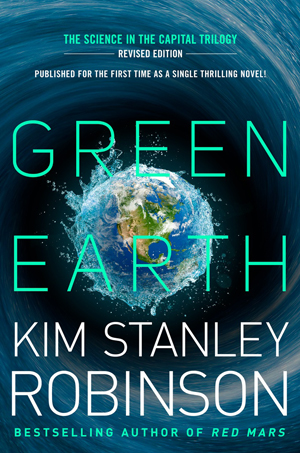
  • Out now: GREEN EARTH!

    Kim Stanley Robinson’s “Green Earth” just came out, in paperback and e-book!

    “Green Earth” is more than an omnibus edition of the three books in the Science in the Capital trilogy, Forty Signs of Rain, Fifty Degrees Below and Sixty Days and Counting. “Green Earth” combines them in a compressed single volume — fully updated and compatible with today’s world and three hundred pages shorter, but still counting 1100 pages!

    “Green Earth” appears as a single volume to coincide with the UN Framework Contract on Climate Change 21st Conference of Parties in Paris, later in November and start of December — where world leaders will gather to hopefully steer world development towards a more sustainable path than greenhouse gases-heavy business-as-usual. It is also a title that fits well with much of KSR’s work, like an extension of his famous Red/Green/Blue Mars trilogy (and is also the title of a chapter in Blue Mars!).

    The synopsis reads:

    Catastrophe is in the air. Increasingly strange weather events are pummelling the Earth. When the Gulf Stream shuts down and the Antarctic ice sheet starts melting, climate extremes multiply, and some winters hit like an ice age.

    New U.S. President Phil Chase is on a mission: he’s determined to solve climate change. His science advisor, Frank Vanderwal, is a bit more messed up. When massive floods hit Washington, Frank finds himself living in a treehouse and in love with a woman who’s definitely not what she seems, one who will draw him into the shadowy world of Homeland Security, and other, blacker agencies.

    Only science can save the day. Frank knows he has to find a way to save the world so that science can proceed.

    “Green Earth” comes with an introduction by KSR. A short version of that introduction appears at io9: “What I Learned From Cutting 300 Pages Out Of My Epic Trilogy“. Selected bits:

    Almost fifteen years have passed since I started that project, and in that time our culture’s awareness of climate change has grown by magnitudes, the issue becoming one of the great problems of the age. In this changed context, I had the feeling that quite a few of my trilogy’s pages now spent time telling readers things they already knew. Some of that could surely be cut, leaving the rest of the story easier to see.

    Science fiction famously builds its fictional worlds by slipping in lots of details that help the reader to see things that don’t yet exist, like bubble cities under the ice of Europa. Just as famously, novels set in the present don’t have to do this. If I mention the National Mall in Washington D.C., you can conjure it up from your past exposure to it. I don’t have to describe the shallowness of the reflecting pools or the height of the Washington Monument, or identify the quarries where that monument’s stone came from. But the truth is I like those kinds of details, and describing Washington D.C. as if it were orbiting Aldebaran was part of my fun.

    Nothing important was lost in this squishing, and the new version has a better flow, as far as I can tell. Also, crucially, it now fits into one volume, and is thereby better revealed for what it was all along, which is a single novel.

    The real-life counterparts of Phil Chase and Charlie Quibler gather in Paris to iron out an agreement to replace the Kyoto Protocol (1997-2012) and usher a post-2020 era with more ambitious action on combating climate change. According to the UN, contributions of countries in preparation of the Paris meeting “have the capability of limiting the forecast temperature rise to around 2.7 degrees Celsius by 2100, by no means enough but a lot lower than the estimated four, five, or more degrees of warming projected by many prior to [this process]” — certainly higher than the 1.5-2 degrees most scientists deem as minimal damage for humans and the biosphere.

    9 November 2015
  • AURORA: interviews & reviews

    Kim Stanley Robinson’s latest, AURORA, has been out for two months now.

    This video is a great introduction to Aurora. Stan explains the concept and motivation for the novel, and his talking is complete by animation. This is a good piece of promotional material by Orbit Books, similar to their illustration on how to build a terrarium from 2312!

    The entire first chapter of Aurora, “Starship Girl”, is available to read at Orbit Books.

    More than just human DNA inside the human body, the fuel problem for acceleration/deceleration, the non-realism of the staple of faster-than-light travem in most science fiction, the complexity of maintaining a functioning society in a confined space, the way humans and all living creatures we know evolved and are tailored for life on Earth, on the development of artificial intelligence, these are some of the issues tackled in the interviews discussing Aurora.

    Beware of spoilers! Aurora, moreso than your typical KSR novel, has twists and turns and page-turner developments as the Aurora mission unfolds.

    This short and sharp interview with the Sacramento Bee sets the stage for these hotly debated ideas at the center of Aurora:

    Q: “Aurora” touches on the growing notion that humankind will soon be able to leave Earth and start fresh on another planet.
    A: It’s a nasty proposition and a wrong idea. The harder you press it, the more you realize it won’t work. Even the closest star systems are too far away.

    Q: Your “Mars” series speculated on colonizing Mars, and a new book “How We’ll Live On Mars” by Stephen Petranek says we’ll be on the Red Planet by 2027.
    A: Mars is in the ballpark, but we’re still 35 years out. Let’s be clear we’re talking about astronauts going there, doing scientific studies and coming back. The actual colonization of Mars is centuries away, and terraforming it (transforming it to support human life) might be a 10,000-year project.

    Q: But what if we could get to another planet for colonization?
    A: This is a mistake because there’s no place other than Earth where humanity can be healthy and safe. When we land on another planet, we’ll find out if it’s either alive or dead. It it’s alive, we’ll be in trouble because the life that’s there already will either make us sick or kill us. If it’s dead, we’ll have to terraform it, in which case we’ll die before it’s ready.

    Here is an interview for Science Friday radio, on interstellar travel, on Earth as our spaceship — “There is no Planet B” — on managing climate change, on who the narrator for Aurora is, plus a reading of an excerpt.

    A short interview at Capital Public Radio, where Stan talks about how Aurora was constructed but also reminisces on his 40 year career as a science fiction writer.

    In another Aurora interview for The Guardian, for the Books Podcast, Robinson’s exploration of time and space are juxtaposed with psychologist Sheldon Solomon’s exploration of death. It’s interesting to hear him out on future history and the existential underpinnings of thinking about the future of humanity, of having objectives beyond the length of our lifetimes and how we have to cope with our own mortality with the new knowledge that science has brought to us on our size and place in the cosmos. It includes the reading of a passage of Aurora, and a discussion of forms of politics “passengers” might adopt in the context of a generational starship.

    Science fiction realism versus fantasy is at the center of this other interview for The Guardian, along with writers Alastair Reynolds and Ann Leckie.

    The spacefarers in his latest novel, Aurora, set out on a voyage to a star 11.9 light years away with no warp drives, no sentient robots and no nanomachines. The ship’s technology offers impressive upgrades on familiar 21st-century models, from “printers” that can manufacture anything the travellers require, to aquantum computer so sophisticated it wonders if it should award itself the pronoun “I”. But Robinson’s mission launches in 2545, putting his characters as far away from the world of Taylor Swift and the Apple smartwatch as we are from Niccolò Machiavelli and the matchlock musket. It’s almost as if Thomas More had imagined a captain setting out for the moon in a clipper.

    Robinson makes no apology for the 21st-century tech of his 26th-century explorers, arguing that progress in science and technology will asymptotically approach “limits we can’t get past”.

    “It’s always wrong to extrapolate by straightforwardly following a curve up,” he explains, “because it tends off towards infinity and physical impossibility. So it’s much better to use the logistic curve, which is basically an S curve.”

    “‘Science’ implies the world of fact and what we all agree on seems to be true in the natural world. ‘Fiction’ implies values and meanings, the stories we tell to make sense of things.” David Hume argued that it’s impossible to argue from the way the world is to the way the world ought to be, Robinson continues, “and yet here is a genre that claims to be a kind of ‘fact-values’ reconciliation, a bridge between the two”.

    “Can it be? Well, no, not really – but it can try.”

    In this interview for Electric Literature, affiliated to To The Best Of Our Knowledge show/podcast, Robinson expands on the technical and human challenges to undertake such an interstellar voyage, and expands on artificial intelligence and the importance of science fiction utopias. Excerpts:

    My working principle was, what would it really be like? So no hyperspace, no warp drive, no magical thing about what isn’t really going to happen to get us there. That means sub-lightyear speeds. So I postulated that we could get spaceships going to about one-tenth the speed of light, which is extraordinarily fast. […] The physics of this is a huge problem.

    SP: As you were imagining this voyage, which part was most interesting to you? Was it the science–trying to figure out technically how we could get there? Or was it the personal dynamics of how people would get along when they’re trapped in space for so long?

    KSR: I think it would be the latter. I’m an English major. The wing of science fiction that’s discussed this idea has been the physics guys, the hard SF guys. They’ve been concerned with propulsion, navigation, with slowing down, with all the things you would use physics to comprehend. But I’ve been thinking about the problem ecologically, sociologically, psychologically. These elements haven’t been fully explored and you get a new story when you explore them. It’s a rather awful story, which leads to some peculiar narrative choices. […] Because they’re trapped and the spaceship is a trillion times smaller than Earth’s surface. Even though it’s big, it’s small. And we didn’t evolve to live in one of these things. It’s like you spend your whole life in a Motel Six.

    SP: You also wrote a whole series of books about Mars. You still have to get there.

    KSR: But there’s an important distinction. You can get to Mars in a year’s travel and then live there your whole life. And you’re on a planet, which has gravity and landscape. You can terraform it. It’s like a gardening project or building a cathedral. I think terraforming Mars is viable. Going to the stars, however, is completely different because you would be traveling in a spaceship for several generations where you’re in a room, not on a planet. It’s been such a techie thing in science fiction. But people haven’t de-stranded those two ideas. They said, “Well, if we can go to Mars, we can go to Tau Ceti.” It doesn’t follow. It’s not the same kind of effort.

    […] I think Earth is the one and only crucial place for humanity. It will always be our only home.

    SP: Does the future of AI and technology more generally excite you?

    KSR: Yes, AI in particular. I used to scoff at it. I’m a recent convert to the idea that AI computing is interesting. Mainly, it’s just an adding machine that can go really, really fast. There are no internal states. They’re not thinking. However, quantum computers push it to a new level. It isn’t clear yet that we can actually make quantum computers, so this is the speculative part. It might be science fiction that completely falls apart.

    KSR: Dystopias express our fears and utopias express our hopes. Fear is a very intense and dramatic emotion. Hope is more fragile, but it’s very stubborn and persistent.

    Bonus: Stan teases his _next_ novel! In the Sacramento Bee and Science Friday interviews:

    A: I’m postulating a sea level rise and I’m doing a “drowned Manhattan” novel. For a Californian, writing about New York is scarier than writing about Mars.

    And let’s leave it at that for the time being!


    AURORA reviews galore!

    • Gary K Wolfe for Locus: “Robinson is among the premier literary figures in modern SF”
    • Alan Cheuse for NPR: “near-perfect marriage of the technical and the psychological”
    • Book of the Month at Space.com
    • Adam Roberts for The Guardian: “Aurora is a magnificent piece of writing, certainly Robinson’s best novel since his mighty Mars trilogy, perhaps his best ever.”
    • Niall Alexander for Tor.com: “its depiction of the ascent of artificial intelligence must be among the most momentous takes on the topic science fiction has ever seen”
    • Annalee Newitz for Gizmodo + io9 Book Club
    • The Daily Democrat, also includes reporting on a reading and Q&A event at the Avid Reader bookstore in Davis
    • News outlets: Chicago Tribune, Pittsburgh Post-Gazette, The Star, Financial Times (gets a medal for spoiling the end with the first sentence), Otago Daily Times, The Age
    • Kirkus Reviews
    • Blogs: Val’s Random Comments (“without a doubt one of the notable releases in science fiction of 2015“), Liwella, SF&F Reviews, Xeno Swarm, Examined Worlds, Hacked (“Yes, Mr. Robinson, we can go to the stars”: a cyberpunk post-humanist critique)
    8 September 2015
  • Out now: AURORA!

    Our voyage from Earth began generations ago.

    Now, we approach our new home.

    AURORA.

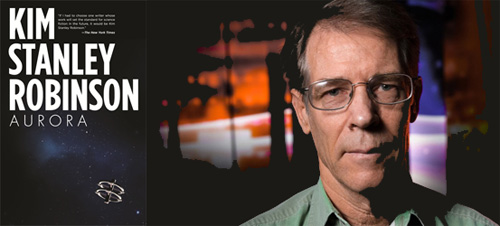
    As of today July 7 2015, Kim Stanley Robinson’s new novel, Aurora, is out! (hardcover, ebook, audiobook)

    The first two reviews are from none other than Gerry Canavan in the Los Angeles Review of Books: “The Warm Equations” — along with reviewing Neal Stephenson’s Seveneves — and it’s relatively as spoiler-free as possible…

    Aurora traces the story of one of the generation starships flung out from the solar system during the Accelerando, Robinson’s alternative name for the prophesied technological Singularity. In previous books these launches have always been something of a dead end: those explorers journey (as he says in 2312) “beyond human time, beyond human reach” into “a vastness beyond comprehension,” outside history itself. […] I think Aurora may well be Robinson’s best novel.

    …and from Gary K. Wolfe for the Locus of July 2015.

    Podcasting duo Gary K. Wolfe and Jonathan Strahan also did an extensive interview with Stan for Coode Street here.

    We are delighted to be able to present what is one of the first major discussions about this extraordinary new novel, which we think will prove to be one of the standout SF novels of 2015.

    Stan also talked to the Verge ESP podcast, here.

    More material — and KSR tour! — as it becomes available.

    (banner image from Coode Street)

    7 July 2015
  • Colonizing Mars: a revisitation

    Kim Stanley Robinson’s next novel AURORA is coming out in hardcover (+ ebook, audiobook) in the USA/Canada on July 7 2015 (July 9 for UK, July 14 for Australia). 480 pages.

    The book synopsis from Orbit Books:

    A multi-generational starship travels out of the solar system for the first time in humanity’s history. Its destination is a planet in the Tau Ceti system, 12 light-years away, that they have dubbed Aurora, after the Roman goddess of the dawn. Will this be a new dawn for humanity or the dusk that will encompass us all?

    Editor Tim Holman says, “Are you looking up at the stars? Kim Stanley Robinson is an incredible individual, a visionary and a truly wonderful writer. Aurora is about our future, but it is what this novel tells us about the present that really matters. A must-read for fans of SF, and a fantastic voyage of discovery for anyone unfamiliar with the genre.”

    One of science fiction’s most powerful voices, Kim Stanley Robinson has won multiple Hugo, Nebula, and Locus awards and has published more than 20 books, including the award-winning Mars trilogy and the New York Times bestseller 2312.

    Aurora cover in super-HQ here.

    It’s been more or less two decades now that the Mars trilogy has been out there. It is recognized as a classic of the genre, and has helped shape the imagination and the mental mapping of the future of many a reader. Today, with so much more of the real Mars explored with robot probes, our better knowledge of the planet makes the project of a long-term human colonization and terraforming a much more challenging one — plus some Earth issues have become much more pressing, like climate change and building a social-economic-environment system that is sustainable. See and listen to Kim Stanley Robinson reminisce on his Mars books and sharing the rough truth on our priorities as a global civilization:

    • Stan talked about his vision of the future for U-T San Diego Science Talks, a video of that is available here.
    • Stan talked about Mars at the SETI Institute’s Big Picture Science podcast, Mars Struck (just the KSR bit here).
    • Another video interview with Stan, this one really laid back from his home, for StarShipSofa’s online SF convention SofaCon2 (also available in StarShipSofa #382). He teases more the setting and story of Aurora, talks about the collections he has edited (Rexroth in the Sierras, Future Primitive, Green Planets), about the way he writes and the many birds he has come to know by writing outside, taking questions from our Facebook group, plus a cameo from Pandora the cat

    Shelf Awareness has a short, to the point interview with Stan. Read about his favorite authors and books, what he’s reading now, books he takes when backpacking, books read most often, all kinds of books!

    Book(s) you’re an evangelist for:

    A Suitable Boy by Vikram Seth and Air by Geoff Ryman.

    Plus, an interview from 2014, in a longer feature for Studio 360, “Will Sci-Fi Save Us?“:

    What does today’s sci-fi mean for our real-life future?  Cyberpunk author Neal Stephenson argues that it’s time to get over our love of dystopia. A class at MIT searches sci-fi classics for technologies they can invent right now, although maybe they shouldn’t. Geoengineers take a tip from Carl Sagan – who saw a green future for Mars – to see if we can save Earth.  And we meet some scientists who think that if we ever want to see the stars, we’d better start building the starship.

    Some upcoming appearances:

    • May 22-25: WisCon 39, in Madison, Wisconsin: Feminist SF convention 
    • June: UCLA: talk about John Muir

    More coming as we gear up to the release of Aurora!

    5 May 2015
  • Coming in 2015: Aurora

    Let’s kick off 2015 with a KSR-inspired video: Wanderers, by Erik Wernquist. Make sure to watch full screen!

    It is really rare to find an optimistic and human-centered visual depiction of space exploration — short films and videos are usually centered around either technological gimmicks or on something going tragically wrong, instead of the pure adventure and awesomeness of humanity expanding beyond the terrestrial frontier. For anyone that has read KSR (the Mars books and 2312 in particular), this really looks like it could be…a trailer for an on-screen adaptation of his books! According to Vernquist:

    The film is a vision of our humanity’s future expansion into the Solar System. Although admittedly speculative, the visuals in the film are all based on scientific ideas and concepts of what our future in space might look like, if it ever happens. All the locations depicted in the film are digital recreations of actual places in the Solar System, built from real photos and map data where available. […] As some may notice I have borrowed ideas and concepts from science fiction authors such as Kim Stanley Robinson and Arthur C. Clarke, just to name a few.


    Coming in 2015 is Kim Stanley Robinson’s next novel: AURORA!

    After taking us 300 years in the future with 2312 and 30,000 years in the past with Shaman, KSR extends further in the future than he’s ever been with the generation ship-themed Aurora!

    It will be published in May 2015 (hardcover, digital, audiobook). 480 pages. Book description:

    A major new novel from one of science fiction’s most powerful voices, AURORA tells the incredible story of our first voyage beyond the solar system.

    Brilliantly imagined and beautifully told, it is the work of a writer at the height of his powers.

    Our voyage from Earth began generations ago.

    Now, we approach our destination.

    A new home.

    AURORA.

    The cover was revealed by Orbit Books, but click the above image for higher quality.

    Also coming in 2015:

    • Aurora book promo tour;
    • …and the inevitable big debate Aurora is going to stir in the science and science fiction circles;
    • the publication of a Science in the Capital trilogy edit/omnibus;
    • a KSR / Marina Abramovic event;
    • some KSR trips outside the USA;
    • possible developments around a Red Mars TV series;
    • the announcement of KSR’s next novel!
    A major new novel from one of science fiction’s most powerful voices, AURORA tells the incredible story of our first voyage beyond the solar system.

    Brilliantly imagined and beautifully told, it is the work of a writer at the height of his powers.
    Our voyage from Earth began generations ago.
    Now, we approach our destination.
    A new home.
    AURORA.

    – See more at: http://www.hachettebookgroup.com/titles/kim-stanley-robinson/aurora/9781…

    7 January 2015
  • The naming of things: “Mount Thoreau”

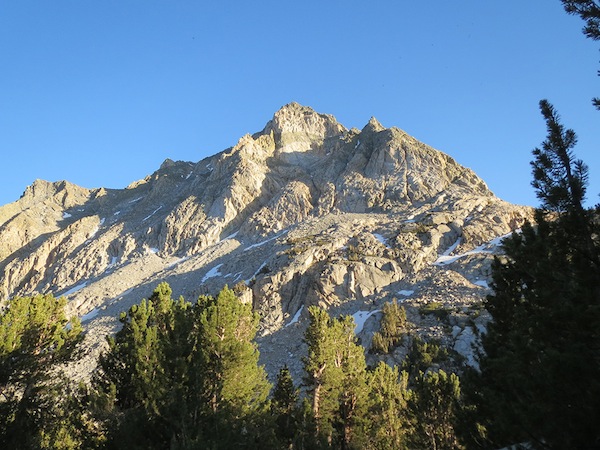
    End of September 2014, a group of people passionate about wilderness and writing gathered to ascend and name a peak in the Sierra Nevada of California “Mount Thoreau” — after the famous 19th century transcendentalist Henry David Thoreau, writer of Walden and such essays as Civil Disobedience and Life Without Principle. Very appropriately, this peak is opposite Mount Emerson — after Thoreau’s close friend and intellectual sparring partner Ralph Waldo Emerson! This is an unofficial name, as this does not follow USGS procedures — and so a little act of civil disobedience — but it was a moment to collectively live in the wild and remember Thoreau.

    Kim Stanley Robinson was among them — also poet and writer Gary Snyder, Tom Killion (whose woodblock print of the Sierra illustrates Robinson’s collection of Rexroth poems Rexroth in the Sierras), writer Paul Park, and other friends of Robinson’s, about 20 total. Robinson wrote an extensive piece on the event, the experience and generally on Thoreau: The Actual World, “Mount Thoreau” and the naming of things in the wilderness. You can read it here, along with photos from Christopher Woodcock and others. Some extracts:

    […] nothing up there is named after Henry David Thoreau, the great American nature writer, the man whose books inspired John Muir and helped create the preservation movement that saved the Sierra Nevada as wilderness. This seemed an oversight, a mistake, a little crime. And an opportunity. Because there is already a Mount Emerson up there, named by John Muir himself, after a trip to the area in 1873. […] Peak 12,691 is somewhat lower than Mount Emerson, but much more gnarly and interesting; the two peaks have much the same relationship that Emerson and Thoreau had, not just in size and aspect but in position, being close to each other but separated by a huge gulf of air. […]

    Once you give up on the idea of sleeping during a night in the mountains, it can be very restful. If it is clear and not too windy, I dispense with a tent and sleep out. At 11,000 feet above sea level, the stars are simply incredible. I watch them, don’t try to sleep, and thus often sleep pretty well. Awake or asleep, in tent or out, a mountainous peace fills me. […]

    We were also continuing a long tradition of meeting in the Sierra to celebrate its art. In the early Sierra Club summer trips, John Muir or Ansel Adams might tell a story by the fire or Cedric Wright play his violin. Here we were doing it again, awake in the dark and the wind. The feeling of that moment resists expression, has no name. It was the kind of party even Thoreau might have liked.

    […] in this case I think the honor of the name is worth the loss of the unnamed. Emerson and Thoreau were friends, and together they changed us. Now their two peaks form a gate like the Pillars of Hercules, marking a way into a certain kind of American reality, as well as a bit of Sierra backcountry. In wildness is the preservation of the world.

    The event was also covered by the New York Times, including an audio report!

    (Photo: “Mount Thoreau” from the north, by Kim Stanley Robinson)

    4 November 2014
  • Exclusive: Time in the Novel

    From the recent LonCon3 in August comes Kim Stanley Robinson’s latest talk, “Time in the Novel“. An exploration of literary techniques and of how different writers have written time passing, from the super-slow Proust to the super-fast Stapledon, addressing Virginia Woolf’s and Olaf Stapledon’s correspondence, the “show, don’t tell” convention, the García Márquez revolution, the literary experiments of Virginia Woolf, William Golding and Patrick O’Brian, and the time passing per page metric, this is a massively enjoyable lecture from a lover of literature!

    Credit goes to:

    Lecture by Kim Stanley Robinson at LonCon 3, the 72nd World Science Fiction Convention, Literature Talk 1477, Thu 14.08.2014 19:00 BST in Capital Suite 14, recorded by Martin Stricker http://www.martin-stricker.de/ for the Phonothek of the Science Fiction Club Germany e. V. http://www.sfcd.eu/

    You can download a recording of the lecture [here] — this is a KSR.info + SFCD exclusive!

    Enjoy!

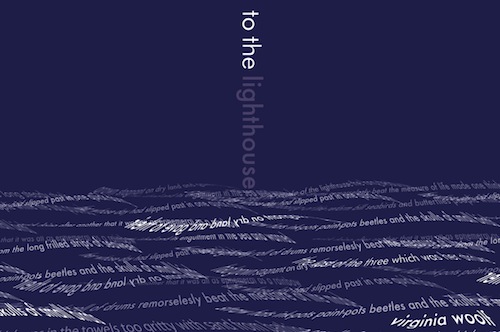
    Image credit: Book cover design for Virginia Woolf’s “To The Lighthouse” by Melanie Smith

    19 September 2014
  • KSR on Dos Passos, Asimov, Wolfe and more

    While the Worldcon is on — and there are various KSR happenings there, more later! — here is some more material to get your teeth and brains on!

    In the previous update I was mentioning “The Future Is Here” festival by the Smithsonian magazine. Along with everybody else’s, KSR’s talk is now online: “Humanity in the Solar System“. Watch Stan guide you through the solar system, à la 2312!

    In an interesting interview for Nautilus by astrobioligist David Grinspoon — and some great KSR & 2312 illustrations by Kyle T. Webster! —  KSR goes over our main challenges as a civilization today and long-term alternatives that have been described in science fiction and in his 2312.

    We need a global economic system that is designed specifically for sustainability. We already have a global economic system in the form of institutions like the World Bank and the International Monetary Fund. Together, their agreements make up a comprehensive system. But right now, this system cheats future generations by systematically underpricing the true costs of our exploitation of the biosphere. It sets the prices of the Earth’s natural resources by establishing what is basically the aggregation of supplies and demands. But this process is biased toward pricing things lower and lower, because of pressure from buyers and the need for sellers to stay in business. As a result, sellers sell their products for less than they cost to make, which should lead to bankruptcy for the seller, but it doesn’t because parts of the costs have been shifted onto future generations to pay. When practiced systematically it becomes a kind of multi-generational Ponzi scheme, and leads to the mass extinction event of the early Anthropocene, which we have already started.

    […] we have to alter the system we already have, because like an animal with evolutionary constraints, we can’t change everything and start from scratch. But what we could do is reconstruct regulations on the existing global economic system. For this, we would need to wrench capitalism so that the global rules of the World Bank, etc., required ecological sustainability as their main criterion. That way, prices would shift to match their true costs.

    […] In my novel, 2312, the economy is in some ways a funhouse mirror portrayal of our world. One of the civilizations—called the Mondragon after the Basque city in Spain that runs its economy as a set of nested co-ops—provides for everyone’s basic needs as a kind of public utility district service. Then there is a more free-market capitalist world of exchange of luxuries; these arrangements are loosely grouped as “above and beyonds.” That’s one image of a possible future, sustainable economy. However, if you include all the civilizations on Earth and in space in 2312, there remains a steep inequality gradient with most of the poor on Earth.

    The format of 2312, with the different types of narration mixed in small chapters, comes from John Dos Passos’ “USA Trilogy“. Robinson talks about the novelty of Dos Passos’ approach and how he managed to give a comprehensive view of 1920s-30s USA in a short interview for To The Best Of Our Knowledge.

    KSR wrote an excellent article on Isaac Asimov’s predictions for the future from the 1964 World Fair, so 50 years ago, a very interesting article that looks back at the science fiction of the time, the expectations for the future of a generation or two ago, how all that compares to today, and also interestingly what have been the successes of the predictions, the consistently reliable trends of our societies.

    What did Asimov fail to see in the future? Many things, inevitably; but he did not miss the biggest problem that would be facing us in 2014, which is building a sustainable civilization. That is his article’s greatest achievement.

    […] he describes the Malthusian scenario of unchecked population growth resulting in a super-crowded “World Manhattan,” but he notes immediately that this scenario (which in his Foundation series was the city-planet Trantor) is ecologically impossible

    […] he writes, “there will, therefore, be a worldwide propaganda drive in favor of birth control by rational and humane methods,” and he predicts that by 2014 we will have “lowered the birth rate.”

    To an extent these things have happened, and yet this is one of the great unsolved issues of our time.  The human population is still rising at a rate of about 75 million people every year, and this is adding to the immense pressure we are putting on the Earth’s biosphere, our irreplaceable support system. So as Asimov pointed out, all is not rosy.

    […] He speaks of boredom as a result of this unemployment, because he is assuming that the postwar social security system will continue to give unemployed people economic support. He fails to imagine the breakdown of the postwar social contract, and a global economy where unemployment leads not just to boredom but to desperation and misery.  He fails to imagine a society as brutal as we have become.

    […] Maybe that’s my prediction for the World’s Fair (“the world is fair”) of 2064.  We’ll have different machines, we’ll have medical advances, a warmer and wilder climate, immense environmental stresses, more people (about 9.5 billion).  Will we have universal women’s rights?  Will we have full employment?  We’d better!  It’ll be that or catastophe.

    Kim Stanley Robinson’s introduction to “The Very Best of Gene Wolfe“, titled “A Story” (a very 5HC-type title), is now online at the New York Review of Science Fiction. This can only be found in the rare “Very Best Of“, not in the more widely available “Best Of“, and is even a corrected/edited version of that “Very Best Of”! Some favourite extracts below:

    A genius in Wolfe: and if there are any fellow postmodern materialists reading this and groaning at the idea of there being anything unusual inside an artist or anyone else, anything beyond the workings of the brain, I will agree immediately, but point out that the latest news from brain science makes it clearer and clearer that saying “only the brain” is not much of a delimiting statement. The brain is not a clockwork, nor a steam engine, nor a binary or digital computer, nor any of the machines we conceptualize it to be with our simple metaphors based on our own feeble handiwork, as if the brain could only be as complex as something we ourselves could make. Very much not the case. The brain is a kind of pocket universe. The mind is huge, and consciousness a small part of it. The unconscious may well be inhabited by “subroutines,” as the computer people would have it, processes that may actually be more like characters. Maybe they are like Jungian archetypes—a shadow seems likely, perhaps an anima or animus—but who knows. Very probably the brain consists of organizations even stranger and more various than that. It may be a kind of library of stories all telling themselves at once. And by way of stories written down, one unconscious mind communicates with other unconscious minds.

    […] I have been coming at Wolfe’s stories from a variety of angles here, like the magpies in my back yard banging on the black walnuts on the ground to break them open. The magpies are not getting very far, but it’s March, and they are persistent. With these stories, no matter what angle you take on them, no matter how hard you whack them, they stay whole and unexplained. I suppose that suggests we have come to the moment to try to speak about what these stories mean: but no. I decline. I’m not saying it’s impossible, but it would be hard. To do justice to that project would require some kind of ongoing Talmudic wiki that considered each story in turn, by itself and in relation to others. I have no doubt the Wolfeish community has already begun this discussion and will continue with it for ages to come. It is also true that sometimes the meaning of any given story is perfectly straightforward; in the later dialogues particularly, characters sometimes try to say things about life that are as plain and wise and interesting as you could want.

    But more often it isn’t that simple. Wolfe’s meanings are complex. That’s part of his point, I take it: life is complex. There are values in life, these stories say, there is good and bad, and all kinds of other values, but they are not often simple to tease out or apply. Indeed it’s precisely where these matters are not simple that Wolfe is interested and finds his stories.

    […] I am proud to know him even a little, and speaking with full confidence for the science fiction community, which is like a small town scattered over the face of the earth and across time too, I’ll say: we are proud of Gene Wolfe. We have published him, we read him with joy, we celebrate him; we will always have reason to be proud of that. Gene shows that literature can be everything, a game, a mystery, a religion, a dive into the deepest depths. Read on and see what I mean and rejoice. Life means something.

    In another short radio interview, KSR and an astrobiologist discuss Frank Herbert’s “Dune“ in the SciFri Book Club. Hear about the classic novel’s ecological themes, the 1960s cultural revolution, the parallels to the oil industry, and more.

    Finally, something not covered before: Robinson contributed to Jeff VanderMeer’s “Wonderbook“, “The Illustrated Guide to Creating Imaginative Fiction“, a most amazing and creative endeavour mixing essays, visual aids and lots of humour in an unconventional publication for a writing companion! Head over to this table of contents and illustrations, this interview of VanderMeer and this fuller table of contents to marvel at it. Robinson’s essay is between those of Nick Mamatas and Ursula K. LeGuin. An excerpt of Robinsons’ essay can be found here:

    “Thoughts on Exposition” by Kim Stanley Robinson

    Am I advocating a return to the Encyclopedia Galactica? Yes. Its entries were always (at least potentially) bits of Stapledonian prose poetry, soaring like phoenixes out of their stories. Face it: sometimes the world is more interesting than we are. Even if the interest is always human interest.

    So: “The door dilated”? That’s now the story’s title. We’ll jettison the long-forgotten plot (I bet it had danger and a chase) and focus on what always mattered: that door. We begin with the door’s manufacturing and installation instructions, badly translated from an unknown language. Next a Wikipedia article about it, apparently mangled in a fierce editing war that left certain ambiguities. Technical details about the door’s pupil mechanism (or, as it turns out, organism, for most are made from vat-grown squid siphons) are followed by a discussion of the door’s uses, maintenance problems, operating quirks, and notable breakdowns. We learn that dilating doors are installed where the air pressure on one side of the door is higher than on the other, but there is not the space to install a sliding door. An ordinary door between such pressure differentials either won’t open or opens much too fast, both dangerous; in fact, some people got killed by a conventional door opening too fast, including a person with the same last name as the dilating door’s inventor. But there have also been cases where dilating doors killed people, sometimes in malfunctions not explained in the accident investigations. Graphs and charts display information about these cases. What’s going on here? Will the reader have to evaluate the data in a forensic process, and imagine what happened? Yes. Because that’s how stories always work.

    (Illustration on top by Kyle T. Webster)
    26 July 2014
  • “Shaman” meets “2312” and more

    Kim Stanley Robinson’s latest novel, Shaman, has now been released in paperback by Orbit!

    What’s it about? In just three paragraphs, you have it from Stan himself in this little piece for Kindle Amazon.

    “When a five thousand year-old body emerged from a glacier in the Alps in 1991, it immediately became one of the greatest finds in archeological history, because all the dead man’s gear had been frozen and preserved with him. […] I thought  He was just like me.”

    Stan and Ursula K Le Guin (do I need to introduce her?) finally did a first event together after knowing each other for nearly 40 years! In February, the Spring Creek Project sponsored a symposium entitled “Transformation Without Apocalypse: How to Live Well on an Altered Planet”, at Oregon State University. Stan and Ursula read from their own work and from each other’s work, with passages from 2312, Shaman and poems. This is a historic appearance, very heartwarming, although the atmosphere in the room can’t be felt through that video alone I suppose.

    More videos of older events have surfaced too. Stan participated in the Arizona State University Origins project, with the Great Debate Transcending Our Origins: Violence, Humanity, and the Future. He was on the panel “The Future: From Medicine and Synthetic Biology to Machine Intelligence” along with scientists and notable experts Richard Dawkins, Craig Venter, Esther Dyson, Eric Horvitz, George Poste and Randolph Nesse discussing the future of new biomedical and robotic technologies and their impact on humanity. The whole panel video was posted on the internet, you can watch it here: Part 1 & Part 2. Stan’s 7-min pitch of how we could live fuller liveshas been posted separately, it’s a concentration of many of the ideas he has been putting forward in recent years:

    So: Laws and “software” of how we run our societies as technologies. Constitutions as science fiction concepts. “Government of the people, by the people, for the people, shall not perish from the earth” as a science fiction short story (future tense). Those are some ideas! In a related interview for Decode DC, “What can Mars teach us about politics on Earth?” (direct audio), Robinson discusses these ideas and others that he has developed throughout his career — for example the citizens’ duma in Blue Mars.

    In October 2013, Stan and social media professor McKenzie Wark did a discussion at Eugene Lang College in New York. Stan read from Shaman and they discussed in depth the thoughts behind the book, how we used to live, what technologies we developed, Neanderthals, and of course taking it from there and on to 2312 and our future, and also on writing SF and “speculative realism” and on readers of SF and fantasy. Part 1 here; Part 2 is audience Q&A. The sound on the video is not that good.

    Additionally, McKenzie Wark interviewed Stan for the Los Angeles Review of Books: “A Functional Form Has Its Own Beauty“. A great interview, some selected parts:

    Finally, somebody asks the sex question! — an aspect of 2312 I felt was not discussed enough:

    I feel I’ve been taught a lot about gender by science fiction, including books by Joanna Russ, Samuel Delany, Ursula Le Guin, and others, and also by the science-fiction community, which has a flourishing LGBT component, pretty well integrated with the rest of it. Also I was very struck by my own experiences as a “Mr. Mom” when I did the home parenting for our two children, especially when they were infants and toddlers. I wanted to write about that again, as I did in the Science In the Capital trilogy, but from a different angle, to express the feeling that grew in me that gender as feeling is labile and not related to bodies per se.

    A great description of how essentially all of his novels work:

    I’ve been much influenced by Bahktin’s image of the novel as polyvocal, what he calls a heteroglossia (another great word!), so that it isn’t so much the novelist as a single visionary but rather something more like an old-time telephone switchboard operator, plugging in different voices and then orchestrating the flow of that chorus, so to speak. So you get chances for different points of view to speak or argue in dialogues or larger discussions, and the plots themselves also express these arguments in actions.   

    On writing a lot about everyday habits:

    As for changing one’s habits, that is so mysterious. Again from Proust; there is the moment when you are cast into a new situation and have to change habits, and I think it was Beckett in his slim book on Proust who spoke of these moments as the true existential exposure, the naked times when you are alive without the protection of your habits, and have to think what to do moment by moment, actually decide, until you settle into (I think Beckett called it exfoliating) into a new set of habits and are somewhat protected again from that existential nakedness. This seems right to me, this is how it has felt for me, and I am very interested to try to write these moments, and present these moments as central to a plot.

    On the scientific “vs” the religious world views:

    Not only in Shaman but in the rest of my science fiction, I’ve been interested to cross all these ways of knowing, to think about  science as a kind of religious activity, and definitely as a secretly hegemonic culture within our other various cultures, while at the same time thinking about Buddhism or art as versions of scientific thinking, or some other permanently valid way of looking at things. The permanent necessity of philosophy and art, basically, so that we can decide what to do — that isn’t a question science takes on or wants to take on.

    Often in my novels all these aspects are mashed together in the characters’ lives, and in the plots.

    On using words like Coriolis and katabatic a lot (I love how McKenzie Wark has spotted this!):

    I like to use words out of the sciences that particularize physical processes (or generalize them) in ways ordinary language doesn’t usually. In fact many of these words are simply Greek or Latin, or mash-ups of the two languages, but they suggest a scientific precision that strikes me as both writerly (like, say, Joyce) and also comic, in the sense of Mr. Spock explaining his Spocklike thinking. Hippocampus, de-intensification, hierarchicalization, etc., etc., it goes on and on and is both funny and sharp, and musical too, in ways I like.

    Finally, the calendar on the left has been updated with summer and fall events, including a European tour for the Worldcon in August and more! There’s also a 2015 event — more on that later.

    15 July 2014
  • Shaping the Future with Science Fiction and Climate Fiction

    Over May 16-18, the Smithsonian Magazine organized “The Future Is Here: Science meets Science Fiction | Imagination, Inspiration and Invention” – an event with many panelists, from scientists and engineers and astronauts to inventors and actors and writers – and Kim Stanley Robinson was among them, for a panel on “Humanity in the Solar System”.

    The event resulted in an article in the Smithsonian Magazine, on “How America’s Leading Science Fiction Authors Are Shaping Your Future”, with interviews of SF authors Kim Stanley Robinson, Cory Doctorow, William Gibson, Ursula Le Guin, Ted Chiang or Neal Stephenson, on the relationship between science, technology and SF, the utopian and dystopian strands of SF and on how SF shapes our imagination on the future. As Delany says,

    “The variety of worlds science fiction accustoms us to, through imagination, is training for thinking about the actual changes—sometimes catastrophic, often confusing—that the real world funnels at us year after year. It helps us avoid feeling quite so gob-smacked.”

    According to Robinson:

    “Science fiction represents how people in the present feel about the future,” Robinson says. “That’s why ‘big ideas’ were prevalent in the 1930s, ’40s and partly in the ’50s. People felt the future would be better, one way or another. Now it doesn’t feel that way. Rich people take nine-tenths of everything and force the rest of us to fight over the remaining tenth, and if we object to that, we are told we are espousing class warfare and are crushed. They toy with us for their entertainment, and they live in ridiculous luxury while we starve and fight each other. This is what The Hunger Games embodies in a narrative, and so the response to it has been tremendous, as it should be.”

    (Picture on top by Mehreen Murtaza)

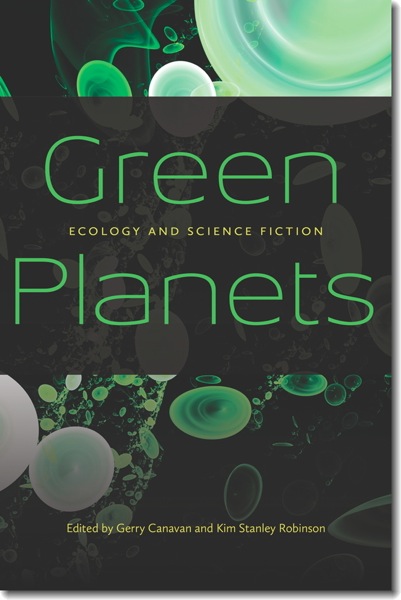
    Robinson along with Gerry Canavan (assistant professor of English at Marquette University) recently edited together a book of “essays exploring the relationship between environmental disaster and visions of apocalypse through the lens of science fiction”, Green Planets. Synopsis:

    Contemporary visions of the future have been shaped by hopes and fears about the effects of human technology and global capitalism on the natural world. In an era of climate change, mass extinction, and oil shortage, such visions have become increasingly catastrophic, even apocalyptic. Exploring the close relationship between science fiction, ecology, and environmentalism, the essays in Green Planets consider how science fiction writers have been working through this crisis. Beginning with H. G. Wells and passing through major twentieth-century writers like Ursula K. Le Guin, Stanislaw Lem, and Thomas Disch to contemporary authors like Margaret Atwood, China Miéville, and Paolo Bacigalupi—as well as recent blockbuster films like Avatar and District 9—the essays in Green Planets consider the important place for science fiction in a culture that now seems to have a very uncertain future. The book includes an extended interview with Kim Stanley Robinson and an annotated list for further exploration of “ecological SF” and related works of fiction, nonfiction, films, television, comics, children’s cartoons, anime, video games, music, and more.
    Contributors include Christina Alt, Brent Bellamy, Sabine Höhler, Adeline Johns-Putra, Melody Jue, Rob Latham, Andrew Milner, Timothy Morton, Eric C. Otto, Michael Page, Christopher Palmer, Gib Prettyman, Elzette Steenkamp, Imre Szeman.

    Gerry Canavan describes the book thusly:

    The essays in Green Planets are predicated on the proposition that two hundred years of SF can help us collectively “think” this leap into futurity in the context of the epochal mass-extinction event called the Anthropocene (which the literary theorists more simply call “modernity”). SF is our culture’s vast, shared, polyvocal archive of the possible; from techno-utopias to apocalypses to ecotopian fortunate falls, it is thetransmedia genre of SF that has first attempted to articulate the sorts of systemic global changes that are imminent, or already happening, and begins to imagine what our transformed planet might eventually be like for those who will come to live on it. Especially taken in the context of escalating ecological catastrophe, in which each new season seems to bring with it some new and heretofore-unseen spectacular disaster, my coeditor’s well-known declaration that in the contemporary moment “the world has become a science fiction novel” has never seemed more true or more frightening. Indeed, such a notion suggests both politics and “realism” are now always “inside” science fiction, insofar as the world, as we experience its vertiginous technological and ecological flux, now more closely resembles SF than it does any historical realism…

    A kind-of-excerpt of the book by Canavan, an essay on “Dystopia, Anti-Utopia, and the End of the World”, is up at SF Signal!

    Staying on the topic of sci-fi, “cli-fi” and scientific news, writer Tony White links all these on the occasion of the publication of the UN’s Intergovernmental Panel on Climate Change Fifth Assessment Report – a big event that happens about every seven years, and with each report raising the level of certainty that climate change is happening, that it is man-made, and that the situation is more and more urgent for us to move towards adapting our energy system, infrastructures, ways of life, to emit less. In discussing the publication, White discusses the Climate Outreach Information Network and references Robinson’s talks and their role in informing and inspiring change (specifically, Stan’s talk at MOMA/PS1 in New York last year).

    The Long View of climate change is also the focus of this New York Times article, where Andrew C. Revkin interviews to paleoclimatologist Curt Stager, Robinson, and astrobiologist David Grinspoon on how humans will deal with climate change impacts – our paleolithic roots (Shaman) and the Venice-like New York (2312) are of course referenced!

    Coming soon: Some more panels with Stan. There will be videos!

    29 May 2014
  • Stan the Californian

    Boom – A Journal of California met Kim Stanley Robinson at his home and writing spot in Davis, California, for an extensive interview. His childhood, writing, science fiction, science, capitalism, utopia, his Three Californias trilogy, John Muir, and the history and landscape of California were addressed. Some excerpts:

    Boom: Is there a special brand of California science fiction?

    Robinson: I think so. It began with people like Jack London and Upton Sinclair, and then the Los Angeles Science Fiction Society in the 1940s. This included Ray Bradbury, who moved with his parents to Los Angeles when he was young, like I did, both of us from Waukegan, Illinois, but him maybe twenty years earlier. Bradbury was always focused on what modernization was doing to human beings, to the nontechnological aspects of humanity. There was also Robert Heinlein, who was living in Los Angeles in the forties. Crazy Bob they called him when he was young. He was always a strange amalgam. And then there was Philip K. Dick in northern California, also Poul Anderson and Jack Vance, Frank Herbert, and in her childhood, Ursula Le Guin. It turns out that many of the most interesting science fiction writers were in California. There’s something strange and powerful about California, as a landscape and an idea, so the place may have inspired the literature.

    Boom: Your Three Californias trilogy lays out very different visions for California’s future. Which of the three Californias would you want to live in?

    Robinson: Pacific Edge without a doubt. Pacific Edge was my first attempt to think about what would it be like if we reconfigured the landscape, the infrastructure, the social systems of California. I think eventually that’s where we’ll end up. It may be a five hundred year project. I thought of it as my utopian novel. But the famous problem of utopian novels as a genre is that they are cut off from history. They always somehow get a fresh start. I thought the interesting game to play would be to try to graft my utopia onto history and presume that we could trace the line from our current moment to the moment in the book. I don’t think I succeeded. I wish I had had the forethought to add about twenty pages of expository material on how they got to that society. Later I had a lot of dissatisfactions with Pacific Edge. You can’t have this gap in the history where the old man says, well, we did it, but never explains how. But every time I tried to think of the details it was like—well, Ernest Callenbach wrote Ecotopia, and then explained how they got to it in Ecotopia Emerging. And there’s not a single sentence in that prequel that you can believe. So, Pacific Edge was my attempt, a first attempt, and I think it’s still a nice vision of what Southern California could be. That coastal plain is so nice. From Santa Barbara to San Diego is the most gorgeous Mediterranean environment. And we’ve completely screwed it. To me now, it’s kind of a nightmare. When I go down there it creeps me out. I hope to spend more of my life in San Diego, which is one of my favorite places. But I’ll probably stick to west of the coast highway and stay on the beach as much as I can. I’ll deal, but we can do so much better.

    Boom: In The Gold Coast, your dystopian novel in the California trilogy, and in your other dystopian novels, are you issuing a warning about where we’re headed?

    Robinson: I am issuing a warning, yes. That’s one thing science fiction does. There are two sides of that coin, utopian and dystopian. The dystopian side is, if we continue, we will end up at this bad destination and we won’t like it. That’s worth doing sometimes. But I won’t do the apocalypse. That is not realist. It is more of a religious statement. I like disaster without apocalypse. Gold Coast is dystopian. And a lot of it has come true since it came out in 1988.

    Boom: Do you think there is something special California can contribute to this utopian project?

    Robinson: I do. I think we’re a working utopian project in progress, between the landscape and the fact that California has an international culture, with all our many languages. It’s got the UC system and the Cal State system, the whole master plan, all the colleges together, and Silicon Valley, and Hollywood. It’s some kind of miraculous conjunction. But conjunctions don’t last for long. And history may pass us by eventually, but for now it’s a miraculous conjunction of all of these forces. So I love California. Often when I go abroad and I’m asked where I’m from, I say California rather than America. California is an integral space that I admire. And we’re doing amazing things politically. I like the way the state is trending more left than the rest of America. And San Francisco is the great city of the world. I love San Francisco. I think of myself as living in its provinces—and provincials, of course, are often the ones who are proudest of the capital. And many of my San Francisco friends exhibit a civic pride that is intense, and I think justified. So there’s something going on here in California. I do think it’s somewhat accidental; so to an extent, it’s pride in an accident, or maybe you could say in a collective, in our particular history. So there’s no one thing or one person or group that can say, ah, we did it! It just kind of happened to us, in that several generations kept bashing away, and here we are. But when you have that feeling and it goes on, and continues to win elections and create environmental regulations, the clean air, the clean water, saving the Sierra, saving the coast: it’s all kind of beautiful. Maybe the state itself is doing it. Maybe this landscape itself is doing it.

    Another utopia and climate change-focused article by Stan is up at IAI TV (a reprint from Australian magazine Arena).

    The Australian Yahoo interviewed Stan on his most recent novel, Shaman, and the way he goes about writing. Some excerpts:

    The final piece of Shaman fell into place when Robinson saw photos of 32,000-year-old cave paintings from France’s Chauvet cave (discovered in 1995). “I was so struck by their beauty and age I felt I had my story, ” he says. “I’d tell the story of the people who painted that cave.” […]

    “I definitely enjoy my research, ” he says. “It’s reading with a purpose. I feel like I’m on the hunt, looking for good stories to tell, because I collect good stories from the research and retell them.”

    The process often begins years in advance as Robinson collects books and web links that seem relevant to an idea he’s been “brooding on”. When starting a book, he then looks for whatever he has on hand that’s useful, but when he starts writing, the process changes to what he calls “iterative”. “Once I’ve written a draft of a scene I know much better what I need to know to make it better, and that directs subsequent research.”

    Stan also wrote in NPR for three recommendations of New Wave SF: Thomas M. Disch‘s Camp Concentration; Joanna Russ‘s The Female Man; and Samuel R. Delany‘s Dhalgren.

    And finally, you have one week left to submit a story to Stan! To The Best Of Our Knowledge, and partners University of Wisconsin’s Center for the Humanities and the Wisconsin Institute for Discovery, are running a competition for a 500-600 hard-SF story that would be turned into a radio play, the deadline is March 1!

    We’re looking for great sci-fi stories, based on real science and set in the near future. Sci-fi master Kim Stanley Robinson, best known for The Mars Trilogy, will choose the winner.

    The winning stories will be turned into radio plays, produced by To the Best of Our Knowledge and LA’s Ensemble Studio Theatre, directed by Gates McFadden (Dr. Beverly Crusher on Star Trek: The Next Generation).

    To your keyboards!

    23 February 2014
  • Shaman interviews & reviews III

    Kim Stanley Robinson’s latest novel SHAMAN, out since September 2013, is coming out in paperback on June 10 2014. Meanwhile, it has entered the Locus Bestseller list for December for hardcovers (at #7) — while 2312 has been released in paperback and has made it to #1 and is continuing its run! (September, October, November, December)

    Despite Shaman‘s setting in the long past, or rather quite the contrary, enriched by that fact, the New Yorker‘s Tim Krieder published an article on Stan: “Our Greatest Political Novelist?“, which draws from both his Mars trilogy and Shaman to make a major point:

    Depending on your own politics, this [the Martian Constitution] may sound like millennia-overdue common sense or a bong-fuelled 3 A.M. wish list, but there’s no arguing that to implement it in the real world circa 2013 would be, literally, revolutionary. My own bet would be that either your grandchildren are going to be living by some of these precepts, or else they won’t be living at all. […] I don’t just admire Robinson’s ambitions or agree with his agenda; I’m not recommending his books because they’re good for you. Kim Stanley Robinson is one of my favorite novelists, period. […] The strength of his characterizations is inextricable from his power as a political visionary; Robinson is realistic about human beings but nonetheless optimistic about our capacity for change.

    […] Loon’s tribe in “Shaman” isn’t exactly a preagricultural utopia—they’re starving by the end of each winter—but it’s still a pretty benign view of man in his primeval state, closer to Rousseau than Hobbes. […] Wouldn’t it ultimately be more optimistic to create a sort of past-dystopia, showing us how far we’ve come? There’s evidence to suggest that prehistoric cultures would’ve seemed far more savage and alien to us than Robinson imagines here. I suspect this is less a failure of imagination on his part than a triumph of his convictions over the evidence, a projection of his resolute optimism backwards through time to show us that folks are basically the same all over. […] What he’s telling us over and over, like the voice of the Third Wind whispering when all seems lost, is that it’s not too late, don’t get scared, don’t give up, we’re almost there, we can do this, we just have to keep going.

    Let the debate begin!

    Some more reviews for Shaman: Songs in Squee Minor ; The Sydney Morning Herald
    and for 2312: Population GO

    Stan participated again to Authors@Google last September, and read from Shaman and talked about creating the world of 30,000 years ago — one of the great Shaman talks!


    He also participated to a debate for iai tv on “Paradise…Lost?” with Marina Benjamin and Alex Callinicos:

    Once a driving force of political change, utopian visions are now out of fashion. But is this a lost opportunity or a new realism?  Should we create new utopias and thereby impel social advance, or will we learn the lessons of history and remain sceptical of grand visions?


    And so… happy new year 2014 AD!

    31 December 2013
←Previous Page
1 … 3 4 5 6 7 … 14
Next Page→

Upcoming Events

Notice
There are no upcoming events.
0 events found.

Events

Notice
There were no results found.
Notice
There were no results found.

Events Search and Views Navigation

Event Views Navigation

  • List
  • Month
Today
  • Today
  • Google Calendar
  • iCalendar
  • Outlook 365
  • Outlook Live
  • Export .ics file
  • Export Outlook .ics file

KimStanleyRobinson.info

The reference site for Kim Stanley Robinson

  • Who is KSR?
  • Stan’s Favorites
  • About & Contact
  • Bibliography
  • List of interviews
  • Forum
  • Events

This is not an official website for Kim Stanley Robinson. To contact this website, send an e-mail to postmaster [at) kimstanleyrobinson.info – To contact Robinson or his publishers, visit the official Kim Stanley Robinson Facebook page – To inquire about a speaking engagement with Kim Stanley Robinson, contact the Hachette Speakers Bureau

Twenty Twenty-Five

Designed with WordPress