KSR.info has already reached its first birthday! Bring out the kava!

KSRi hopes to continue nurturing appreciation for Kim Stanley Robinson’s works and fuel related discussions for many terrestrial revolutions around the sun to come…
The reference site for Kim Stanley Robinson
KSR.info has already reached its first birthday! Bring out the kava!
KSRi hopes to continue nurturing appreciation for Kim Stanley Robinson’s works and fuel related discussions for many terrestrial revolutions around the sun to come…
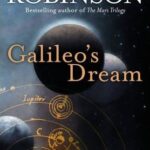
On May 6, Kim Stanley Robinson participated in an event at UCSD on Galileo: “Galileo Between Science, Science Studies and Science Fiction” — very fitting with the themes of his latest novel Galileo’s Dream!
Participants were Mario Biagioli, history professor and scientifc revolutions expert; Sheldon Brown, visual artist; Brian Keating, astrophysicist; and Kim Stanley Robinson.
DESCRIPTION/ABSTRACT:
In his recent book, Galileo’s Dream, Kim Stanley Robinson creates a portrait of Galileo’s life in which he combines historic research with science fiction tropes to show the impact and challenges of paradigm shifts and their very human origins. One of the sources for this work is the research of Mario Biagioli, who will discuss the importance of Robinson’s approach to historians of science and interrelationships between science studies and science fiction. Additionally, UCSD Professor of Physics Brian Keating will describe his observations of the early universe made with a version of Galileo’s refractor telescope, which is sensitive to radio-waves, instead of visible light. This telescope located in Antarctica, has made ultra-sensitive images of the afterglow of the Big Bang. He will show images of the early universe as well as data from observations of Jupiter made with a new UCSD telescope, and will discuss techniques to peer deeper into the universe, standing on Galileo’s shoulders. All will be framed by films of high resolution images produced by Sheldon Brown of the four Jovian moons discovered by Galileo some 400 years ago. This event is organized by Don Wayne, Provost of Revelle College. Co-Sponsored by: California Institute for Telecommunications and Information Technology (Calit2), Clarion Writers’ Workshop, Center for Research in Computing and the Arts (CRCA), The Council of Provosts, Department of Literature, Division of Arts and Humanities, Division of Physical Sciences, Revelle College.
The recorded panel has been posted online, at Calit2 and at YouTube and lasts for 2h 10min. Here it is below for your enjoyment:
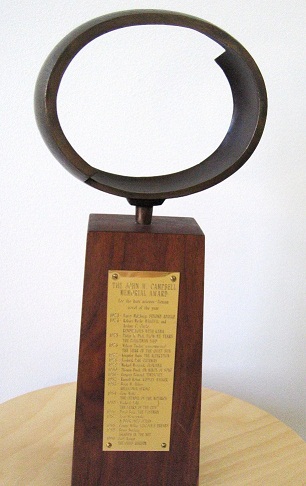
Kim Stanley Robinson’s Galileo’s Dream has been nominated for the 2010 John W. Campbell Memorial Award, for best science fiction novel! The full list of the nominees is:
The jury is a small committe consisting of Gregory Benford, Paul Di Filippo, Sheila Finch, James Gunn, Elizabeth Anne Hull, Paul Kincaid, Christopher McKitterick, Pamela Sargent, and T.A. Shippey.
The award will be presented during the Campbell Conference Awards Banquet, to be held July 16-18, 2010 at the University of Kansas.
Robinson had previously won in 1991 for Pacific Edge, and had also been nominated for The Gold Coast and Blue Mars.
Kim Stanley Robinson, a UC San Diego graduate, gave the commencement address for UCSD’s Sixth College on June 13. Prior to the address he gave an interview for SignOnSanDiego. Highlights:
There is a mismatch now between our civilization and the natural systems that give us life and support us. In short, we have not yet invented a sustainable civilization, and now inventing that civilization has gone from being a good idea to a survival necessity. That process will be the story of the twenty-first century.
Those of the World War Two generation will understand best the idea that having an overarching goal for the whole society is something that can bring people together and drive individual decisions in powerful ways. Now we’re facing a different kind of challenge, and in many ways a more positive one. It will take the global community coming together, rather than fighting each other; and young people are the most connected generation yet. So, this big necessary project will mean jobs, careers, and meaningful lives. It’s a good thing to have.
Enough of my novels have had autopian aspect that I also often think of myself as a utopian science fiction writer. This is an odd pursuit, but I find it interesting, and it keeps me working to find new ways to do it. I think it’s a useful thing for our literature to include visions of how we might build a better world. And it’s fun to try.
Find the full interview here.