






KimStanleyRobinson.info

The reference site for Kim Stanley Robinson

  • Upcoming publications: Rexroth in the Sierra

    Kim Stanley Robinson’s love for the Sierra Nevada is well known and permeates his work, as evidenced, among others, in the poems in The Martians or a trip to the Sierras in Sixty Days And Counting. He is now very excited to be editing the work of another lover of the Sierras, Kenneth Rexroth, one of Robinson’s favourite poets.

    Kenneth Rexroth (1905-1982) was an American poet whose biography is too rich and varied — to a newcomer like me — to be summarized in two-three lines for the purposes of this article. His poetry involved themes of love, sexuality, ecology, sociology, mysticism, he was involved in anarchism, communism, buddhism, taoism, dadaism, wobblies and all kinds of radical and free thinkers groups, he is considered as a founding figure of the San Francisco Renaissance of the 1950s, he influenced the Beat generation, he translated lots of poems into English and notably Japanese haikus, he mixed his poetry with jazz, he was a pacifist and conscientious objector of World War II, nearly published a guidebook for camping in the mountains… Lots of resources are available here, or even here and biographies here.

    Rexroth’s poetry was published by landmark poetry publishing house New Directions, founded by James Laughlin, with whom Rexroth camped and skied in the Sierras for many years.

    Kim Stanley Robinson is now gathering all of Rexroth’s Sierra-related poems, which were up to now scattered over dozens of publications over four decades of Rexroth’s life. Robinson is providing an introduction and notes to this collection, “Rexroth in the Sierra“, to be published by New Directions in fall 2011 or spring 2012.

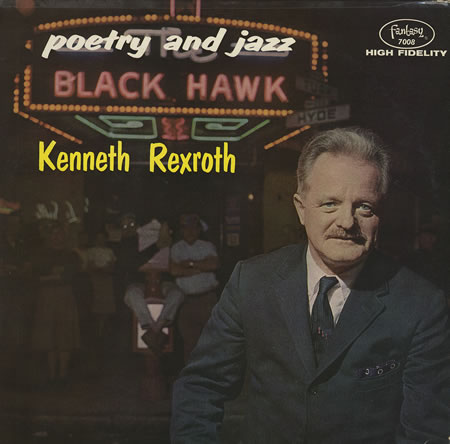
    (Photo: cover of Poetry and Jazz at the Blackhawk, a 1958 LP recording of Rexroth reading his poetry over jazz)


    Here follows a Kenneth Rexroth poem on the Sierras and on Sacco and Vanzetti, two Italian immigrants and anarchists who were executed in Boston on August 23, 1927, accused of a murder they did not commit (taken from the Bureau of Public Secrets):


    CLIMBING MILESTONE MOUNTAIN
    August 22, 1937

    For a month now, wandering over the Sierras,
    A poem had been gathering in my mind,
    Details of significance and rhythm,
    The way poems do, but still lacking a focus.
    Last night I remembered the date and it all
    Began to grow together and take on purpose.
    We sat up late while Deneb moved over the zenith
    And I told Marie all about Boston, how it looked
    That last terrible week, how hundreds stood weeping
    Impotent in the streets that last midnight.
    I told her how those hours changed the lives of thousands,
    How America was forever a different place
    Afterwards for many.
    In the morning
    We swam in the cold transparent lake, the blue
    Damsel flies on all the reeds like millions
    Of narrow metallic flowers, and I thought
    Of you behind the grille in Dedham, Vanzetti,
    Saying, “Who would ever have thought we would make this history?”
    Crossing the brilliant mile-square meadow
    Illuminated with asters and cyclamen,
    The pollen of the lodgepole pines drifting
    With the shifting wind over it and the blue
    And sulphur butterflies drifting with the wind,
    I saw you in the sour prison light, saying,
    “Goodbye comrade.”
    In the basin under the crest
    Where the pines end and the Sierra primrose begins,
    A party of lawyers was shooting at a whiskey bottle.
    The bottle stayed on its rock, nobody could hit it.
    Looking back over the peaks and canyons from the last lake,
    The pattern of human beings seemed simpler
    Than the diagonals of water and stone.
    Climbing the chute, up the melting snow and broken rock,
    I remembered what you said about Sacco,
    How it slipped your mind and you demanded it be read into the record.
    Traversing below the ragged arête,
    One cheek pressed against the rock
    The wind slapping the other,
    I saw you both marching in an army
    You with the red and black flag, Sacco with the rattlesnake banner.
    I kicked steps up the last snow bank and came
    To the indescribably blue and fragrant
    Polemonium and the dead sky and the sterile
    Crystalline granite and final monolith of the summit.
    These are the things that will last a long time, Vanzetti,
    I am glad that once on your day I have stood among them.
    Some day mountains will be named after you and Sacco.
    They will be here and your name with them,
    “When these days are but a dim remembering of the time
    When man was wolf to man.”
    I think men will be remembering you a long time
    Standing on the mountains
    Many men, a long time, comrade.

  • World Building and Contemporary Art @UCSD

    “The transreal: artworks that cross boundaries of multiple realities with a nuance for a multiplicity of worlds, using reality as a medium.“
    – Micha Cárdenas, Interim Associate Director of Art and Technology for Sixth College, UCSD

    Kim Stanley Robinson will be appearing in a panel discussion at the Culture, Art and Technology program of the Sixth College of UC San Diego, California, as part of the opening of the ARTifact art gallery exhibition “Many Worlds, Many Times” (April 6 to June 10, 2011). The exhibition is focusing on “a vision of a multiplicity of worlds and times, on many levels: the science fiction imaginary, phenomenological approaches to time and a world experienced through sound are just a few.“

    Friday, April 22nd, 3pm
    Panel Discussion, “World Building and Contemporary Art”

    Pepper Canyon Hall 257

    Featuring Kim Stanley Robinson
    Sheldon Brown, Professor of Visual Art
    Cauleen Smith, Professor of Visual Art
    Christopher Kardambikis, MFA Candidate

    The Culture, Art and Technology (CAT) program at the Sixth College of UCSD is proud to present the new ARTifact gallery exhibition for the Spring 2011 quarter, Many Worlds, Many Times, curated by Micha Cárdenas, Interim Associate Director of Art and Technology for Sixth College. The ARTifact gallery exists as a physical gallery in the CAT core offices as well as an online exhibition space at the CAT website, cat.ucsd.edu. The gallery acts as an integrated learning laboratory, transforming the working environment of CAT students, staff and faculty into a hybrid space in which contemporary art can be part of the dialog of interdisciplinary undergraduate learning curriculum in Sixth College.

  • Introductions & Prefaces by Kim Stanley Robinson, 2006-2011

    Over the last few years, on top of concentrating on his novels, his short stories and his appearances in various media, Kim Stanley Robinson has also lent his pen to writing introductions and prefaces to various books, mostly new editions of past science fiction greats. Let’s go over what’s been going on over the past 5 years and what’s in store for 2011:


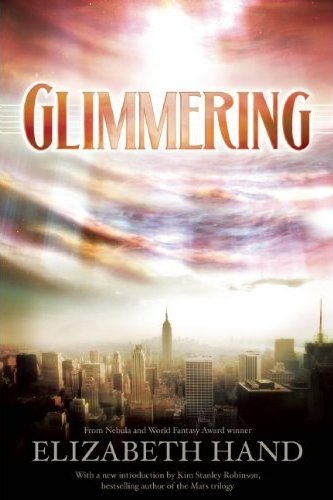
    The most recent one is Glimmering, by Elizabeth Hand, about a 1999 Manhattan plagued by climate, environmental and health disasters. This 1997 novel is re-edited by genre publisher Underland Press; it should be published in December 2011.

    Says Hand in an interview with Tor.com:

    There were such great environmentally-themed SF books from that time [1970s], stuff like Stand on Zanzibar, The Sheep Look Up, and Dune. I wrote Glimmering in that spirit, a novel that anticipated a lot of terrible stuff that actually did come to pass in the last decade. Unfortunately, it was published in 1997, at the height of the go-go 90s, and that terrible bleak vision of the near-future was not what anyone wanted to read about. But it’s being reprinted next year by Underland Press, with a new intro by Kim Stanley Robinson. So I’m very excited about that.

    Robinson and Hand both participated in the Summer 2009 Clarion Science Fiction and Fantasy Writers’ Workshop.


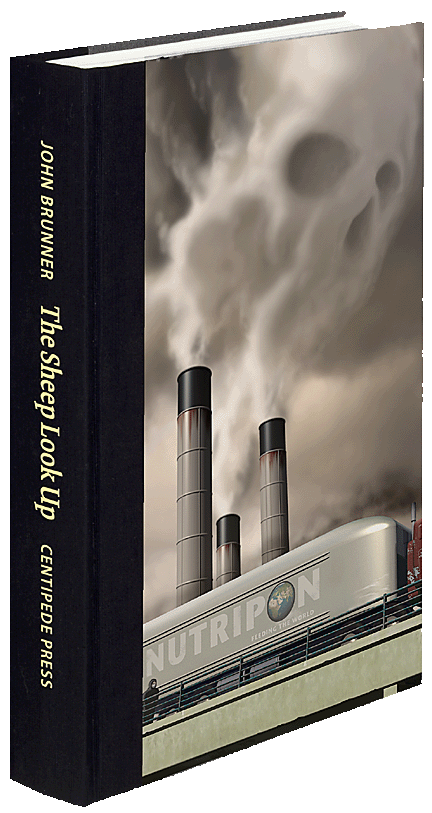
    Speaking about Stand on Zanzibar and The Sheep Look Up, both of these landmark John Brunner novels were re-edited by genre publisher Centipede Press in June 2010, with introductions by Stan.

    These are luxurious hardcover editions with original colour illustrations inside:

    [Stand on Zanzibar] With a printed cloth front panel, Japanese cloth on back panel, top-edge stain, ribbon marker, beautiful European endopapers, full color illustrations, 500 + pages, a bonus essay by Brunner, and a stunning and simple design. Each book is signed by John Brunner and Kim Stanley Robinson.

    [The Sheep Look Up] This is the first limited edition of The Sheep Look Up ever published. This edition features a fine introduction by Kim Stanley Robinson, one of science fiction’s best-known writers.
    The book also features an interview with Brunner, a column by Brunner, and a lengthy autobiography with photographs. Signed by Kim Stanley Robinson. The book has a printed cloth front panel, Japanese cloth on back panel, top-edge stain, ribbon marker, beautiful European endpapers, full color illustrations, and is over 350 pages.

    Stand on Zanzibar (1968) is the classic lengthy novel about an overpopulated future, which also experiments on narrative structure and with varied point-of-view chapters to enrich its wordbuilding.
    The Sheep Look Up (1972) is a tale of environmental disasters and social unrests in a future USA.

    Keep note of Robinson’s association with Stand on Zanzibar, as we will be referring to it again in the future (hint, hint!)…


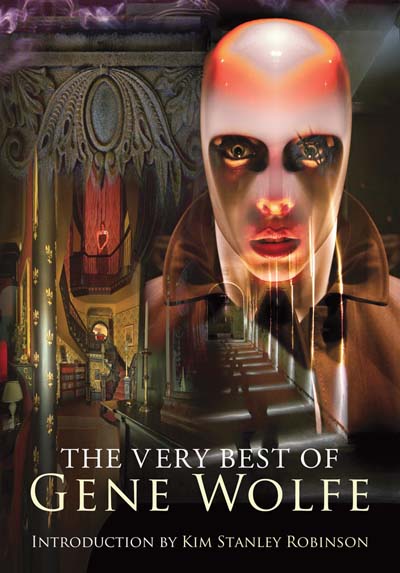
    Stan also wrote the introduction to the short story collection The Very Best of Gene Wolfe, published in 2009 by PS Publishing (UK).

    Careful though! According to this Strange Horizons review by David McWilliam, the US version of the book (called The Best of Gene Wolfe) is one story short and does not feature the introduction:

    [The UK edition features] a thorough introduction by Kim Stanley Robinson that significantly augmented my enjoyment of the book. Robinson’s boundless enthusiasm for Wolfe is infectious, though he occasionally verges on hyperbole, claiming that this is “one of the best story collections ever published, a masterpiece of American literature” (p. xix). Robinson’s articulate championing of the nuances of Wolfe’s style, mixing biographical details with literary analysis, makes the introduction a valuable addition to the collection.

    Stan has expressed his love for Wolfe’s prose time and again.


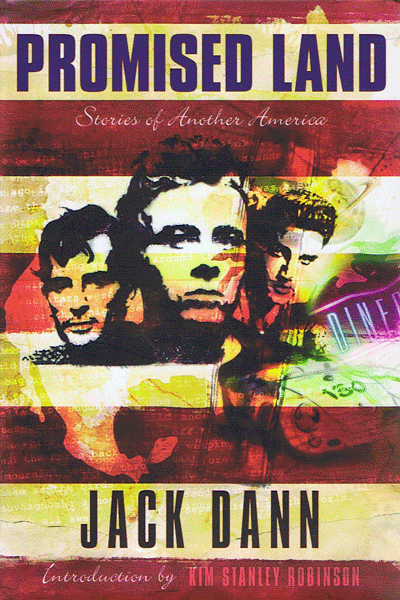
    Also by PS Publishing, in 2007, is Promised Land: Stories of Another America, by Jack Dann.

    This is a short stories collection of stories taking place in the same alternative history of the USA in the 1950s-1970s and features several of America’s cultural icons (James Dean, Robert Kennedy, Marilyn Monroe, Elvis Presley, Jack Kerouac, William Burroughs!…). It is a companion volume to the 2004 novel The Rebel: An Imagined Life of James Dean, in which James Dean survived his car crash in 1955 and went on to have a successful life and political ties with Bobby Kennedy.

    Jack Dann appeared with Stan last September in a panel of the Aussiecon 4.


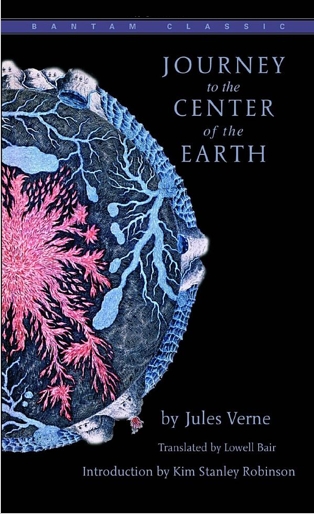
    In 2006, Stan wrote the introduction to a new edition by Bantam Classics of Jules Verne’s classic-of-the-classics Journey to the Center of the Earth (1864)!

    If you don’t know anything about this novel then I encourage you to check out the 1959 film adaptation, in all its James Mason/Bernard Herrmann/stop-motion effects glory!


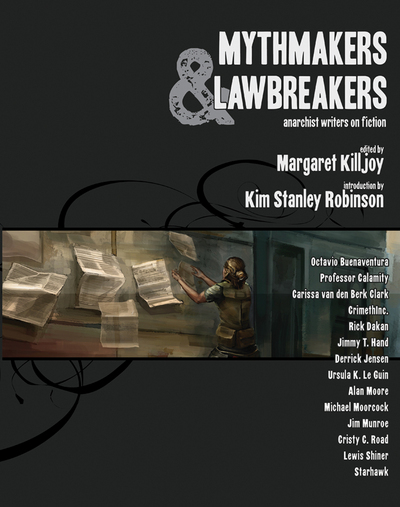
    Moving on to non-fiction, KSR.info already covered the 2009 release of the essays & interviews collection Mythmakers & Lawbreakers: Anarchist Writers on Fiction by AK Press, for which Stan provided the introduction.


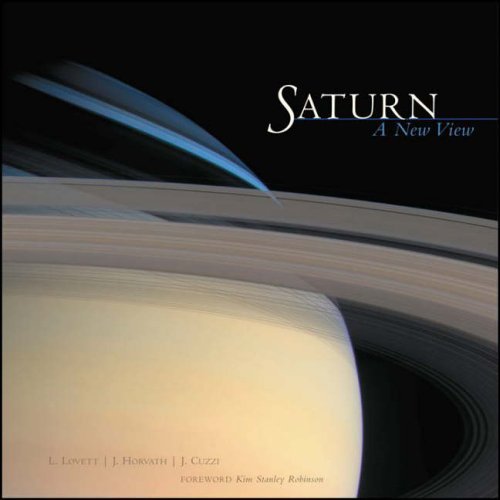
    Finally, Saturn: A New View by Harry N. Abrams Inc (2006) is a large-format hardcover book that features 150 glorious photos from the Cassini-Huygens mission by NASA/JPL, which reached Saturn in 2004. Stan wrote the foreword.


    That’s all for now folks!


  • Rethinking Capitalism conference

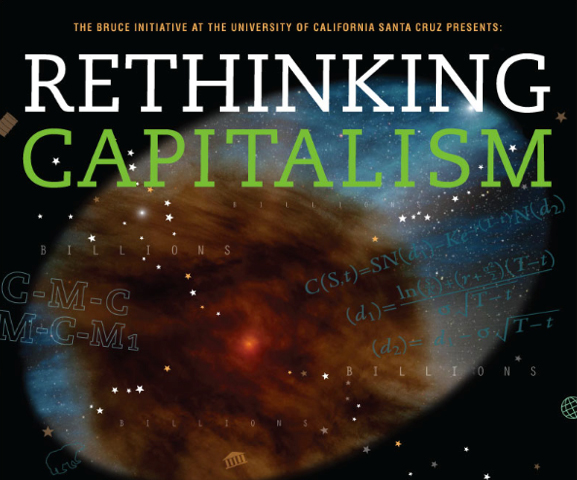
    Bruce Initiative on Rethinking Capitalism Conference, April 7-9, 2011 – Social Sciences Division of University of California Santa Cruz

    Kim Stanley Robinson will be appearing on the 2011 Rethinking Capitalism Conference, April 7-9, 2011. There are several panels and a wide range of participants over the three-day event. The conference is described as:

    The collapse of capital markets in 2008 has produced a literature that describes the financial apocalypse we almost had. This new, more realistic, view of capitalism stresses its dependence on taxpayer subsidy and government regulation and the imperative of preserving it as something less than a market utopia. This conference will explore the difference and relation between confessing the fragility of capitalism and formulating a critique. Each panel brings theories of economic value and regulation into conversation with the study of culture, institutions, ethics, history, geography and theology. Their overall focus will be on the large role of financial products, especially options, in the development of global capitalism and the ways which questions of how to manage uncertainty about the future must be supplemented by political questions about the direction and sustainability of capitalism itself.

    The issues covered are very topical and a matter of hot debate in recent times. Indeed, when including some of the most respected economists of our times insist that the problem not only lies in regulation (or lack thereof) of financial markets, but also in the fact that our world civilization is hitting against real physical limits inherent in our world and its finite resources, then it is time to listen, ponder, and act accordingly!

    See this recent article in the New York Times by US economist and Nobel laureate Paul Krugman (December 2010), as one example among many many:

    Oil is back above $90 a barrel. Copper and cotton have hit record highs. Wheat and corn prices are way up. Over all, world commodity prices have risen by a quarter in the past six months.
    So what’s the meaning of this surge?
    Is it speculation run amok? Is it the result of excessive money creation, a harbinger of runaway inflation just around the corner? No and no.
    What the commodity markets are telling us is that we’re living in a finite world, in which the rapid growth of emerging economies is placing pressure on limited supplies of raw materials, pushing up their prices. And America is, for the most part, just a bystander in this story.

    Stan will be appearing in one of the very first panels, on Thursday April 7:

    7:15 PM Keynote Panel: Telling the Story of 2008: Realistic, Utopian and Apocalyptic Narratives of What Could Have Happened
    Kim Stanley Robinson, Science fiction author known for his Mars trilogy
    Lynn Stout, Corporate and Securities Law, University of California Los Angeles
    Graham Ward, Contextual Theology and Ethics, University of Manchester

    He will also be appearing on a panel with a large number of participants on Friday April 8:

    2:00 PM ROUND TABLE 1: Eschatology, Visualization and Scenario Planning
    Andrew Barry, School of Geography, University of Oxford
    Karin Knorr Cetina, Sociology, University of Constance, Germany
    Daniel Friedman, Economics, UC Santa Cruz
    Dai Jinhua, Comparative Literature and Culture, Beijing University, Resident Fellow Townsend Center for the Humanities, UC Berkeley
    Andrew Mathews, Anthropology, UC Santa Cruz
    Darel Paul, Political Science, Williams College
    Paolo Quattrone, Accounting, IE Business School
    Kim Stanley Robinson, Science fiction author known for his Mars trilogy
    Shyam Sunder, Accounting, Economics and Finance, Yale University
    Graham Ward, Contextual Theology and Ethics, University of Manchester

    The Santa Cruz Sentinel ran an article on the conference and provides some background:

    Last year’s inaugural Rethinking Capitalism conference focused on derivatives, the esoteric financial instruments that helped drive the economy to the brink of failure.
    “Now we’re drilling down,” said Stephen Bruce, founder of the Bruce Initiative. Bruce is a UCSC economics graduate who went on to a career in international asset management.
    He founded the Bruce Initiative at UCSC because of its interdisciplinary approach to probing critical social and economic issues in unconventional ways.
    “This year we will look at social systems and questions of distribution and allocation.”
    “People used to be persuaded that the problems in markets could be solved by creating more markets. Now I think people no longer expect these markets to operate without very heavy involvement from government and central banks and government can’t do what they do to keep these markets going without suspending democracy. The general view is that the system has been saved but that we’re on borrowed time. The purpose of the conference is really an attempt to figure out what kind of time that is.”

    If you are going to the conference, we are interested in any material you might come back with!

    And as always, if you have an opinion or want to react on these matters, there is always the comments section below.

    Edit: Thanks to Albinoflea!