Skip to content

KimStanleyRobinson.info

The reference site for Kim Stanley Robinson

  • Who is KSR?
  • Stan’s Favorites
  • About
  • Bibliography
  • Forum
  • Events

Category: news

  • The Best of KSR cover revealed!

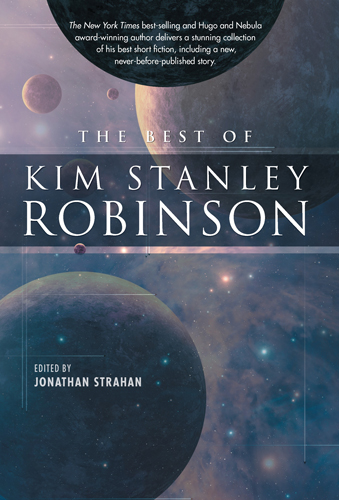
    The upcoming short story collection “The Best Of Kim Stanley Robinson” now has a cover:

    Despite the very astronomical cover, it will include a variety of stories, from alternative history and earth-based futures to comedy and adventure. The hardcover title will be filled with 22 stories from the entirety of Robinson’s carreer, including the novella-length “The Lucky Strike“, “The Blind Geometer” and “Escape From Kathmandu“, and an all-new story, “The Timpanist of the Berlin Philharmonic, 1942”. It will be coming out in August and it is published by Night Shade Books.

    25 June 2010
  • KSR interview at ActuSF

    The French SF&F news site ActuSF has published a new interview with Kim Stanley Robinson. It is available in both the original English format, and in a French translation.

    Among other things, Stan discusses his writing process, space news, the writers that inspired him, and gives a concise rundown of his ideas on ecology and social justice. Highlights:

    We need to reduce our impacts on the environment, and restore habitat for the rest of the animals, who have the same right to leave we do, and are part of our support system (our food, air, water, etc). This effort involves stopping the rise in human population, which is a social justice issue ; in countries where women have full human rights, population growth is right around replacement rate or a little below. So it is patriarchy and injustice that causes the growth in population, which needs to be recognized and confronted. It has to be said, always, that this is not a technical but a political issue ; capitalism is not designed to be sustainable within the closed system of Earth, and it includes most of the injustices of feudalism.

    So “ecology” and “social justice” are two ways of talking about the same problem, of sustainability or permaculture, which is a word from agriculture for a truly sustainable civilization.

    On his backpacking habits:

    So, I think what I do is more like the French term “randonee” ( ?). We hike fairly long distances in the Sierra Nevada mountains, using passes without trails, and usually very far from other people. It’s not like what people do in the Alps, although it resembles perhaps the summer version of the “Haute Route” between Chamonix and Zermatt ; except there are no huts along the way, and very few trails or people. Having done a couple years of exploring in the Alps, I am aware that people tend to travel in the Alps and the Sierra Nevada very differently ; this is something I’d like to write about someday.

    He also teases the content of his next novel, tentatively titled 2312:

    I am writing a novel in which humanity is occupying the solar system and terraforming many of the planets and moons, as part of the project of dealing with climate change on Earth ; so they are terraforming Earth too.

    French readers will be happy to learn that Galileo’s Dream will soon be published by Presses de la Cité, which also published the Mars and Science in the Capital trilogies.

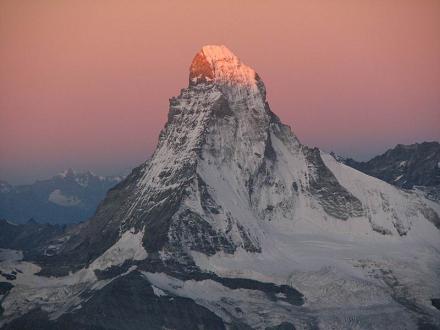
    Photo of the Matterhorn (Cervin en français), on the Swiss/Italy border, by Fabrice Brun.

    26 April 2010
  • Locus Award nomination + Dune article

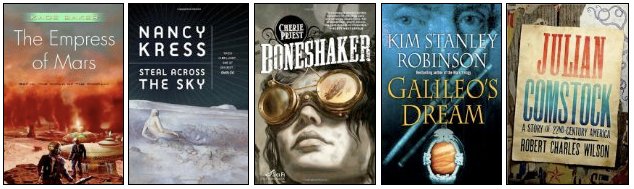
    The finalists for the 2010 Locus Awards have been announced and Kim Stanley Robinson’s Galileo’s Dream is in the shortlist for Best Science Fiction Novel, along with Kage Baker’s The Empress of Mars, Nancy Kress’s Steal Across the Sky, Cherie Priest’s Boneshaker and Robert Charles Wilson’s Julian Comstock: A Story of 22nd-Century America. Nominees and winners are established by Locus Magazine’s readers’ poll. Winners will be presented during the Science Fiction Awards Weekend in Seattle in June 25-27, 2010.


    Also, the LA Times have published an article on Frank Herbert’s Dune, the classic science fiction novel with mystical and environmental themes, and Kim Stanley Robinson offered his appreciation and recognizes it had a positive influence on his writing:


    “The planet was something you could really feel,” says Robinson, whose latest novel is “Galileo’s Dream.” “Herbert spent a lot of time outdoors — you can see it in the writing, he’s seen things you can only see if you’ve been there. It’s physical and expansive.”

    Robinson calls “Dune” a big influence: The book showed him, he says, that “you could talk about the future of the wilderness. It gave me courage. I knew that people were willing to read at great length and that the world could be a character.”

    But Herbert’s future vision of a galaxy with numerous populated worlds seems out of step with the deflated present. “The future,” says Robinson, “doesn’t look to be off-planet in any near-future time frame.”


    Finally, the release date for the paperback for Galileo’s Dream in the USA appears to be December 28, 2010 (according to Amazon.com); the UK release date is August 5, 2010. Both releases come exactly one year after the hardcover release in each country.


    The release date for The Best Of Kim Stanley Robinson is August 15, 2010.

    22 April 2010
  • KSR in Australia

    Kim Stanley Robinson will be a guest of honor at the 68th World Science Fiction Society Convention in Melbourne, Australia: the Aussiecon Four. The event will be taking place at the Melbourne Convention and Exhibition Centre in just under five months, in September 2-6, 2010, so for those not living Down Under start planning early! Other guests of honor will be artist Shaun Tan and organization veteran Robin Johnson. At the Convention will also be awarded the 2010 Hugo Awards, one of the best known awards in the science fiction and fantasy field; Galileo’s Dream is not among the nominees, however they are: Cherie Priest, China Miéville, Robert Charles Wilson, Catherynne M. Valente, Robert J. Sawyer and Paolo Bacigalupi. Voters are supporting and attending members of the Convention.

    Right before Aussiecon will also be taking place a conference at the Monash University of Melbourne titled “Changing the Climate: Utopia, Dystopia and Catastrophe” — a very topical title for Robinson readers — and it is actually the Fourth Australian Conference on Utopia, Dystopia and Science Fiction. It will take place from August 30th to September 1st, 2010. Mr. Robinson will be one of the keynote speakers, along with writer and critic John Clute and utopian studies scholar Tom Moyan and many others. There is also a Call For Papers in case you’d like to weigh in.


    In other news, the first multi-cellular organisms living in an oxygen-free environment have been discovered not in Mars, Europa or elsewhere but no further than in the Mediterranean Sea! (Nature article, BMC abstract) Life without oxygen: another environment previously considered too extreme for life has been proven otherwise!


    11 April 2010
  • Galileo’s Dream nominated for Clarke Award

    Kim Stanley Robinson’s Galileo’s Dream has been shortlisted for the Arthur C. Clarke Award for 2010, was announced yesterday!

    The Clarke Award is awarded yearly for the best science fiction novel since 1987. The winner was initially chosen by representatives from the British Science Fiction Association; now, the panel of judges is “made up of a voluntary body of distinguished writers, critics and fans”. For 2010, the judges are: Jon Courtenay Grimwood and Chris Hill (BSFA),Rhiannon Lassiter and Francis Spufford (Science Fiction Foundation), and Paul Skevington (Science Fiction Crowsnest).

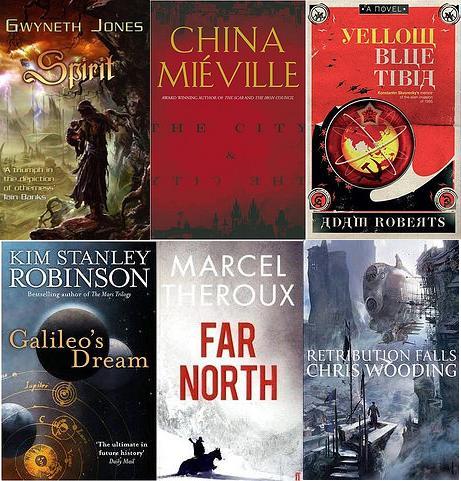
    The six nominees, established from an initial submissions list of 41 novels, are:

    • Spirit by Gwyneth Jones
    • The City & the City by China Miéville
    • Yellow Blue Tibia by Adam Roberts
    • Galileo’s Dream by Kim Stanley Robinson
    • Far North by Marcel Theroux
    • Retribution Falls by Chris Wooding

    Reactions and bets have started already! The winner will be announced on April 28, 2010.

    Robinson had been previously nominated for The Years Of Rice And Salt, in 2003.

    1 April 2010
  • BookBanter interviews KSR

    The BookBanter blog has now posted a new audio interview with Kim Stanley Robinson, available here!

    Says Alex C. Telander (who runs BookBanter):

    On January 23rd I was given the opportunity to interview Kim Stanley Robinson, author of the award-winning Mars trilogy, as well as other bestselling books such as The Year of Rice and Salt and Forty Signs of Rain, in person at the Avid Reader Bookstore, in the city of Davis where Robinson resides. The interview was conducted a little while before his reading and signing for his latest book, Galileo’s Dream, which is a science fiction novel, but is also a biography of Galileo’s life, as well as his problems in dealing with the Church. During the interview, Robinson talked a lot about how he came up with Galileo’s Dream, how much work and research the book took. He also talked about what got him into writing, what he thinks readers will get out of reading his books, and what he’s working on next.

    Thanks go to Sunny Baadkar and the Avid Reader in Davis for helping to organize and provide a very comfortable space to do the interview (and that’s classical music in the background from Capital Public Radio).

    And just because I felt like posting it, here is a video with Carl Sagan talking about the “Pale Blue Dot”:

    21 March 2010
  • Kim Stanley Robinson maps the future’s gray areas

    The Los Angeles Times interview Kim Stanley Robinson and offer many insights on his writing, his influences and his personal life in Davis, California. Excerpts:

    It wasn’t until he started reading Isaac Asimov, and later Ursula K. Le Guin, Samuel R. Delany and Gene Wolfe, that he discovered a genre to express what he’d witnessed. “When I started reading science fiction, I thought, ‘This is me. This is about going from a human world to a machine world and becoming a cyborg,’ ” he has said. “I think of science fiction as the realism of California.”

    Over the years, Robinson has tilted away from the absolutism of the 1960s and tried to “reimagine what revolution” can be. In his novels, he posits a scientific, gradualist, nonviolent view of how progress can occur. […] “The problem is that dealing with climate change is a Big Government issue, and ever since Reagan-Thatcher there’s been this strong move to demonize government,” he says. Climate-change rejecters and free-market ideologues “have done just what the Catholic Church did with Galileo. They’ve made the wrong choice and are going to have to crawl away from it, but the damage will have been done.”

    Robinson reckons that he knows about 200 of his roughly 1,000 neighbors, and has even served on the community’s board of directors. He’s fond of citing a quote attributed to Oscar Wilde: “Socialism will never succeed. It takes too many evenings.”

    I continue to gather reviews of Galileo’s Dream here, be they professional like the magnificent piece by John Clute, or from casual readers — now (with those from Amazon) numbering well over 60!

    For more reading:

    Stan’s talk at Duke University last month sparked quite a discussion thanks to a post by biologist PZ Myers here.

    Also, a review of The Lucky Strike by Cory Doctorow has sparked an interesting debate here.

    Finally, the collection The Best Of Kim Stanley Robinson looks like it’s headed to an Augut 15 2010 release.

    27 February 2010
  • KSR joins UKL in petition against Google Books

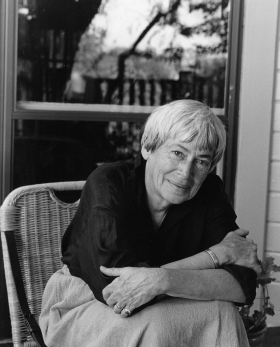
    Acclaimed writer Ursula Kroeber LeGuin (read her!) has launched a petition calling US writers and publishers to join her in preventing Google from digitizing works without consent. Kim Stanley Robinson is one among 367 other writers who has joined her. The petition was submitted to a US judge for consideration on January 26, 2010, in view of a Fairness Hearing on February 18, 2010.

    The free and open dissemination of information and of literature, as it exists in our Public Libraries, can and should exist in the electronic media. All authors hope for that. But we cannot have free and open dissemination of information and literature unless the use of written material continues to be controlled by those who write it or own legitimate right in it. We urge our government and our courts to allow no corporation to circumvent copyright law or dictate the terms of that control.

    Ursula K. LeGuin resigned from the (US) Authors Guild over this issue in December 2009 after the Guild settled legal dispute with Google Books in October 2008 (the “Google Book Search Settlement Agreement“). Copyright issues and Google Book digitization has been a matter of public debate all over the world throughout 2009.

    Ireland, India, South Africa, and New Zealand (countries with active publication in English) protested the settlement and have been exempted from it. The governments of Germany and France protested unregulated digitization and have been exempted from the Settlement (and the French Government is suing Google for illegal digitization of copyrighted property.) We ask that the United States also be exempted from the settlement.

    The news has been relayed by several media and the UKL petition continues to be discussed at Book View Cafe Blog.

    (photo of Ursula K. LeGuin by Marian Wood Kolisch)

    Also, two more KSR appearances in California have been listed, for February and March:

    A reading with Kim Stanley Robinson and Terry Bisson
    Pegasus Books Downtown, on Thursday Feb-25-2010, 7:30pm
    2349 Shattuck Avenue
    Berkeley, California 94704, USA

    Appearance of Kim Stanley Robinson and many other interesting speakers
    15th Annual Bay Area Anarchist Book Fair
    Mar-13-2010, 5pm
    SF County Fair Building, Golden Gate Park, 9th Ave. and Lincoln Way
    San Francisco, California, USA

    12 February 2010
  • KSR talk at Duke University: videos

    Last week, as we announced previously, Kim Stanley Robinson was part of the “Science, Religion, and Ideology” event at Duke University in Durham, North Carolina, USA. Event co-organizer Gerry Canavan has put Stan’s speech on youtube (one hour’s worth of material) and blogged extensively about it. Like all of Stan’s interventions, this is stuff you have to watch!

    “one of them said “Enough is a bad word. That’s a bad word in America. Enough sounds like not enough. You should change it to Goldilocks, where there’s too little, there’s too much, and then there’s just right. And what you want is just right. And you can easily have too much.” So I thought, okay, Goldilocks. I’ll change it always and mention that it’s not only that enough is as good as a feast, but enough is just right.”

    “we’ll be looking back at the 2010s and thinking “They had just discovered the laptop and lost their minds.” It’s like in the discovery of the telephone; for a while there there was the euphoria of the telephone, and everyone had to call everyone, and we’re in that kind of moment for the Internet—but eventually you get past these technologies and we’re just back to people doing things.”

    I invite you to head over to Gerry’s post and read, and watch, and think.

    A complete list of interviews with Kim Stanley Robinson can be found here.

    UPDATE 08/02/10: Gerry Canavan has now posted more material (video and transcript) of the event preceding the “Science, Religion, and Ideology”, again at Duke University.

    6 February 2010
  • “Best Of KSR” contents released

    The contents of the upcoming “The Best Of Kim Stanley Robinson” have been released. It contains short stories and novellas from the entirety of Stan’s career, from the 1980s throughout the 2000s. It is edited by Jonathan Strahan and is expected to be released mid-2010 in the USA by Night Shade Books, in hardcover.

    The 300-page volume includes 23 stories: 5 from The Planet On The Table, the novella The Blind Geometer, one novella from Escape From Kathmandu, 10 from Remaking History, 3 from The Martians, and 3 previously uncollected stories (including one never before published):

    • Venice Drowned
    • Black Air
    • Ridge Running
    • The Lucky Strike
    • Our Town
    • The Blind Geometer (previously uncollected)
    • Mother Goddess Of The World
    • Glacier
    • Remaking History
    • The Lunatics
    • Before I Wake
    • The Translator
    • Zurich
    • A History Of The Twentieth Century, With Illustrations
    • A Sensitive Dependence On Initial Conditions
    • Muir On Shasta
    • Vinland The Dream
    • Arthur Sternbach Brings The Curveball To Mars
    • Sexual Dimorphism
    • Discovering Life
    • How Science Saved The World (previously uncollected)
    • Prometheus Unbound, At Last (previously uncollected)
    • The Timpanist Of The Berlin Philharmonic, 1942 (previously unpublished)
    • Afterword by Kim Stanley Robinson

    Night Shade Books page

    1 February 2010
  • Fresh KSR interview, reviews continued

    Popular science fiction and science blog io9 has published an interview with Kim Stanley Robinson, focusing mainly on Galileo’s Dream.

    Meanwhile, reviews for Galileo’s Dream continue to pop up and I add them for your reading and commenting pleasure in the site.

    Don’t forget to check out the calendar on the left for readings and discussions involving Robinson (event tonight and tomorrow at North Carolina’s Duke University)!

    28 January 2010
  • More events + Galileo’s Dream, Pacific Edge articles

    More readings and discussion events with Robinson, still in the USA but this time on the East Coast: at Duke University, at Durham, North Carolina.

    A discussion on Science Fiction and Ecology with Stan Robinson
    Co-organizer Gerry Canavan says:
    “We’re coming back for another semester of Ecology and the Humanities events, sponsored by the Franklin Humanities Institute and organized by the editors of Polygraph 22. The group’s first event of the spring will be a conversation with science fiction author Kim Stanley Robinson on “Science Fiction and Ecology.” There will be a short reading for this event, the draft of the interview conducted between Stan and the Polygraph 22 editors; contact me if you’re planning to attend and would like a copy.”
    Thursday, January 28, 2010, 7-9 pm
    John Hope Franklin Center 240, Duke University
    Durham, North Carolina

    Also, Robinson will be speaking on “Science, Religion, Ideology” in the event “Competing Cosmologies, Effecting Worlds: Intersections of Science and Religion” along with another science fiction author, Nisi Shawl, and two academics, Bruce Lincoln and Michael Taussig.
    Friday, January 29, 2010, 10am-5pm
    (KSR speech & Q&A 10:15am-11:15am)
    Breedlove Room, Perkins Library, Duke University
    Durham, North Carolina

    Of course, if you attend any of these events, feel free to drop a comment here!

    Stan Robinson wrote a Galileo-related article for Suvudu, a “multi-contributor blog with the mission of providing information, content, and free ebook downloads to fans of Science Fiction and Fantasy“.

     

    If the themes of Galileo’s Dream interest you then you might want to see “Agora“, a 2009 film by Spanish director Alejandro Amenábar (Tesis, Abre los Ojos, The Others, Mar Adentro) starring Rachel Weisz. “Agora” (picture above) deals with the life of Hypatia, Greek philosopher and astronomer in Alexandria, at around the end of the 3rd century AD, at the turning point between the Greek/Roman Antiquity and the Christianity-dominated Middle Ages, and tackles themes dear to Robinson as well: science vs religion, or perhaps empathy vs intolerance, politics, history of religions and history of civilisations, astronomy… A truly excellent film that did not get the cinema release it deserved.

    Finally, Jo Walton wrote a great piece on Pacific Edge for the (rich) blog of Tor, KSR’s publisher for up to that novel (1990). “Water, love, and meetings” looks on utopia and and simply concludes “we’re no closer to utopia—or if we are, then not the one Robinson was after“.

    “Central to Tom and to what Robinson is doing is his meditation on his eighties Californian childhood, growing up in utopia, in a free country full of opportunity, but a utopia that was grounded in exploitation in the Third World and pollution of the planet. The key sentence, as he vows to work for a better world is: “If the whole world reaches utopia, that dream California will become a precursor and my childhood is redeemed.” That’s imperialist guilt in a nutshell, but in this book with its small scale issues of water in California and softball games we’re constantly being reminded that the rest of the planet is there, in a way that’s quite unusual in anglophone SF.“
    17 January 2010
←Previous Page
1 … 10 11 12 13 14
Next Page→

Upcoming Events

Notice
There are no upcoming events.
0 events found.

Events

Notice
There were no results found.
Notice
There were no results found.

Events Search and Views Navigation

Event Views Navigation

  • List
  • Month
Today
  • Today
  • Google Calendar
  • iCalendar
  • Outlook 365
  • Outlook Live
  • Export .ics file
  • Export Outlook .ics file

KimStanleyRobinson.info

The reference site for Kim Stanley Robinson

  • Who is KSR?
  • Stan’s Favorites
  • About & Contact
  • Bibliography
  • List of interviews
  • Forum
  • Events

This is not an official website for Kim Stanley Robinson. To contact this website, send an e-mail to postmaster [at) kimstanleyrobinson.info – To contact Robinson or his publishers, visit the official Kim Stanley Robinson Facebook page – To inquire about a speaking engagement with Kim Stanley Robinson, contact the Hachette Speakers Bureau

Twenty Twenty-Five

Designed with WordPress