Skip to content

KimStanleyRobinson.info

The reference site for Kim Stanley Robinson

  • Who is KSR?
  • Stan’s Favorites
  • About
  • Bibliography
  • Forum
  • Events

Category: news

  • Rethinking Capitalism videos

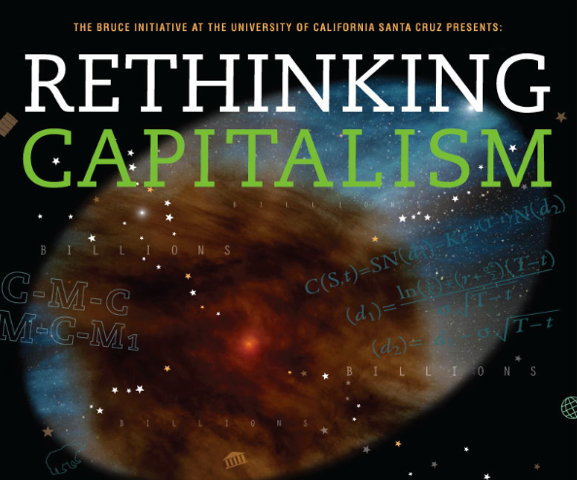
    Videos from the Bruce Initiative on Rethinking Capitalism 2011 conference at UC Santa Cruz, April 7-9 2011 (previously announced on KSR.info here), have surfaced on their website.

    First is Kim Stanley Robinson‘s panel, where he speaks about (post-)capitalism, science fiction, science, history, historiography…

    Stan Robinson also appeared on two more panels (presentations followed by discussion and Q&As):

    April 7: Keynote Panel: Telling the Story of 2008: Realistic, Utopian and Apocalyptic Narratives of What Could Have Happened
    Andrew Barry, School of Geography, University of Oxford
    Kim Stanley Robinson, Science fiction author known for his Mars trilogy
    Lynn Stout, Corporate and Securities Law, University of California Los Angeles
    Graham Ward, Contextual Theology and Ethics, University of Manchester

    Dick Bryan, Political Economy, University of Sydney

    April 8: ROUND TABLE 1: Eschatology, Visualization and Scenario Planning
    Andrew Barry, School of Geography, University of Oxford
    Karin Knorr Cetina, Sociology, University of Constance, Germany
    Daniel Friedman, Economics, UC Santa Cruz
    Dai Jinhua, Comparative Literature and Culture, Beijing University, Resident Fellow Townsend Center for the Humanities, UC Berkeley
    Andrew Mathews, Anthropology, UC Santa Cruz
    Darel Paul, Political Science, Williams College
    Paolo Quattrone, Accounting, IE Business School
    Kim Stanley Robinson, Science fiction author known for his Mars trilogy
    Shyam Sunder, Accounting, Economics and Finance, Yale University
    Graham Ward, Contextual Theology and Ethics, University of Manchester

    Both panels covered much more than their announced topics: different forms of capitalism across states, new accounting methods, international regulation and law, post-secular societies, sociobiology, marxism, the role of the state, capitalism in China, …

    There’s a lot to learn and think about here, and not only in these panels above. The reader of Robinson’s works might find other panels interesting as well, such as this one by Lynn Stout, presenting results from research on psychology, behavioral economics, evolutionary biology and conscience — things that Frank Vanderwal (from the Science in the Capital trilogy) would enjoy a lot!

    24 July 2011
  • Odds & Ends of July, continued

    More news for July! Most are somewhat stale news, as real life is taking its toll.


    The Best Of Kim Stanley Robinson (Night Shade Books, 2010) has been out for a while now, and is available as hardback, paperback or e-book.

    It’s been getting some reviews, notably this one by Strange Horizons contributor Niall Harrison.

    Few other writers can capture so vividly the sense of being-in-the-world.

    [On “Remaking History” and “A Sensitive Dependence on Initial Conditions”] In Galileo’s Dream, when the maestro is whisked away to the year 3,000 and given a history lesson, this is pretty much what he’s shown: a great river of histories, many streams braided together to carve a limited channel through possibility space. Whether or not this is a sustainable model for understanding history, it strikes me that it’s a fascinating way of understanding science fiction’s versions of history—indeed, as John Clute argued in setting out the concept of “First SF”, the existence of an early default narrative for the genre, it was the compelling understanding of the field as late as the early 1990s. Since then, we are meant to understand that there is no consensus history of the future in the way that the Moon-Mars-Stars progression provided a backdrop for the Golden Age. And yet the version of our future that Galileo is shown passes through a wrecked world, a rebuilding with an increased understanding of environmental stewardship, a slow exploration of the solar system. It’s impressive, when you stop to look at it, how much contemporary SF falls somewhere on this timeline—Paolo Bacigalupi’s The Windup Girl (2009) at its nearest end, Paul McAuley’s The Quiet War (2008) at the other, Ken MacLeod’s Fall Revolution quartet (1995-1999) covering the whole spread. As a template narrative, its only real contemporary competition is the Singularity.

    By the way, Strange Horizons previously had a fun little debate starting from a quote from an interview with Robinson. The subject was infodumps in science fiction novels… well, actually, infodumps in Robinson’s novels!

    Strange Horizons (Paul Kincaid) also reviewed 80! Memories and Reflections on Ursula K. Le Guin, on which Robinson contributed.

    The cover art for The Best Of was actually not made for the book specifically. Its title is actually “Goodnight Tale” and it was made in 2009 by Joe Jesus. It is available on his deviantART site for download in high quality!


    The short story “The Lunatics“, recently reprinted in the collection “Brave New Worlds” (Night Shade Books, 2011), is available online for free from Tor.com, as part of their “Dystopia Week”.


    Good news for our French friends: the translated Science in the Capital trilogy now has new paperback editions! French is the language Robinson has been the most translated into (as far as I know).

    Bonnes nouvelles pour nos amis français: Les livres 40 / 50 / 60, ou la trilogie de la Science dans la Capitale, sont désormais édités en livres de poche par Pocket, bien plus commodes (et économiques!) que ces larges volumes de la première édition!


    Alyssa Rosenberg from ThinkProgress has been writing for and animating a Book Club discussion on Red Mars since last month, and there has been some good discussion in there. There have been 5 parts so far, with the upcoming sixth that will wrap the book up:

    • ‘Red Mars’ Book Club Part I: Escape Velocity: RM Parts I-II
    • ‘Red Mars’ Book Club Part II: Hearts and Heads: RM Part III
    • ‘Red Mars’ Book Club Part III: Evolution and Engineering: RM Parts IV-V
    • ‘Red Mars’ Book Club Part IV: The Art of the Possible: RM Part VI
    • ‘Red Mars’ Book Club Part V: Destroyer of Worlds: RM Part VII
    • [Edit Jul-16-2011: ‘Red Mars’ Book Club Part VI: Water and the Rock: RM Part VIII]

    Thanks to Google alerts, it’s sometimes fun to track down all mentions of Kim Stanley Robinson in articles that are published on the internet. For example:

    • MIT’s Technology Review has published a list of “The Best Hard Science Fiction Books of all Time“, or rather “Ten titles that inspired Technology Review to publish its own collection of sci-fi stories”. Between Jules Verne and Vernor Vinge can be found Kim Stanley Robinson’s Mars trilogy:

    This tale of the colonization of Mars begins in 2026 and ends two hundred years later, with the terraforming of Mars largely completed and humanity making its first steps into interstellar space. Packed with detailed descriptions of the colonist’s everyday lives, and a close attention to the geography of Mars, it’s as close as any of us will get to walking on the red planet. (If, sometime after reading this, you become an actual explorer of Mars, feel free to look me up and berate me for my lack of faith in you. It’ll be something to tell the other people at the old folks home.)


    • This article from the University of Exeter discusses “The novel in a time of climate change“: “Researchers at the University of Exeter are leading the way in the literary analysis of climate change as a cultural phenomenon“, with academic publications accompanying that. Who knew the European Commission’s European Social Fund would fund projects like ‘From Climate to Landscape: Imagining the Future’? Robinson’s Science in the Capital trilogy is discussed.
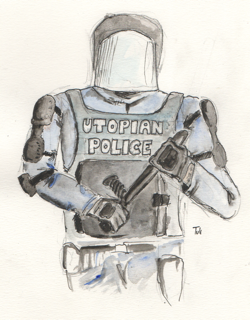
    • This blogger (Yet Another Anarchist Blog) has posted “A Few Thoughts on Antiauthoritarian Utopianisms” and quickly moves from Plato’s Republic to Le Guin’s Dispossessed and Robinson’s Mars trilogy. Artwork on the right from there.

    Rest assured, there is more coming!

    14 July 2011
  • Odds & Ends of July

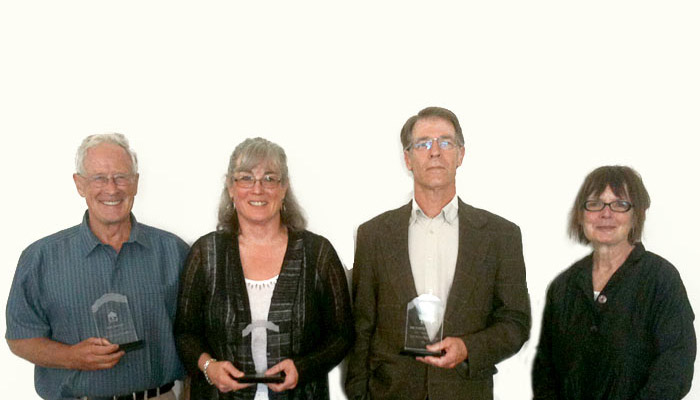
    Kim Stanley Robinson was named a Muir Environmental Fellow from the John Muir College of UC San Diego on April 21, along with sustainability professor Lisa Shaffer and ocean scientist Paul Dayton. The Muir College names selected individuals whose work has contributed significantly to the cause of sustainability and environmental preservation. The first Fellows were selected in 2011, in connection with the 50th anniversary of UC San Diego.

    Dayton, Shaffer, Robinson, and John Muir College Provost Susan Smith


    On the UCSD panel discussion on “World Building and Contemporary Art” on April 22 (announced previously here), Robinson talked about the Singularity. An article on this appeared on science20.com, but it seems to have been taken out. I’m reproducing it here:

    The Singularity? It’s Just A Metaphor

    I heard an interesting panel discussion over at UCSD today. One of the panelists was Kim Stanley Robinson. If you’re a sci-fi fan like me, you might recognize the name; he wrote the Mars trilogy, “Red Mars”, “Green Mars”, “Blue Mars”, about a fictional human colonization of the Red Planet. Anyway, I saw Robinson’s name on the panelist list, and it piqued my curiosity, so I went along. Good thing, too, because my curiosity was amply rewarded with what turned out to be a very interesting discussion.

    Robinson pointed out that young readers prefer fantasy to sci-fi — and have for some years, starting back in the late 1990s. Why? Well, by his way of thinking, it’s partly because fantasy is escapist. Most fantasy novels are set in mythic feudal worlds where heroes and villains wield magical powers and modern-day technology is conspicuously absent. In other words, it’s entirely divorced from our present reality. It looks to the past, whereas sci-fi looks to the future. And starting back in the 1990s, Robinson says, we have become ever more pessimistic about the future.

    Back in the 1950s, we were optimistic about where our world was headed, and (most) science fiction faithfully reflected that optimism, describing a society where the “engineer’s fantasy” of flying cars and smart homes had become reality. (Think The Jetsons.) Starting in the 1980s, however, sci-fi renounced this sunny vision in favor of a more dystopian take on our prospects. (Think cyberpunk). Now, Robinson says, if you say you believe we can survive the next century, some people label you a utopian. Think of that! it’s utopian to say we can make it, we can survive.


    On April 19, on the Australian radio ABC, Robinson appeared in “The Book Show” and talked about his favourite recent sci-fi novels for the ‘Off the Shelf’ segment:
    – Newton’s Wake by Ken MacLeod
    – Life by Gwyneth Jones
    – Air by Geoff Ryman
    – Yellow Blue Tibia by Adam Robertson
    – Red Plenty by Francis Spufford


    Speaking of reviews of other science fiction novels, Robinson participated in a Guardian article with various genre writers offering their views on past favourites: Robinson chose Ursula K Le Guin’s The Left Hand of Darkness. Lots of other good reviews on that article too.


    The above article was made on the occasion of the opening of the British Library’s exhibition on the history of science fiction, ‘Out of this World‘, where apparently Robinson’s works are also featured. The exhibition runs from May 20 to September 25 2011.


    Robinson was featured in Rick Kleffel’s Agony Column interviews site along with fellow writer Rudy Rucker. Apparently the interview (“Seeing the Future with Kim Stanley Robinson and Rudy Rucker”) was done as a ‘live’ session, from Santa Cruz on June 4, however only a preview from May 31 is online.


    Kim Stanley Robinson also made various appearances in California as of late:
    – At the Whole Earth Festival at UC Davis on “The Invention of Permaculture“, on May 7
    – With Terry Bisson on “The Politics of Science Fiction and the Left” at Sacramento, on May 9
    – At the John Muir Institute of the Environment (UC Davis) for the Education for Sustainable Living Program, on May 25: “Imagining Post-Capitalism“
    …but not much surfaced on this on the internets.


    Finally, like last year, Robinson is participating in this year’s Clarion UCSD’s Write-a-thon, from June 26 to August 6. With the writing of 2312 presently completed (more on that later), I wonder what he is writing there!…

    More odds & ends coming soon…

    10 July 2011
  • Upcoming publications: Rexroth in the Sierra

    Kim Stanley Robinson’s love for the Sierra Nevada is well known and permeates his work, as evidenced, among others, in the poems in The Martians or a trip to the Sierras in Sixty Days And Counting. He is now very excited to be editing the work of another lover of the Sierras, Kenneth Rexroth, one of Robinson’s favourite poets.

    Kenneth Rexroth (1905-1982) was an American poet whose biography is too rich and varied — to a newcomer like me — to be summarized in two-three lines for the purposes of this article. His poetry involved themes of love, sexuality, ecology, sociology, mysticism, he was involved in anarchism, communism, buddhism, taoism, dadaism, wobblies and all kinds of radical and free thinkers groups, he is considered as a founding figure of the San Francisco Renaissance of the 1950s, he influenced the Beat generation, he translated lots of poems into English and notably Japanese haikus, he mixed his poetry with jazz, he was a pacifist and conscientious objector of World War II, nearly published a guidebook for camping in the mountains… Lots of resources are available here, or even here and biographies here.

    Rexroth’s poetry was published by landmark poetry publishing house New Directions, founded by James Laughlin, with whom Rexroth camped and skied in the Sierras for many years.

    Kim Stanley Robinson is now gathering all of Rexroth’s Sierra-related poems, which were up to now scattered over dozens of publications over four decades of Rexroth’s life. Robinson is providing an introduction and notes to this collection, “Rexroth in the Sierra“, to be published by New Directions in fall 2011 or spring 2012.

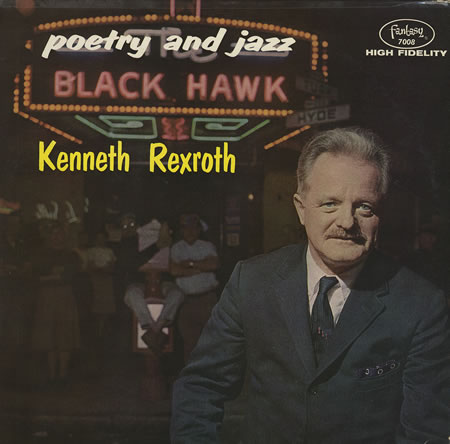
    (Photo: cover of Poetry and Jazz at the Blackhawk, a 1958 LP recording of Rexroth reading his poetry over jazz)


    Here follows a Kenneth Rexroth poem on the Sierras and on Sacco and Vanzetti, two Italian immigrants and anarchists who were executed in Boston on August 23, 1927, accused of a murder they did not commit (taken from the Bureau of Public Secrets):


    CLIMBING MILESTONE MOUNTAIN
    August 22, 1937

    For a month now, wandering over the Sierras,
    A poem had been gathering in my mind,
    Details of significance and rhythm,
    The way poems do, but still lacking a focus.
    Last night I remembered the date and it all
    Began to grow together and take on purpose.
    We sat up late while Deneb moved over the zenith
    And I told Marie all about Boston, how it looked
    That last terrible week, how hundreds stood weeping
    Impotent in the streets that last midnight.
    I told her how those hours changed the lives of thousands,
    How America was forever a different place
    Afterwards for many.
    In the morning
    We swam in the cold transparent lake, the blue
    Damsel flies on all the reeds like millions
    Of narrow metallic flowers, and I thought
    Of you behind the grille in Dedham, Vanzetti,
    Saying, “Who would ever have thought we would make this history?”
    Crossing the brilliant mile-square meadow
    Illuminated with asters and cyclamen,
    The pollen of the lodgepole pines drifting
    With the shifting wind over it and the blue
    And sulphur butterflies drifting with the wind,
    I saw you in the sour prison light, saying,
    “Goodbye comrade.”
    In the basin under the crest
    Where the pines end and the Sierra primrose begins,
    A party of lawyers was shooting at a whiskey bottle.
    The bottle stayed on its rock, nobody could hit it.
    Looking back over the peaks and canyons from the last lake,
    The pattern of human beings seemed simpler
    Than the diagonals of water and stone.
    Climbing the chute, up the melting snow and broken rock,
    I remembered what you said about Sacco,
    How it slipped your mind and you demanded it be read into the record.
    Traversing below the ragged arête,
    One cheek pressed against the rock
    The wind slapping the other,
    I saw you both marching in an army
    You with the red and black flag, Sacco with the rattlesnake banner.
    I kicked steps up the last snow bank and came
    To the indescribably blue and fragrant
    Polemonium and the dead sky and the sterile
    Crystalline granite and final monolith of the summit.
    These are the things that will last a long time, Vanzetti,
    I am glad that once on your day I have stood among them.
    Some day mountains will be named after you and Sacco.
    They will be here and your name with them,
    “When these days are but a dim remembering of the time
    When man was wolf to man.”
    I think men will be remembering you a long time
    Standing on the mountains
    Many men, a long time, comrade.

    26 April 2011
  • World Building and Contemporary Art @UCSD

    “The transreal: artworks that cross boundaries of multiple realities with a nuance for a multiplicity of worlds, using reality as a medium.“
    – Micha Cárdenas, Interim Associate Director of Art and Technology for Sixth College, UCSD

    Kim Stanley Robinson will be appearing in a panel discussion at the Culture, Art and Technology program of the Sixth College of UC San Diego, California, as part of the opening of the ARTifact art gallery exhibition “Many Worlds, Many Times” (April 6 to June 10, 2011). The exhibition is focusing on “a vision of a multiplicity of worlds and times, on many levels: the science fiction imaginary, phenomenological approaches to time and a world experienced through sound are just a few.“

    Friday, April 22nd, 3pm
    Panel Discussion, “World Building and Contemporary Art”

    Pepper Canyon Hall 257

    Featuring Kim Stanley Robinson
    Sheldon Brown, Professor of Visual Art
    Cauleen Smith, Professor of Visual Art
    Christopher Kardambikis, MFA Candidate

    The Culture, Art and Technology (CAT) program at the Sixth College of UCSD is proud to present the new ARTifact gallery exhibition for the Spring 2011 quarter, Many Worlds, Many Times, curated by Micha Cárdenas, Interim Associate Director of Art and Technology for Sixth College. The ARTifact gallery exists as a physical gallery in the CAT core offices as well as an online exhibition space at the CAT website, cat.ucsd.edu. The gallery acts as an integrated learning laboratory, transforming the working environment of CAT students, staff and faculty into a hybrid space in which contemporary art can be part of the dialog of interdisciplinary undergraduate learning curriculum in Sixth College.

    19 April 2011
  • Introductions & Prefaces by Kim Stanley Robinson, 2006-2011

    Over the last few years, on top of concentrating on his novels, his short stories and his appearances in various media, Kim Stanley Robinson has also lent his pen to writing introductions and prefaces to various books, mostly new editions of past science fiction greats. Let’s go over what’s been going on over the past 5 years and what’s in store for 2011:


    The most recent one is Glimmering, by Elizabeth Hand, about a 1999 Manhattan plagued by climate, environmental and health disasters. This 1997 novel is re-edited by genre publisher Underland Press; it should be published in December 2011.
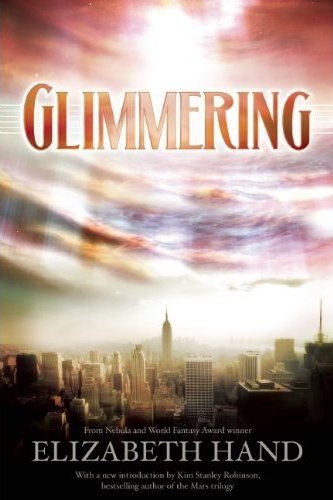
    Says Hand in an interview with Tor.com:

    There were such great environmentally-themed SF books from that time [1970s], stuff like Stand on Zanzibar, The Sheep Look Up, and Dune. I wrote Glimmering in that spirit, a novel that anticipated a lot of terrible stuff that actually did come to pass in the last decade. Unfortunately, it was published in 1997, at the height of the go-go 90s, and that terrible bleak vision of the near-future was not what anyone wanted to read about. But it’s being reprinted next year by Underland Press, with a new intro by Kim Stanley Robinson. So I’m very excited about that.

    Robinson and Hand both participated in the Summer 2009 Clarion Science Fiction and Fantasy Writers’ Workshop.


    Speaking about Stand on Zanzibar and The Sheep Look Up, both of these landmark John Brunner novels were re-edited by genre publisher Centipede Press in June 2010, with introductions by Stan.

    These are luxurious hardcover editions with original colour illustrations inside:

    [Stand on Zanzibar] With a printed cloth front panel, Japanese cloth on back panel, top-edge stain, ribbon marker, beautiful European endopapers, full color illustrations, 500 + pages, a bonus essay by Brunner, and a stunning and simple design. Each book is signed by John Brunner and Kim Stanley Robinson.

    [The Sheep Look Up] This is the first limited edition of The Sheep Look Up ever published. This edition features a fine introduction by Kim Stanley Robinson, one of science fiction’s best-known writers.
    The book also features an interview with Brunner, a column by Brunner, and a lengthy autobiography with photographs. Signed by Kim Stanley Robinson. The book has a printed cloth front panel, Japanese cloth on back panel, top-edge stain, ribbon marker, beautiful European endpapers, full color illustrations, and is over 350 pages.
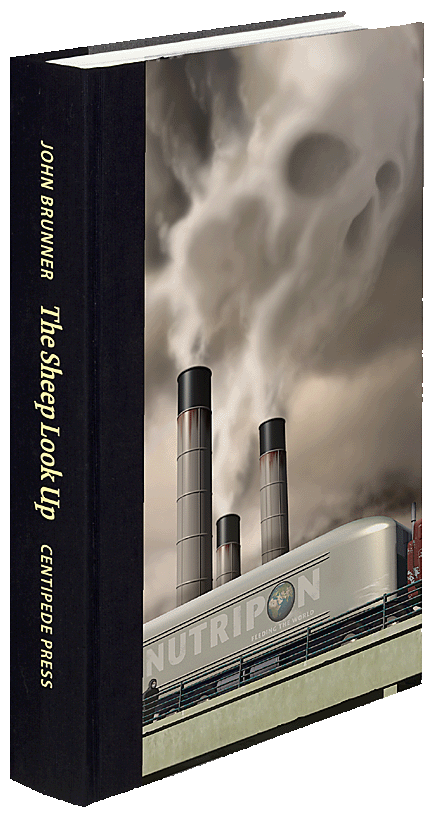
    Stand on Zanzibar (1968) is the classic lengthy novel about an overpopulated future, which also experiments on narrative structure and with varied point-of-view chapters to enrich its wordbuilding.
    The Sheep Look Up (1972) is a tale of environmental disasters and social unrests in a future USA.

    Keep note of Robinson’s association with Stand on Zanzibar, as we will be referring to it again in the future (hint, hint!)…


    Stan also wrote the introduction to the short story collection The Very Best of Gene Wolfe, published in 2009 by PS Publishing (UK).
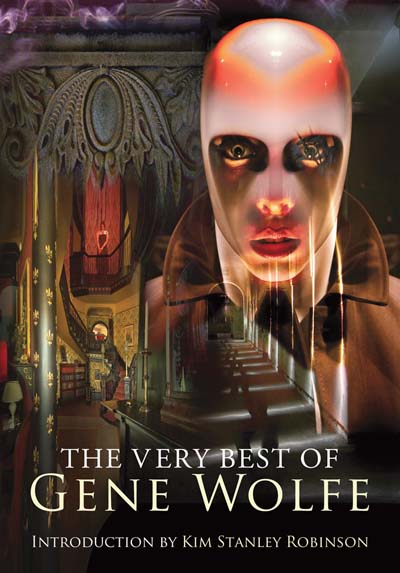
    Careful though! According to this Strange Horizons review by David McWilliam, the US version of the book (called The Best of Gene Wolfe) is one story short and does not feature the introduction:

    [The UK edition features] a thorough introduction by Kim Stanley Robinson that significantly augmented my enjoyment of the book. Robinson’s boundless enthusiasm for Wolfe is infectious, though he occasionally verges on hyperbole, claiming that this is “one of the best story collections ever published, a masterpiece of American literature” (p. xix). Robinson’s articulate championing of the nuances of Wolfe’s style, mixing biographical details with literary analysis, makes the introduction a valuable addition to the collection.

    Stan has expressed his love for Wolfe’s prose time and again.


    Also by PS Publishing, in 2007, is Promised Land: Stories of Another America, by Jack Dann.
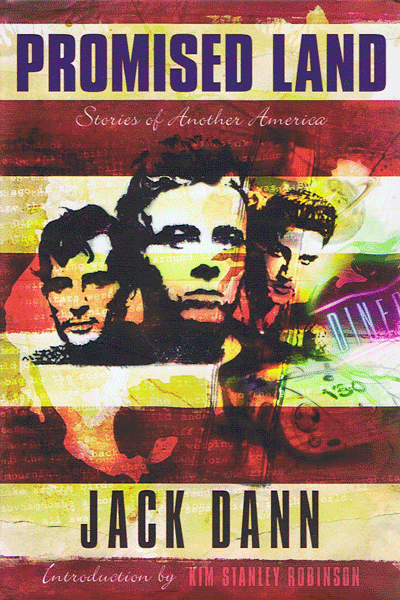
    This is a short stories collection of stories taking place in the same alternative history of the USA in the 1950s-1970s and features several of America’s cultural icons (James Dean, Robert Kennedy, Marilyn Monroe, Elvis Presley, Jack Kerouac, William Burroughs!…). It is a companion volume to the 2004 novel The Rebel: An Imagined Life of James Dean, in which James Dean survived his car crash in 1955 and went on to have a successful life and political ties with Bobby Kennedy.

    Jack Dann appeared with Stan last September in a panel of the Aussiecon 4.


    In 2006, Stan wrote the introduction to a new edition by Bantam Classics of Jules Verne’s classic-of-the-classics Journey to the Center of the Earth (1864)!
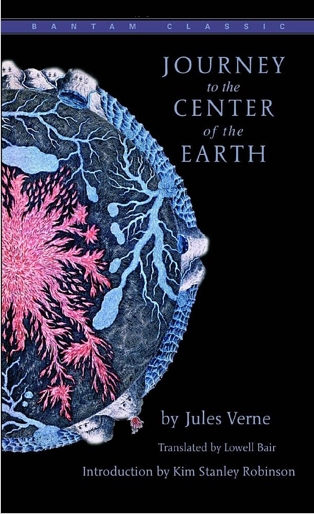
    If you don’t know anything about this novel then I encourage you to check out the 1959 film adaptation, in all its James Mason/Bernard Herrmann/stop-motion effects glory!


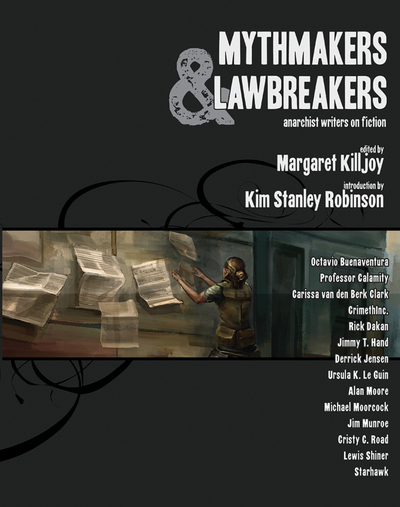
    Moving on to non-fiction, KSR.info already covered the 2009 release of the essays & interviews collection Mythmakers & Lawbreakers: Anarchist Writers on Fiction by AK Press, for which Stan provided the introduction.

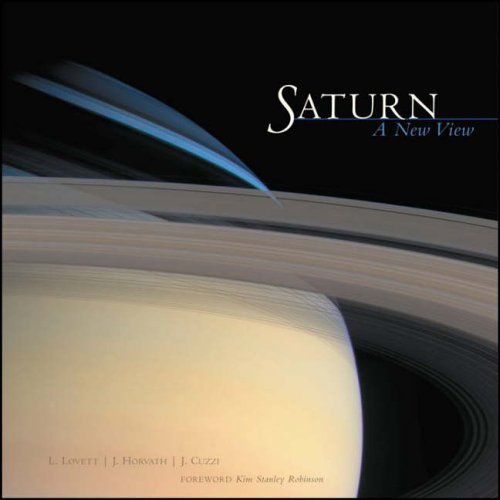
    Finally, Saturn: A New View by Harry N. Abrams Inc (2006) is a large-format hardcover book that features 150 glorious photos from the Cassini-Huygens mission by NASA/JPL, which reached Saturn in 2004. Stan wrote the foreword.

    That’s all for now folks!

     

    17 April 2011
  • Rethinking Capitalism conference

    Bruce Initiative on Rethinking Capitalism Conference, April 7-9, 2011 – Social Sciences Division of University of California Santa Cruz

    Kim Stanley Robinson will be appearing on the 2011 Rethinking Capitalism Conference, April 7-9, 2011. There are several panels and a wide range of participants over the three-day event. The conference is described as:

    The collapse of capital markets in 2008 has produced a literature that describes the financial apocalypse we almost had. This new, more realistic, view of capitalism stresses its dependence on taxpayer subsidy and government regulation and the imperative of preserving it as something less than a market utopia. This conference will explore the difference and relation between confessing the fragility of capitalism and formulating a critique. Each panel brings theories of economic value and regulation into conversation with the study of culture, institutions, ethics, history, geography and theology. Their overall focus will be on the large role of financial products, especially options, in the development of global capitalism and the ways which questions of how to manage uncertainty about the future must be supplemented by political questions about the direction and sustainability of capitalism itself.

    The issues covered are very topical and a matter of hot debate in recent times. Indeed, when including some of the most respected economists of our times insist that the problem not only lies in regulation (or lack thereof) of financial markets, but also in the fact that our world civilization is hitting against real physical limits inherent in our world and its finite resources, then it is time to listen, ponder, and act accordingly!

    See this recent article in the New York Times by US economist and Nobel laureate Paul Krugman (December 2010), as one example among many many:

    Oil is back above $90 a barrel. Copper and cotton have hit record highs. Wheat and corn prices are way up. Over all, world commodity prices have risen by a quarter in the past six months.
    So what’s the meaning of this surge?
    Is it speculation run amok? Is it the result of excessive money creation, a harbinger of runaway inflation just around the corner? No and no.
    What the commodity markets are telling us is that we’re living in a finite world, in which the rapid growth of emerging economies is placing pressure on limited supplies of raw materials, pushing up their prices. And America is, for the most part, just a bystander in this story.

    Stan will be appearing in one of the very first panels, on Thursday April 7:

    7:15 PM Keynote Panel: Telling the Story of 2008: Realistic, Utopian and Apocalyptic Narratives of What Could Have Happened
    Kim Stanley Robinson, Science fiction author known for his Mars trilogy
    Lynn Stout, Corporate and Securities Law, University of California Los Angeles
    Graham Ward, Contextual Theology and Ethics, University of Manchester

    He will also be appearing on a panel with a large number of participants on Friday April 8:

    2:00 PM ROUND TABLE 1: Eschatology, Visualization and Scenario Planning
    Andrew Barry, School of Geography, University of Oxford
    Karin Knorr Cetina, Sociology, University of Constance, Germany
    Daniel Friedman, Economics, UC Santa Cruz
    Dai Jinhua, Comparative Literature and Culture, Beijing University, Resident Fellow Townsend Center for the Humanities, UC Berkeley
    Andrew Mathews, Anthropology, UC Santa Cruz
    Darel Paul, Political Science, Williams College
    Paolo Quattrone, Accounting, IE Business School
    Kim Stanley Robinson, Science fiction author known for his Mars trilogy
    Shyam Sunder, Accounting, Economics and Finance, Yale University
    Graham Ward, Contextual Theology and Ethics, University of Manchester

    The Santa Cruz Sentinel ran an article on the conference and provides some background:

    Last year’s inaugural Rethinking Capitalism conference focused on derivatives, the esoteric financial instruments that helped drive the economy to the brink of failure.
    “Now we’re drilling down,” said Stephen Bruce, founder of the Bruce Initiative. Bruce is a UCSC economics graduate who went on to a career in international asset management.
    He founded the Bruce Initiative at UCSC because of its interdisciplinary approach to probing critical social and economic issues in unconventional ways.
    “This year we will look at social systems and questions of distribution and allocation.”
    “People used to be persuaded that the problems in markets could be solved by creating more markets. Now I think people no longer expect these markets to operate without very heavy involvement from government and central banks and government can’t do what they do to keep these markets going without suspending democracy. The general view is that the system has been saved but that we’re on borrowed time. The purpose of the conference is really an attempt to figure out what kind of time that is.”

    If you are going to the conference, we are interested in any material you might come back with!

    And as always, if you have an opinion or want to react on these matters, there is always the comments section below.

    Edit: Thanks to Albinoflea!

    5 April 2011
  • Various updates

    …And this is 2011 and we’re still here! Some updates in the world of KSR:

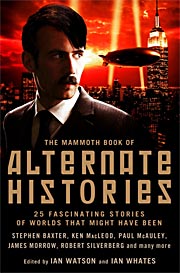
    The Lucky Strike has been included in a collection with stories from various authors (such as Ken McLeod and Stephen Baxter): The Mammoth Book of Alternate Histories, by Robinson (no, not that one, the publisher) and Running Press. With the PM Press release also last year, The Lucky Strike gets a lot of attention! Nice cover! (right)


    The Lunatics has been included in the short story collection Brave New Wolrds: Dystopian Stories, by Night Shade Books (paperback). Editor John Joseph Adams created a whole mini-site for the book and conducted a short interview with Robinson himself for the occasion! Excerpt:


    What was the genesis of the story–what was the inspiration for it, or what prompted you to write it?

    My wife and I were living in Zurich while she was doing a post-doc, and we hung out with all the other post-docs, most of them chemists. One night I saw a periodic table in someone’s kitchen and noticed the element promethium. The story came from that.


    Meanwhile, The Best Of Kim Stanley Robinson has been released in paperback and Kindle editions by Night Shade Books.


    Galileo’s Dream has been translated in Spanish by Minotauro, and reviews are up! As far as I can tell, this is the first translation of the novel, ¡felicidades a los Españoles!


    Galileo’s Dream has also been nominated for the 2011 IMPAC Dublin Award. That’s notable because 1) The nominees are designated only by public libraries from all over the world, which is brilliant, and 2) It’s a “general”/”non-genre” award, which means Galileo’s Dream is nominated for its own literary merits beyond its qualities as a specifically science fiction novel, which is also brilliant! The shortlist should be announced on April 12th and the winner on June 15th.


    Back in October 2010, Kim Stanley Robinson participated in a conference at UC Santa Cruz, Emerging Terraformations: Climate Change, Geoengineering and Science Fictions. Speakers also included Chris McKay, Gregory Benford and others. Stan was interviewed by Colin Milburn (English and Science and Technology Studies, UC Davis). I only found a “liveblogging”…blog entry about this event over here on a very interesting blog! Written as cliff notes. Live reporting. Excerpt:


    Economics is geoengineering. Our economics are not properly calibrated to long term survival on the planet. two ways to talk about it:
    False pricing. We have never charged ourselves properly. Everything costs a lot less than it should. B/c we have shifted off costs to future generations. Charge less for something than it costs to make it = predatory dumping. Who are we predating on? generations of the future. can defend themselves. Imagine them as little babies underfeet, imagine us beating them, that’s what we’re doing. Imagine each generation as equal to us in economic value. We’ve systemically undervalued future generations. Geoengineering: properly pricing things. Post-capitalism.

    A portion of this population will call that a tax. Immediately thrown back into framework of our economy. Political opposition, intense avoidance of economical environmentalism. Pro-carbon party. Will always be controversy. Biz won’t like it b/c it’s not profitable. Paradigm buster. We claim to have an economy that can put a price on everything. There are religious fundamentalists who won’t like it:thinking about Earth as a planet in a secular, scientific world view. Global changes will never be visible to individual senses. With the exception of ice. that’s not true. Increasingly hot summers and warm winters are really easy to perceive. You have to trust science to believe it. Science is often attacked as a stand-in for government, as atheist thing. Culture of anti-intellectualism and anti-science. Discrepancies and incoherences involved. Should be much more effort made to show that Sciences are conciliate, you can’t cherry pick. It will always be resisted and controversial b/c it requires a trust of science.


    On podcast StarShipSofa, Josh Roseman conducts a reading of the title story from Escape From Kathmandu, in serial style! Beware of yeti hunters in Part 1, Part 2 and Part 3!


    Speaking of audio material, KSR.info contributor Albinoflea has tracked down the audio drama adaptation of The Lucky Strike, performed by the full cast of Seeing Ear Theatre! Recorded circa 2003 (to be confirmed) and clocking at 73min! The audio files can be found on Archive.org for your listening pleasure!

    28 January 2011
  • KSR Down Under, Part V (final)

    A very belated final news post on material that surfaced the internet after Kim Stanley Robinson’s visit to Australia in late August-early September!

    In the Melbourne Writers Festival, writer and editor Lucy Sussex interviewed Kim Stanley Robinson as part of Australian Brodcasting Corporation’s Big Ideas series. Stan discusses his novels, his ideas, his politics, his child love of Francis Drake’s exloprations that inspired the award-winning short story “Black Air“, his love of the Sierras that inspired the Mars novels, his love of Virginia Woolf and Olaf Stapledon, Galileo‘s character and time-travelling as a storytelling device that can stand in for psychology and memory, and much more. This excellent interview is available in video (mp4 & wmv) and audio, and is embedded below.

    And some last Aussiecon 4 articles:

    AusLit, as part of their series of articles on the Worldcon, also did a review article with all the technical issues discussed on the panel The Race To The Red Planet, with Kim Stanley Robinson, David D. Levine and Jim Benford. A video featuring part of the panel (atomic-powered rockets to Mars and space elevators) surfaced on YouTube; audio quality is very bad, but you can see it here (originated from this blog).

    Blogger and SF writer Graham Clements posted reviews on all the Climate Change panels of the convention — Stan of course participated in nearly all of them. Blog posts part 1 and part 2 (which includes an account of Gregory Benford‘s panel with some very interesting technical details on geoengineering). Excerpts:

    He disagreed with the concept of sustainable development, which he thought was humanity saying: let’s just continue to live like we have, but get away with it.
    He has a garden and solar panels.
    He wishes they had a preferential voting system in the
    US so environmental parties would get a look in at the elections.

    He mentioned that one-third of humanity’s food comes from the oceans, but greenhouse gases are raising its PH level which might kill the bottom of the food chain.

    He believes it is still possible to get to a carbon neutral state, but it would take some severe action. Nuclear power has to be used as a bridging technology. Genetic engineering might also be part of the solution, for example, rice that can survive two month floods instead of the previous two week floods. He’s against notions of purity, i.e., that the solution has to be pure and contain no nuclear power, no genetic engineering.


    Keep checking the Calendar on the left — next event with KSR is a NASA-sponsored talk on November 9th (in two days!) in Irvine, California, on human space flight and the public.

    (Photo from ABC.)

    7 November 2010
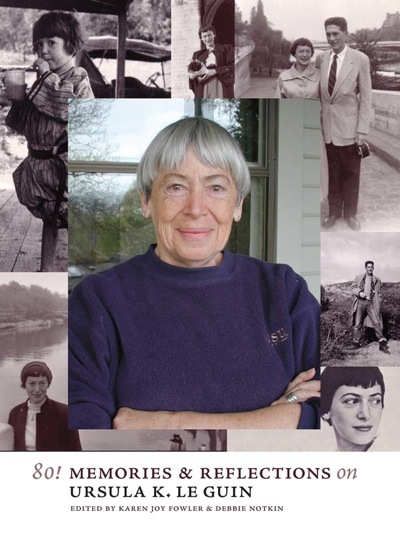
  • New publication: 80! Ursula K LeGuin festschrift

    On October 21, 2010, Ursula K. Le Guin‘s 81st birthday, was published 80! Memories & Reflections on Ursula K. Le Guin by Aqueduct Press. Assembled for her 80th birthday from an idea of Kim Stanley Robinson, the book contains contributions by a great many people, including a piece written by Robinson.

    A private gift to Ursula K. Le Guin becomes a gift to all readers, an exciting chance to enjoy someone else’s birthday present. In 2009, for the momentous occasion of Ursula K. Le Guin’s 80th birthday, Karen Joy Fowler and Debbie Notkin put together a volume of tributes and appreciations, as a birthday present. The project, known in academic circles as a ”festschrift,” or ”celebration book,” resulted in a single copy, handbound in green leather, which Karen presented to Ursula a few days after her birthday in October. The original idea came from Kim Stanley Robinson, who also contributed an essay to the book. With Ms. Le Guin’s kind agreement, Aqueduct Press is delighted to share this unique celebration with Le Guin’s readers and fans. The book contains poetry, personal essays, academic essays, biographical information about Le Guin, as well as fiction, including previously unpublished fiction by Andrea Hairston and John Kessel. Publication will coincide with Le Guin’s 81st birthday. Contributors include Eleanor Arnason, Brian Attebery, Richard Chwedyk, Karen Joy Fowler, Molly Gloss, Eileen Gunn, Andrea Hairston, Jed Hartman, Gwyneth Jones, John Kessel, Ellen Kushner, Nancy Kress, Sarah LeFanu, Vonda N. McIntyre, Pat Murphy, Julie Phillips, Paul Preuss, Kim Stanley Robinson, Nisi Shawl, Lisa Tuttle, Elisabeth Vonarburg, and Jo Walton, among others.

    Stan is a long-time friend of Le Guin and an admirer of her work; she has been cited as an influence on him — in particular in the utopian approach of his work.

    Happy birthday Ursula!

    25 October 2010
  • Outspoken Authors panel

    On October 13, 2010, Kim Stanley Robinson, Terry Bisson and Gary Philips, three writers in PM Press‘s Outspoken Authors series (Robinson’s The Lucky Strike), met up in a panel in CounterPULSE in San Francisco, and had a chat on politics in fiction:

    It’s only a story; or is it? Fantasy, Science Fiction, and Noir conspire as three of PM Press’s Outspoken Authors series discuss the problems, pitfalls and possibilities of writing fiction from a revolutionary perspective. Kim Stanley Robinson is the Hugo-winning author of Red Mars and Galileo’s Dream. Terry Bisson is an award winning short story writer and the biographer of Mumia Abu Jamal and Nat Turner. And LA’s own Gary Phillips “combines politics and storytelling as well as any writer of crime fiction” (Ellery Queen Mystery Magazine). Co-Presented by PM Press.

    KSR spoke on H G Wells, cyberpunk, science and utopia, Calvin and Hobbes and other topics. Terry Bisson moderated the panel, and the entire panel was uploaded on YouTube:

    • Part 1

    • Part 2
    • Part 3
    • Part 4
    • Part 5
    • Q&A Part 1 (from which an extract that is bound to go viral is here: KSR on the denial of the genre)
    • Q&A Part 2


    25 October 2010
  • KSR Down Under, Part IV

    Continuing the series of articles on Kim Stanley Robinson’s series of talks and panels in Australia last month, as more material surfaces in the new Big Brother entity that records everything called the Internet…

    Rjurik Davidson, who interviewed Robinson a few years ago, wrote a new article for the Australian cultural magazine Overland, on Robinson’s panel for the Melbourne Writers Festival on August 29th:

    Robinson was a critic of cyberpunk. ‘I didn’t like It,’ he explained, because it was the literary equivalent of the neoliberal dogma that ‘There is No Alternative’. Cyberpunk sought to celebrate and revel in a free market future. For Robinson, optimism is not optional. We need an ‘optimism of the will’ he explains (paraphrasing Gramsci), because ‘to be pessimistic now is to let down our children and generations to come.’

    In his latest novel, Galileo’s Dream, Robinson examines the relationship between science and capitalism and, as he explained, relied on Raymond Williams’ concept of a ‘structure of feeling’ to capturing a sense of sixteenth-century consciousness. In this novel, Robinson examines the nature of science as a project to liberate humanity. For him, the traditional left critique of science is a ‘category error.’

    Italian political theorist Antonio Gramsci‘s quote is: “I’m a pessimist because of intelligence, but an optimist because of will.“

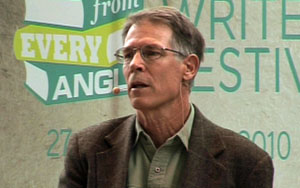
    Monash University, which organized the conference on “Changing the Climate: Utopia, Dystopia and Catastrophe“, August 30th to September 1st, has now posted online podcasts of its panels:

    • Kate Righby: Opening address: ‘Changing the Climate: Utopia, Dystopia and Catastrophe
    • Tom Moylan: ‘N-H-N’: Kim Stanley Robinson’s Dialectics of Ecology
    • Kim Stanley Robinson: Utopia In the Age of Climate Change
    • John Clute: Truth Is Consequence
    • Deborah Rose & Marshall Bell: RUtopia
    • Linda Williams: Shadows of the Holocene: transformed creatures and the dystopian animals of the future

    PhD student Zachary Kendal has written passionate reports on the three days of the conference:

    • Day one: Clute & Robinson colloquially discuss Gene Wolfe
    • Day two: Stan’s panels
    • Day three: More panels and more Wolfe fannishness

    A final Oz-related report should follow on KSRi, stay tuned…

    2 October 2010
←Previous Page
1 … 8 9 10 11 12 … 14
Next Page→

Upcoming Events

Notice
There are no upcoming events.
0 events found.

Events

Notice
There were no results found.
Notice
There were no results found.

Events Search and Views Navigation

Event Views Navigation

  • List
  • Month
Today
  • Today
  • Google Calendar
  • iCalendar
  • Outlook 365
  • Outlook Live
  • Export .ics file
  • Export Outlook .ics file

KimStanleyRobinson.info

The reference site for Kim Stanley Robinson

  • Who is KSR?
  • Stan’s Favorites
  • About & Contact
  • Bibliography
  • List of interviews
  • Forum
  • Events

This is not an official website for Kim Stanley Robinson. To contact this website, send an e-mail to postmaster [at) kimstanleyrobinson.info – To contact Robinson or his publishers, visit the official Kim Stanley Robinson Facebook page – To inquire about a speaking engagement with Kim Stanley Robinson, contact the Hachette Speakers Bureau

Twenty Twenty-Five

Designed with WordPress